Get Full Government Meeting Transcripts, Videos, & Alerts Forever!
Get email alerts on the Housing topic
No spam. Unsubscribe anytime.
Consultant presents Clarkdale housing needs assessment; estimates rental shortfall and long‑term senior housing demand
Summary
At a July 24 advisory meeting, consultant Martina Kiel outlined Clarkdale’s housing needs assessment, citing a need for roughly 190 low/moderate‑income rental units, about 66 middle‑income units, and an estimated 354 long‑term units to meet aging‑homeowner needs over the next decade. Committee members and residents discussed financing, developer margins and outreach strategies.
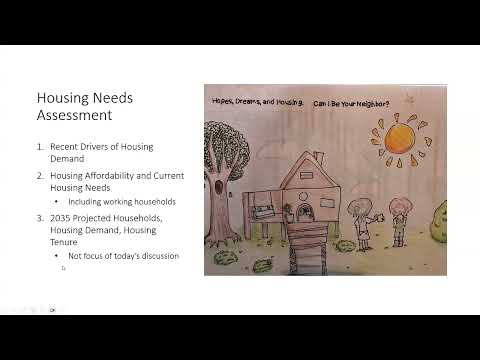
Martina Kiel, the consultant contracted by the Town of Clarkdale to prepare a housing plan, presented a housing needs assessment and recommended areas for action at a special meeting on July 24, 2025.
Kiel told the zoning code advisory committee that the state‑funded plan requires a needs assessment, outreach and an action plan, and that the governing body will be asked to adopt a resolution committing to implement the plan. “There’s also a requirement that the governing body adopt a resolution that they will implement the plan,” she said.
Why it matters: Kiel’s analysis seeks to align code updates with local housing needs as Clarkdale updates its zoning. The assessment identifies specific gaps in the local housing stock, affordability barriers for workers and older residents, and outreach steps the town can take before the draft action plan goes to council next year.
Kiel reviewed survey and demographic data collected for the assessment. The working group’s employer/workforce survey had 64 responses; Kiel said about 60% of respondents live in Clarkdale and 55% are homeowners. She reported that wages ranked above housing as the top issue affecting households’ ability to participate in the local economy. “Wages came out on top of housing, and housing was closely followed by health care, debt burden, and then healthy food access,” Kiel said.
On the scale of need, Kiel presented estimates designed to guide planning: an estimated shortfall of about 190 rental units for low and moderate income households (highest demand for one‑bedroom and studio units), roughly 66 units targeted to middle‑income households, and an estimated 354 units over 10 years to provide alternatives for aging homeowners seeking lower‑maintenance options. Kiel emphasized that these figures are estimates intended to inform policy choices and zoning options rather than immediate quotas.
Kiel also noted common move‑in barriers and market constraints. She said fair‑market rent for a one‑bedroom unit countywide is around $1,400 per month and that combined security, rent and utility deposits can add up to roughly $4,000, a substantial upfront cost for many workers. Using local wage data, she illustrated purchase gaps for typical occupations: pairing a nurse practitioner with an average local wage earner would still leave an estimated $45,000 gap to purchase a median‑priced home in the region under current prices.
Several committee members and residents discussed financing and developer incentives. Ray Sellant, a real estate professional in the room, described builder margins and lending hurdles that can make small local projects difficult to finance, urging the committee to hear directly from builders about construction costs and development margins. “I think there’s a lot of greed in the market,” Sellant said, urging the committee to consider how incentives and caps in subsidized projects affect affordability.
Kiel outlined candidate action areas to address the assessment’s findings: produce housing for a range of family types, preserve neighborhood character through design standards and overlays, demystify the permitting process (including changes to accessory dwelling unit rules), pursue partnerships with nonprofits and employers, provide housing and credit counseling, and explore short‑term employer housing or reserve units to bridge transitions.
Kiel asked committee members which populations to prioritize and invited further input as strategic initiatives are developed in the fall. She said the team will produce draft strategic objectives in September–November, continue public outreach and prepare a draft action plan by January for council review in March–April.
The meeting’s discussion underscored tensions the committee will continue to face: how to use zoning and incentives to direct development toward affordability goals while recognizing financing constraints and market dynamics. The consultant said outreach, a clear vocabulary for terms like “workforce housing,” and partnerships will be central to advancing feasible projects.
The committee did not take formal action on the housing plan at the meeting; the consultant and working group will reconvene in the coming months and return with drafts for committee review before council consideration.