Get Full Government Meeting Transcripts, Videos, & Alerts Forever!
Get email alerts on the Public Safety topic
No spam. Unsubscribe anytime.
Verde Valley Fire seeks $15.5 million bond to shore up radios, build Clarkdale station and address firefighter hazards
Summary
Verde Valley Fire Chief Danny Johnson told Clarkdale council the district plans a two-sale, $15.5 million general-obligation bond to replace aging communications infrastructure, construct a new Clarkdale station and make health-and-safety upgrades across stations; the bond would be repaid over ~20 years and is estimated to add roughly $2–5 monthly for typical residential properties depending on assessed value.
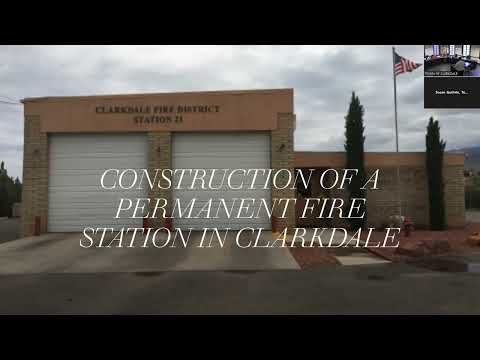
Danny Johnson, fire chief of the Verde Valley Fire District, told the Clarkdale Town Council on Aug. 26 that the district will ask voters this November to approve a $15.5 million general-obligation bond aimed only at capital projects such as radio infrastructure, station construction and safety renovations.
The presentation said the district’s call volume has risen roughly 58% over the past decade while many capital costs have jumped: chief Johnson cited a 241% rise in workers’ compensation costs, a roughly 128% increase in fire-engine prices (from about $440,000 a decade ago to just over $1 million for a recent engine) and double-digit increases for cardiac monitors and turnout gear. He said general-obligation bonds cover capital only and cannot be used for ongoing personnel or operating expenses.
Why it matters: Johnson said that parts of the Verde Valley, including much of Clarkdale, now have limited or no radio reception, which can delay requests for mutual aid or aerial resources during wildfires and other emergencies. He described repeaters more than a decade old, sites affected by weather, and a current configuration with only two working repeaters; consultants’ coverage models showed sizeable coverage gaps. The presentation stressed coordination with regional partners, including Cottonwood dispatch and other automatic-aid agencies, to build redundant point-to-point links.
What the bond would fund: Johnson broke the proposal into two phases. If the first sale occurs in March 2026, the district would sell about $10 million in bonds (roughly $2 million for communications, $7 million toward station construction in Clarkdale and $1 million contingency). A later sale of about $5.5 million would fund targeted renovations—about $3 million for Station 31 (the site with a failing septic system), improvements at Station 32 in Cornville and a $500,000 contingency. The district estimates repayment over about 20 years.
Firefighter health and station problems: Johnson and firefighter advocates emphasized health risks inside older stations: diesel-exhaust infiltration, cross-contamination of turnout gear, and other exposures linked with higher firefighter cancer rates. He described cramped layouts where truck bays sit a few feet from living quarters, failing septic at Station 31 that forced temporary closures, and the need for exhaust capture, dedicated decon zones and safer PPE storage.
Costs to property owners: Johnson presented sample tax impacts based on assessed limited values used by the district. For a home with an assessed limited value of $100,000, the district estimated roughly $32 per year (about $2.70–$4.47 per month depending on calculation presented); other examples in the presentation showed a median figure of about $61 annually (about $5.15 per month) for different property types. Johnson said the district is a secondary taxing entity and that the bond spreads repayment over future property owners as well.
Questions from council and public outreach: Council members asked whether homeowners’ insurance rates would change; Johnson said ISO ratings and insurers’ actions are largely out of the district’s control and that the district’s ISO rating is limited by water availability. He confirmed the district is applying for grants (some $100,000+ annually) but argued bonds are needed to initiate shovel-ready building projects and to make the district competitive for construction grants. Seth Murphy, representing the Sedona Prairie Valley Firefighter Association, said the association is fundraising and will run voter-education mailers and social-media outreach in support of the bond.
Next steps: Johnson said the district will not invest bond funds until regional communications plans are finalized and stressed that upgrades would be coordinated across partner agencies. The fire district plans to run the ballot measure in November and begin initial work in 2026 if voters approve the bond.
Representative quotes
“Over the past 10 years, our call volume has increased by over 58%,” Danny Johnson said, arguing that rising demand and inflation make the bond necessary. “Our fire engines…came in at just over $1,000,000.”
“We are fundraising…we’ll see a mailer coming out pretty quick here,” Seth Murphy said, urging residents to read outreach materials and support the measure.
What we don’t know yet: Exact project schedules, final sites for a new Clarkdale station and the detailed design scope for communications upgrades are to be set during planning; the presentation gave projected ranges and contingency amounts but not final construction contracts.
The council did not take a formal vote on the bond at the Aug. 26 meeting; the district’s presentation materials are posted on the Verde Valley Fire District website and the district plans further public outreach ahead of the November ballot.