Lifetime Citizen Portal Access — AI Briefings, Alerts & Unlimited Follows
Clallam County approves a slate of behavioral‑health contracts amid public calls for clearer metrics
Loading...
Summary
The Clallam County Board on Jan. 27 approved multiple behavioral‑health agreements recommended by its advisory board while several residents urged stronger metrics and enforcement to ensure accountability for public dollars.
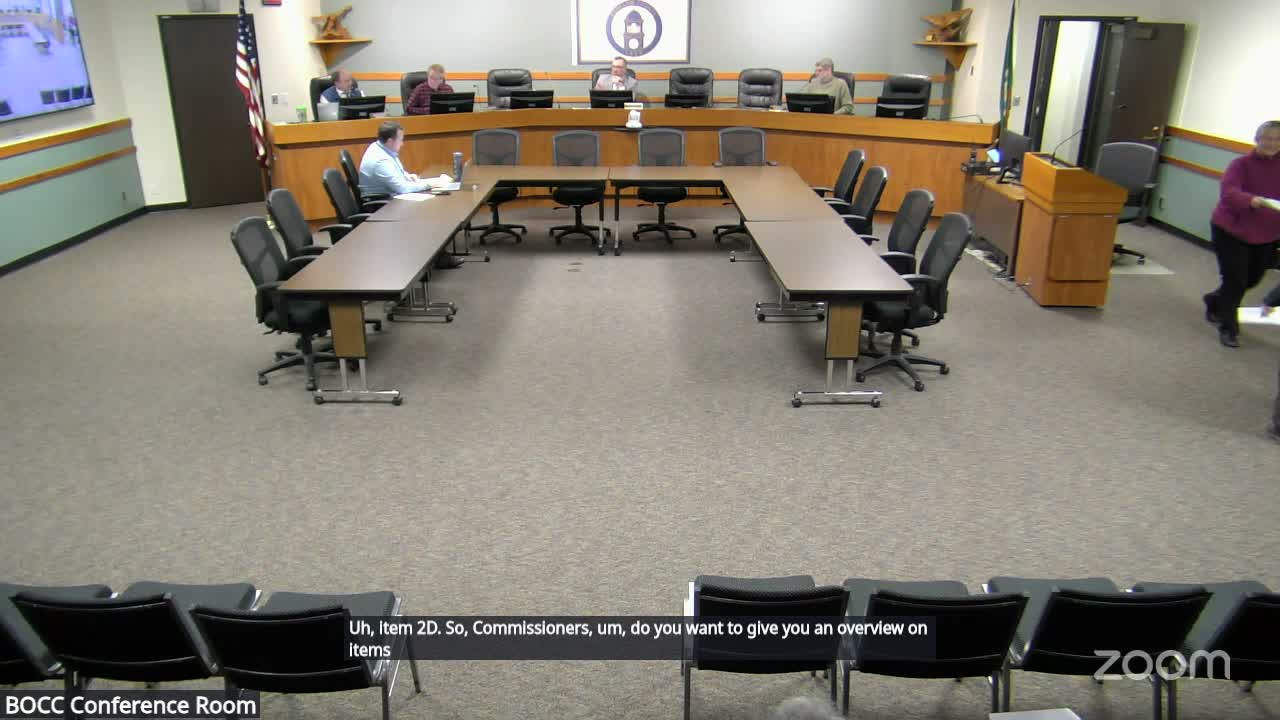
The Board of Clallam County Commissioners on Jan. 27 approved a package of behavioral‑health contracts recommended by the Behavioral Health Advisory Board and county staff, and heard public comments pressing for stronger metrics and oversight of nonprofit contractors.
County staff told the board the funds come from a dedicated one‑tenth of one percent behavioral‑health tax and commonly flow through the Salish Behavioral Health Administrative Services Organization (BHASO) to support therapeutic courts, clinical services, and community providers. Program staff described a two‑year contracting cycle, epidemiology support for reporting, and a review process that begins with volunteer review panels.
Public commenters urged greater accountability. “I do not think you should okay any voucher to HHS until they do what they’ve been ordered to do,” said Robin Weiner, a resident who spoke during the meeting’s public‑comment period. Another attendee described alleged instances in which assistance checks were diverted and said taxpayers lack visibility into spending and outcomes.
Staff responded that the RFP process requires applicants to state requested amounts, intended uses and measurable outcomes and that contracts include reporting and backup documentation. Program staff said the RFP review committee selected priorities this cycle — behavioral‑health specialized services; behavioral‑health housing and shelter; prevention and early intervention; and underfunded behavioral‑health supports — and withheld $200,000 from the current RFP for redistribution in 2027 to help offset expected Medicaid changes.
The board moved, seconded and approved the contracts individually. Contracts approved at the meeting included, among others: Reflections Counseling Services ($204,684.22), Peninsula Behavioral Health ($340,000), the PATH homelessness‑transition program ($66,666.66), Olympic Peninsula Community Clinic ($204,684.22), First Step Family Support Center ($200,000), a Transformations/Olympic Angels program (~$25,294), Venture Project ($55,000), Boys & Girls Club of the Olympic Peninsula ($70,000), West End Outreach Services ($50,000), Olympic Personal Growth Center ($144,684.22), and Sequim Schools for a school‑based mental‑health curriculum ($90,906.25). Staff also noted a Port Angeles Fire Department contract for community paramedics (post‑overdose response) is being finalized and will be brought back for approval; that two‑year amount was stated in the meeting as $348,080.43.
Board members thanked HHS staff and the volunteer Behavioral Health Advisory Board for the oversight role they play in reviewing applications and monitoring grantees. Several residents, however, told the board the public still lacks adequate access to program metrics and follow‑up documentation, and urged commissioners to use contract leverage before releasing funds.
Next steps: staff will finalize any outstanding contract language and return the Port Angeles Fire Department agreement at a later date; the board did not request further votes that day on the set of behavioral‑health contracts they approved.