Get Full Government Meeting Transcripts, Videos, & Alerts Forever!
Get email alerts on the Comprehensive Plan Update topic
No spam. Unsubscribe anytime.
Clallam County planning panel debates archaeological protections and siting rules for essential public facilities
Summary
At a Jan. meeting, the Clallam County Planning Commission discussed edits to the county comprehensive plan that would add siting guardrails for essential public facilities and change how suspected archaeological sites are handled. Commissioners asked staff to redraft language and continued the public hearing to Jan. 21, 2026.
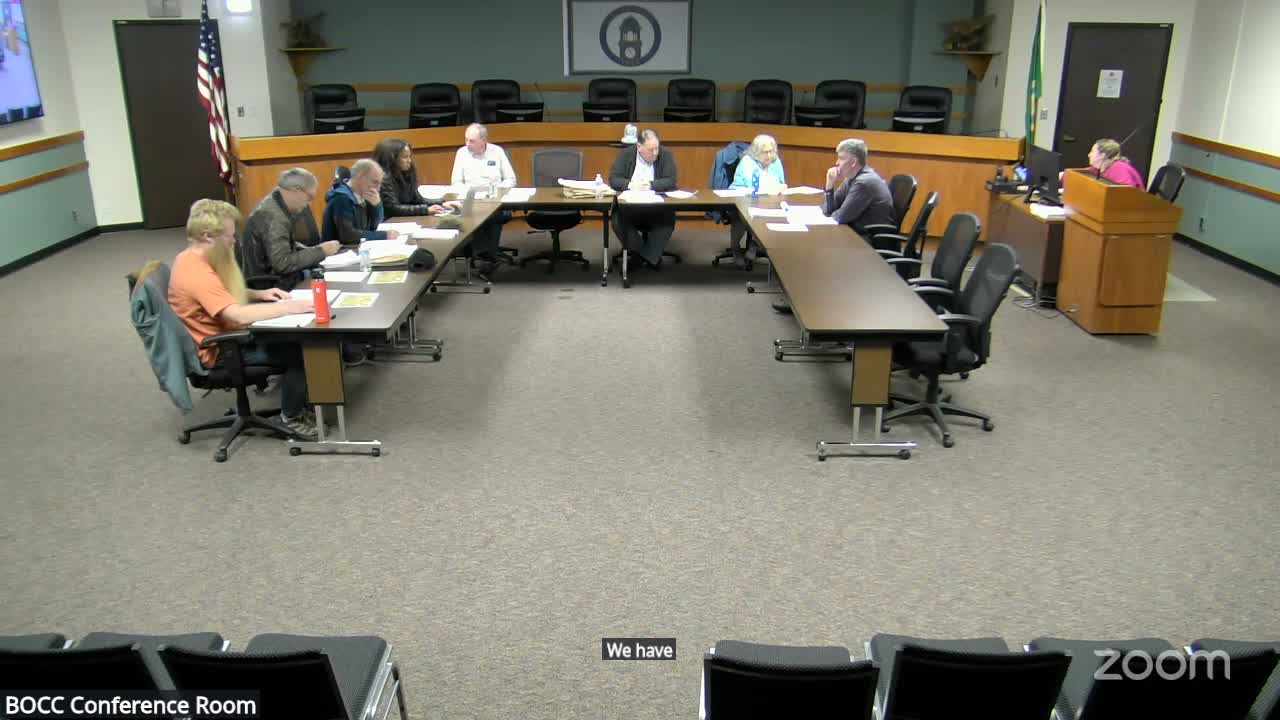
The Clallam County Planning Commission continued a public hearing on the county comprehensive plan update and spent much of the meeting arguing over how the plan should treat essential public facilities and archaeological resources.
Director Emery, the county planning director, told commissioners that recent changes in state law and practice require the county to create a clear process for siting essential public facilities and to provide a regulatory framework in the zoning code. "The Growth Management Act states... to encourage growth to occur in urban growth areas where urban services can be provided in an efficient manner," Emery said, adding that the proposed policy language (3102.300, subsection 8) is intended to create "guardrails" for subsequent zoning standards rather than to ban specific uses.
Why it matters: The discussion will shape how the county reviews and conditions projects such as treatment facilities, transitional housing and other uses that the state now classifies as essential public facilities. Commissioners said the policy must be precise enough to prevent ad hoc or exploitive uses while preserving county authority to evaluate projects case by case.
The commission turned into lengthy debate over draft language that would "protect" sites that are "known or suspected" to have archaeological or cultural value. Some commissioners warned that the phrase "suspected" risks opening the process to unworkable claims and could impose costly survey requirements on landowners. "If you say 'we suspect'... anybody can say I suspect," the Chair said during discussion, urging clearer, implementable wording.
Commissioner Hester proposed a compromise to keep protection for known sites while moving the "suspected" standard into a later sentence that would require a professional survey: "If the presence of an archaeological site is suspected, then a survey should be conducted by an archaeologist," she said, framing the change as a way to avoid tying up land on unfounded suspicion while ensuring due diligence where evidence suggests cultural resources may exist.
Several commissioners urged that the county explicitly defer technical determinations to state experts and tribal partners. Commissioners questioned whether the plan's proposed language goes beyond existing protections in the Shoreline Master Program and suggested staff cite the applicable statutes and federal rules directly — staff referenced 36 CFR 800 and RCW provisions during the discussion.
Public comment highlighted those concerns. John Worthington of Sequim told the commission he wants access to consultant input from Cascadia and the Puget Sound Partnership so he can review and "rebut" positions if necessary; later in the meeting he urged the commission to preserve space on the map for an alternate salmon-restoration approach he called the "Jimmy Come Lately" project.
Procedural developments: Commissioner Long moved to keep the public record open and continue the public hearing; the commission approved the motion by voice vote and set the next hearing date for Jan. 21, 2026. Earlier in the meeting, the commission approved amended minutes from a prior meeting.
What happens next: Staff said they will revise the draft language to reflect the commission's direction — removing or relocating ambiguity about "suspected" sites, clarifying that permanent preservation applies to known, significant resources, and providing the surrounding code citations so commissioners can see how the policy fits in context. Staff will also return with suggested zoning standards to implement any airport- or facility-related policy directions.
The commission closed the session with procedural items and brief public-comment follow-up; the hearing will resume Jan. 21, 2026.