Get Full Government Meeting Transcripts, Videos, & Alerts Forever!
Get email alerts on the Public Comment topic
No spam. Unsubscribe anytime.
Residents press Clallam County commissioners on outside boards, tribal deals and accountability
Summary
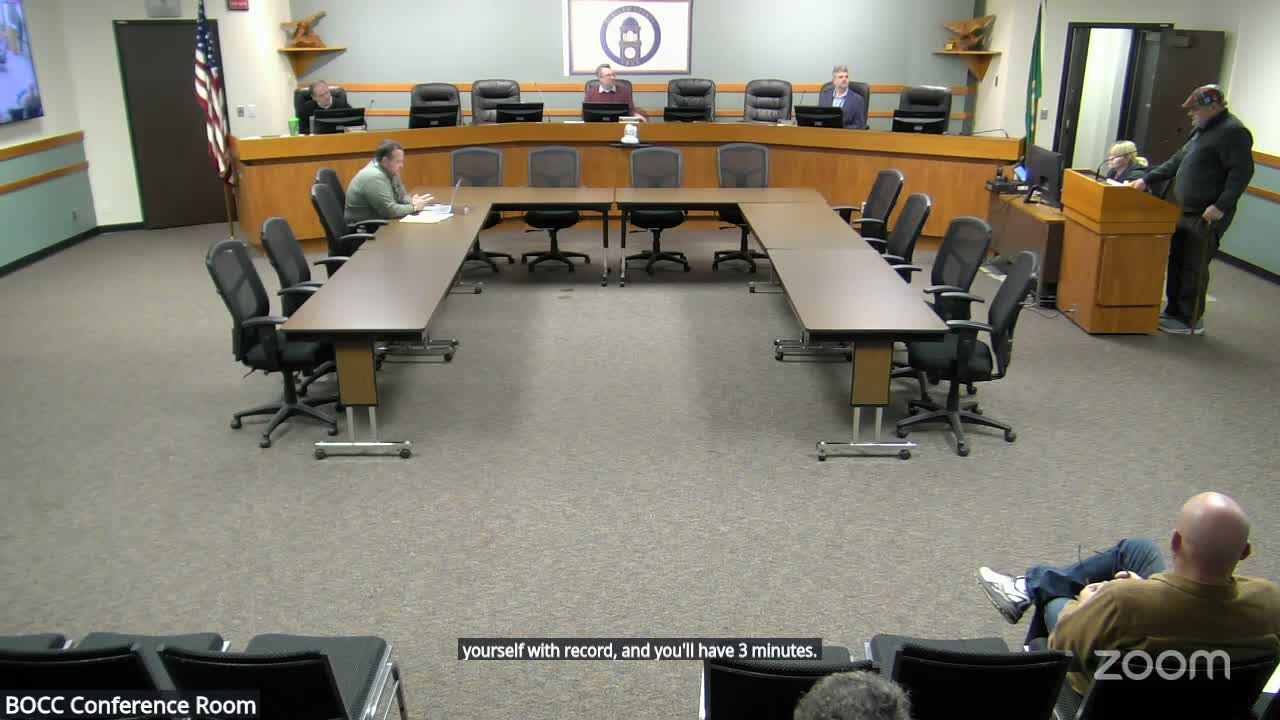
During extended public comment Jan. 6, multiple residents criticized commissionersoutside-board commitments, raised concerns about possible park arrangements with the Jamestown S'Klallam Tribe, and demanded clearer metrics and accountability on county programs and spending.
An extended public-comment period at the Clallam County Board of Commissioners meeting on Jan. 6 featured repeated criticisms of commissionersoutside-board service, concerns about possible park-management arrangements with the Jamestown S'Klallam Tribe, and calls for clearer performance metrics.
Eric Fairman and other speakers questioned why the county continues to list advisory boards that have not met in more than a year and asked the commissioners to disclose which appointments are required by law. "Why or how can you approve a resolution for a board that hasn't met for over a year?" Fairman asked.
Several commenters focused on a possible change in management of the Dungeness recreation area and Dungeness RV Park. Jeff Tozer read from an email he attributed to Ron Allen, CEO of the Jamestown corporation, and asked whether the county had quietly explored transferring park management. Tozer told commissioners he would like a public update rather than what he characterized as "quiet" discussions.
Pepe Whipple raised per-parcel figures for commissioner salaries and questioned whether large campaign contributions or donations from the Jamestown entity influence county decisions. "We are taxed for your wages...The tribe is Ozias's largest donor," Whipple said in public comment. The transcript shows multiple speakers raising similar concerns about the influence of donations.
Other commenters demanded accountability on previously adopted plans. Karen Cummins urged the board to produce measurable outcomes tied to the countys homeless-crisis response and housing plan (approved in 2025) and asked when the board would report progress. Dr. Sarah Healy asked specifically for quantified "before and after" impacts and distributional analyses when the board reviews changes such as the DCD fee schedule.
Commissioners responded in part by explaining the range of boards they serve on. The chair said some boards are statutorily required (for example, canvassing boards and transit-authority seats required by RCW or interlocal agreements), while other committees are voluntary and intended to bring citizen input to decisions such as lodging tax or behavioral health spending. The chair said some advisory groups meet rarely because they have limited work and cited the disability board as an example of a body that meets only when a claim arises.
Why it matters: Public trust and transparency about how county officials allocate time and influence are recurring themes in local governance. Residents asked for clearer disclosure about mandatory versus voluntary board service, for public updates before exploring significant changes to park management, and for measurable outcomes on adopted plans.
What happens next: Staff said appointment details (Janice Wilson's residence) and disability-board status would be clarified in the record; the board approved the consent agenda (including the appointment) later in the meeting and said future discussions on parks or partnerships would occur in public processes before any transfer or management change.