Get Full Government Meeting Transcripts, Videos, & Alerts Forever!
Get email alerts on the Surplus Property Housing topic
No spam. Unsubscribe anytime.
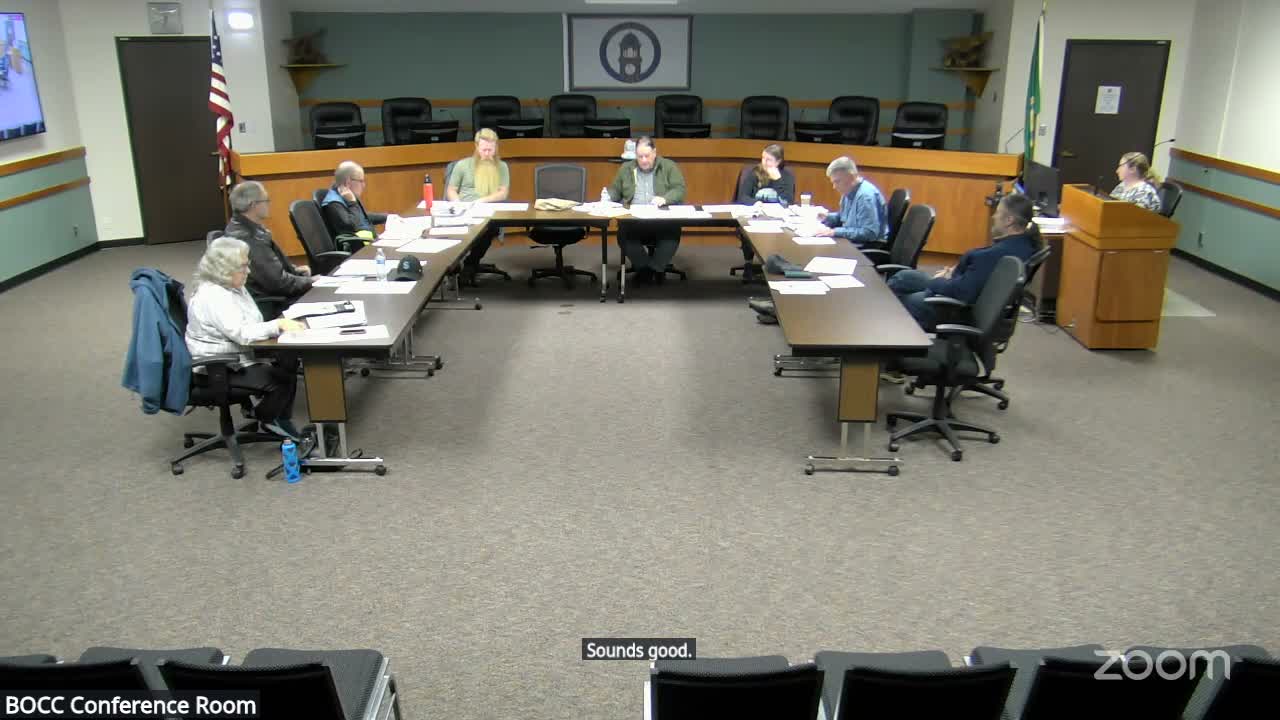
Commission reviews surplus county property inventory and discusses housing options including tiny homes and ADU changes
Summary
Staff reported roughly 56.2 acres of surplus county property with limited near‑term housing capacity (initial estimate ~7 units plus 7 ADUs). Commissioners discussed tiny homes, county‑run campgrounds, ADU policy changes and legal/building‑code constraints, and asked staff to forward ideas to the homelessness task force and to provide follow‑up analysis.
Clallam County planning staff told the commission the county's initial inventory of surplus property totals about 56.2 acres, and that an early conservative estimate found capacity for roughly seven housing units plus seven accessory dwelling units (ADUs) on several parcels. Commissioners discussed whether any parcels could be repurposed for housing or temporary campgrounds and reviewed regulatory limits on tiny homes and building‑code constraints.
Staff cautioned that many county parcels are wetland‑encumbered or limited by zoning, but identified Craig Avenue parcels as among the best candidates for future development. The staff analysis said the 56.2‑acre figure is a starting point and that realistic capacity could be higher if parcels can be rezoned or if developers seek rezone approvals.
Commissioners raised the idea of county‑run campgrounds or gravel‑pad sites with basic facilities for people experiencing homelessness and asked the homelessness task force to consider such options. Staff noted legal obstacles for tiny homes—building permits require compliance with the International Building Code or appropriate agency review for manufactured housing—and said proposals might need conditional‑use permits depending on zoning.
The commission also discussed housing policy levers: updated ADU rules that allow two ADUs in urban areas and the ability to condominiumize ADUs could create small‑lot homeownership opportunities. Several commissioners stressed economic feasibility and market forces often drive developer decisions, while others urged the county to produce simple guidance, templates, or incentive programs to encourage smaller, energy‑efficient homes.
No property dispositions or rezones were approved; staff will follow up with the homelessness task force, include the surplus inventory in future planning materials and provide more detailed parcel maps and development‑capacity analysis.