
Public Disclosure Commission details website upgrades, filer support and move to login.gov
Get AI-powered insights, summaries, and transcripts
Subscribe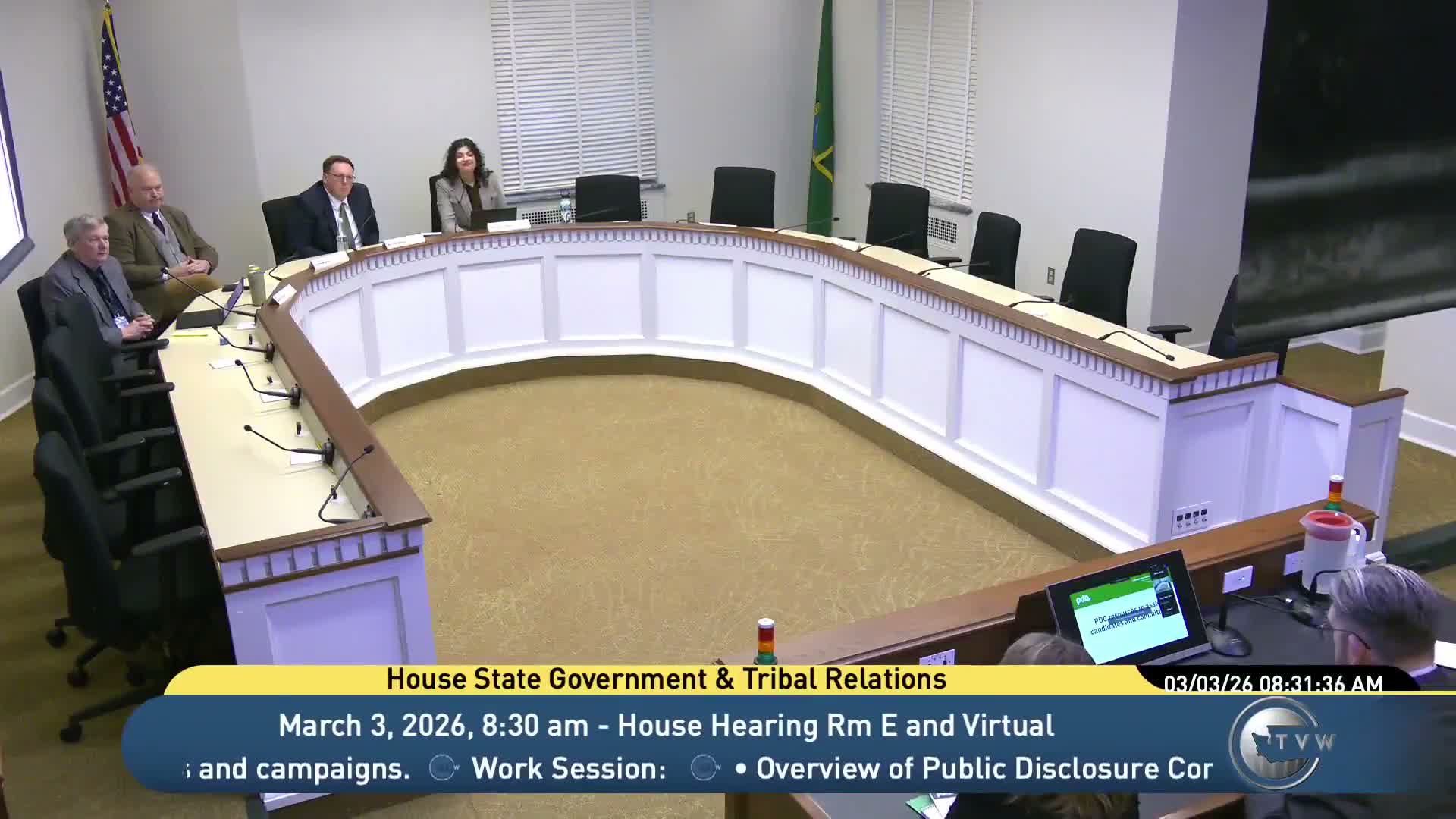
Summary
Public Disclosure Commission officials told a legislative work session they have expanded online help, training and outreach for candidates and filers, handled thousands of assistance requests in fiscal 2025, and are coordinating a move from Secure Access Washington to login.gov to ease access for filers.
Public Disclosure Commission officials told a state legislative committee at a work session that the agency has expanded its website, training and direct support for campaign filers and is preparing to move authentication from Secure Access Washington to login.gov.
Kim Bradford, the PDC's deputy director, said the agency has invested in a user-centered website — funded in part by a legislative “transparency account” created in 2018 — to guide filers to the forms and information they need. "We try to make that information as accessible as possible," Bradford said.
Nate Meyer, who runs customer service and outreach at the PDC, provided figures for the agency's assistance in the most recent fiscal year. "In fiscal year 2025, our filer assistance staff responded to over 8,000 requests for assistance via email, and our customer service line took over 6,000 calls," Meyer said. He described a mix of supports, including 42 free virtual trainings last year, recorded YouTube videos, monthly newsletters, lunch-and-learn sessions and an on-site table on the Rotunda floor where filers can speak with PDC staff.
The presentation highlighted two filer-facing features designed to reduce reporting errors. Gotham said the agency added an in-app notice that warns filers when a contribution could change their reporting period; the change, he said, went from idea to implementation in under two weeks. "We show them, 'hey, you've told us that you're participating in the general election. What you're doing here might not be covered by that,'" Gotham said.
James Gotham, the PDC's chief information officer, described the agency's technology strategy: prioritize improvements around filing cycles, build guided user experiences for both novice and experienced filers, and design for accessibility (screen readers, keyboard navigation and visible focus indicators). He said PDC systems are being updated on a controlled, automated schedule and that the agency has begun using AI agents to perform an initial review of code changes before human review to speed deployments. "An AI agent does the first review of the code and then provides feedback to the developer," Gotham said.
Gotham also discussed the agency's work to move away from Secure Access Washington to login.gov and said PDC staff are working to ensure filers with existing Secure Access Washington accounts do not lose access during the transition.
In a question-and-answer period Ranking Member Waters asked whether PDC rules and systems are deterring candidates or shrinking the pool of volunteer treasurers. Bradford said the PDC has seen growth in candidate numbers, particularly in local election years, and described options for people who find compliance too burdensome: a candidate can sign a statement discontinuing their campaign (and avoid enforcement for missed reports if they do not campaign) or opt for a "mini reporting" status if their activity stays below the PDC threshold. "It doesn't seem like we're scaring them off too much," Bradford said.
A committee member asked about corporate, union or nonprofit donations. Bradford said limits depend on the office: for many local offices the limit is $1,200 per election, which would total $2,400 across a primary and a general election; she added that some offices historically were outside contribution limits and that certain offices such as PUD commissioners may remain outside current limits.
When asked about training for treasurers, Meyer said the PDC offers walk-throughs of online reporting and is considering a course aimed specifically at treasurers; Bradford noted the agency expanded online offerings after 2017 and now provides remote and recorded options alongside in-person and lunch-and-learn sessions.
The committee did not take votes. Chair Mena thanked the presenters and adjourned the meeting.