Get Full Government Meeting Transcripts, Videos, & Alerts Forever!
Get email alerts on the Courthouse Project topic
No spam. Unsubscribe anytime.
Hall County board approves $35.8 million guaranteed maximum price for courthouse addition amid cost concerns
Summary
The Hall County Board of Commissioners approved recommended subcontractors and authorized a $35,816,566.46 guaranteed maximum price for a courthouse addition despite commissioners' concerns about contingencies, finish costs and whether a new building would have been more economical.
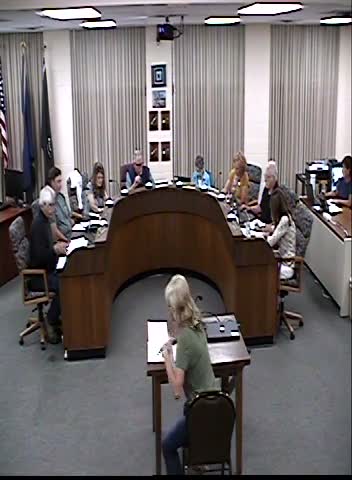
The Hall County Board of Commissioners voted to approve recommended subcontractors and to authorize the board chair to sign a guaranteed maximum price (GMP) of $35,816,566.46 for the county courthouse addition.
The vote came at a special meeting after project designers and the construction manager at risk defended selections of certain subcontractors that were not the lowest bidders. Commissioner Jane Richardson moved to accept the committee's recommendations; the motion passed, and then Richardson moved and the board approved the GMP by a 5-yes, 2-no vote.
The county's construction manager at risk and project team said choosing some higher bids reflected safety, sequencing and local responsiveness rather than price alone. Lance Bachman, project manager for Chief Construction, said the team preferred a single subcontractor to handle combined earthwork and shoring near the existing courthouse tunnel to protect the structure and respond quickly if weather or other issues required immediate action. "Lowest isn't always the best," Bachman said, arguing the combined approach reduces risk and improves coordination during excavation.
Davis Design architect Steve Severson and other design staff explained that the courthouse's materials and courtroom finishes differ from recent local projects, which helps explain higher per-square-foot costs. Severson noted that courtroom construction uses precast concrete for long clear spans and heavier finishes such as wood paneling and chair rails that increase cost compared with metal-panel medical-office shells. "That concrete is going to help prevent noise going between the rooms," he said, adding the choices reflect durability and acoustic needs rather than simple cost comparisons.
Some commissioners pressed the team on allowances and contingencies, which were described as protective budget items that would be returned to the county through deductive change orders if unused. One commissioner said the project included roughly $3.5 million in "what ifs" and warned that the total program cost plus interest could significantly increase what taxpayers ultimately pay. He questioned whether a new building would have been preferable to the planned addition and called the project a potential "historic mistake." The design and construction team countered that the scope addresses current courtroom inadequacies and adds security and size required for jury trials.
The board's motions and votes were recorded on the transcript as carrying with 5 votes in favor and 2 opposed for both the subcontractor approvals and the GMP authorization. After the vote, the chair said the board would start planning a groundbreaking ceremony and would discuss dates at the next regular meeting, noting he had consulted the judges about likely timing so they could be available.
The project team present included Steve Severson and Matt Tonages of Davis Design and Lance Bachman and Justin Sanford of Chief Construction. The transcript shows county staff and at least one commissioner raising concerns about prior spending on design and future interest costs; the team said many of those costs are driven by material/finish choices and by the project's security and courtroom requirements.
What happens next: the chair said the board will set a date for a public groundbreaking and final administrative steps will follow to execute the GMP. The contractor team said unused allowances would be reconciled during project buyout and any savings would be returned to the county as contract deductive change orders.