Get Full Government Meeting Transcripts, Videos, & Alerts Forever!
Get email alerts on the Pedestrian Safety topic
No spam. Unsubscribe anytime.
Oro Valley workshop spotlights pedestrian and cyclist safety, calls for better connectivity and maintenance
Summary
At a town planning workshop, residents urged safer, cleaner multiuse paths, clearer signage and physical separation from traffic; staff said mid‑block crosswalks are denied without safety warrants and the town sweeps paved surfaces but resource limits affect frequency.
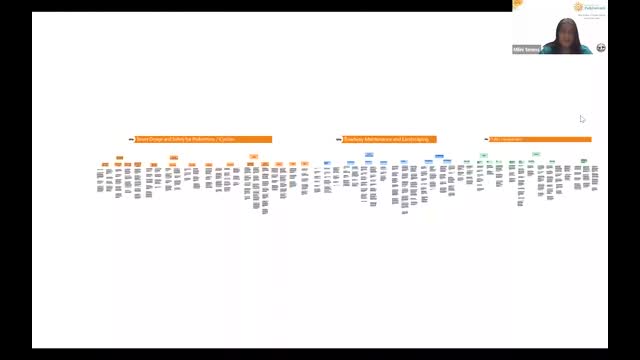
Malini Sims, a principal planner with the Town of Oro Valley, opened a virtual community workshop by saying the evening would focus “on pedestrian and cyclist safety, road maintenance, and public transportation.” Residents used the town’s whiteboard and spoken comments to press for safer crossings, cleaner multiuse paths and better connections to parks, schools and shops.
Why it matters: Sims told the group the town will fold tonight’s comments into the 10‑year transportation plan’s goals, policies and actions; the workshop also drew on a statistically projectable survey Sims said found 74% of respondents prioritized pedestrian and cyclist safety — a share she said represents roughly 30,500 Oro Valley adults.
Participants identified specific gaps and near-term fixes. Matt Wood pointed to a missing link “between La Canada and Noronha that are going down Noronha” that would complete a loop to the park and could draw grant funding. Several residents urged the town to keep paved shoulders and multiuse paths clear of debris so bicyclists — particularly those on thin‑tire road bikes — can ride away from vehicular lanes. Paul Keesler, the town engineer, said the town performs sweeping with its own equipment and conducts vegetative maintenance but conceded frequency depends on resources and sometimes county responsibility where the loop is concerned.
On crosswalks, residents asked whether a mid‑block crossing near Naranja Park was part of upcoming work. Keesler replied, “Currently, it is not. And the reason is not is because we don't have the, safety warrants in place to be able to put a mid block crosswalk across there,” adding that mid‑block crossings can create an unexpected sense of security if pedestrian volumes don’t support them.
Memorials and roadside clutter became a prominent safety concern. A resident identified in the meeting as Jody said roadside memorials — “heavy concrete statues, huge crosses that are lit at night” and other decorations — are increasingly distracting to drivers and dropping debris into bike lanes; she urged the town to consider adopting a memorial policy within the sign code to limit hazards.
School travel also featured in the discussion. Parents and students described chaotic drop‑off and pick‑up at a Basis campus and cited gaps in safe routes along North Oracle; a student who identified herself as Emma said bus promotion and improved walking connections would reduce vehicle trips.
Residents proposed a mix of short‑ and mid‑term responses: clearer shared‑use signage and etiquette campaigns (including partnering with bicycle shops), targeted physical separation where feasible (curbing, rubber dots or rumble strips), and better coordination with county-maintained segments of the loop. Tom and others pointed to recent curb‑separated lanes installed on Stone Avenue as a positive local example.
The meeting closed with staff noting that many close calls are never reported — complicating data on minor collisions — and reiterating that comments will be consolidated into the draft plan. Sims asked participants to add any remaining notes to the online whiteboard and send follow‑up comments to the address shown on the meeting materials (ovpathforward@orovalleyaz.gov).
The town did not take formal action at the meeting; staff said they will incorporate these public comments into the 10‑year plan drafting process and follow up on technical questions such as signal timing and sweep schedules.