
Bangor committee green-lights staff to develop Section 108 loan proposal, reviews housing strategy and rental-registry pilot
Get AI-powered insights, summaries, and transcripts
Subscribe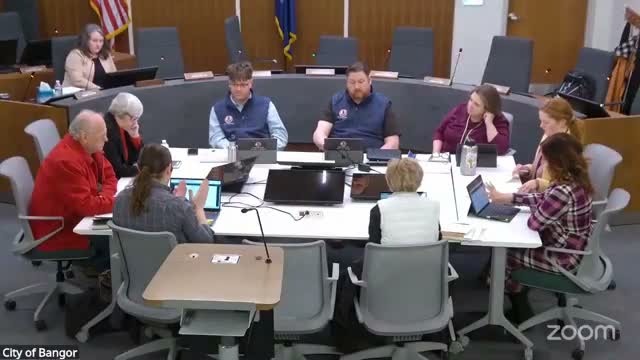
Summary
City staff reported rising housing-permit numbers and presented a consolidated housing strategy; the committee authorized staff to prepare a Section 108 loan-guarantee proposal to access additional capital and discussed making the strategy citywide and continuing rental-registry work.
City staff told the Bangor City Economic Development Committee that completed dwelling units and issued certificates of occupancy have risen in recent fiscal years, and the committee authorized staff to develop a Section 108 loan-guarantee proposal to pursue low-cost capital for housing projects.
Robin Stanicky, community development officer, summarized a consolidated-plan housing strategy that emphasizes production, preservation, affordability, typology (including demand for studios and one-bedrooms), permanent supportive housing and regulatory reform. Staff reported permit activity rose from 61 building-permit-related dwelling-unit approvals in fiscal year 2023 to 162 in fiscal year 2025.
Stanicky described the Section 108 loan-guarantee program as a way for the city — because it participates in the Community Development Block Grant (CDBG) program — to access low-cost capital and "take up to five times our CDBG amount" to support targeted projects for affordable housing and small infill developments. She said staff sought direction to prepare a formal Section 108 proposal, finalize benchmarks and then go out to the public for feedback and HUD submission.
Councilor Beck and others discussed whether the strategy could be scaled beyond CDBG to a citywide approach and how a new housing committee might interact with staff work. After discussion, a motion to allow staff to prepare the Section 108 proposal was made and seconded, and the chair allowed staff to proceed with the package-building work.
The committee also reviewed the two-year long-term rental-registry pilot. Staff said the pilot tested registration formats, landlord incentives, and tenant-support services intended to reduce evictions; resource constraints limited the registry to known-data matches rather than household-level contact lists. Staff noted an upcoming landlord engagement session to seek additional feedback.
Next steps: staff will draft the Section 108 proposal and return with benchmarks, implementation tools and a public-engagement schedule; continued landlord outreach on the rental registry is planned.