
Panel OKs bill returning state hemp program to USDA, citing cost savings
Get AI-powered insights, summaries, and transcripts
Subscribe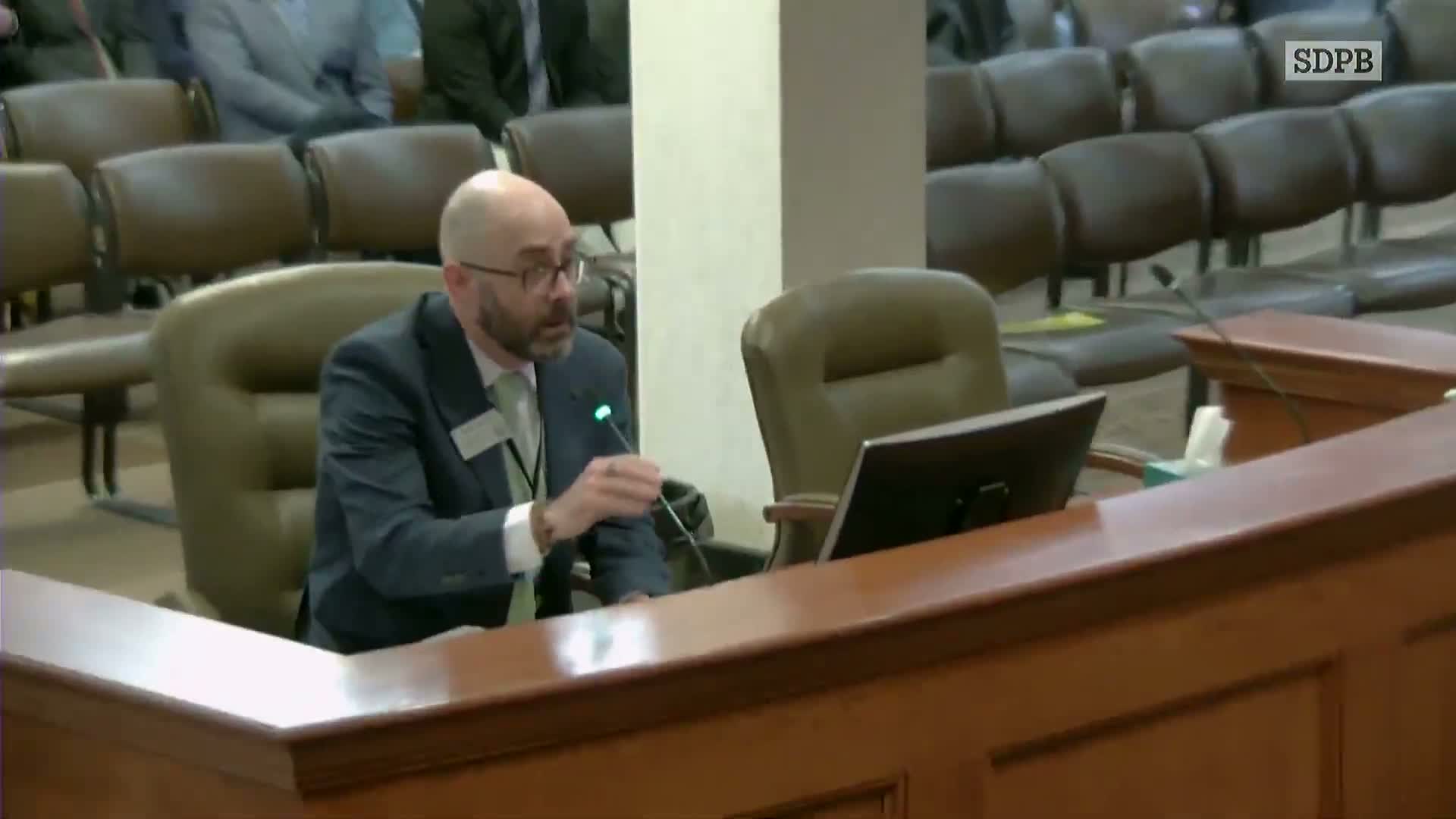
Summary
The committee recommended SB 39 as amended to shift regulatory authority for industrial hemp growers to USDA, keep state transportation safeguards, and save roughly $200,000 by reducing state FTE support; the measure includes a delayed effective date of 01/01/2027 to protect the 2026 growing season.
The House Agriculture and Natural Resources Committee voted to recommend Senate Bill 39 as amended, a measure that would move South Dakota’s industrial hemp licensing and program administration back to the U.S. Department of Agriculture while preserving state transportation safeguards and THC testing requirements.
Brian Walsh of the Department of Agriculture and Natural Resources said the state program is not financially sustainable for the relatively small number of growers and processors (he cited 17 growers, five processors and about 1,100 harvested acres in 2025). Walsh told the committee returning the program to USDA would reduce the state’s FTE burden and save approximately $200,000 a year in general funds.
"It actually reduces the regulatory burden on the hemp growers and processors," Walsh said, adding that the bill sets a delayed effective date of Jan. 1, 2027 to avoid disruption of the 2026 growing season.
Katie Seiberting of the South Dakota Industrial Hemp Association said she supported the amendment and the department’s work on transportation documentation. Christy Turman, deputy secretary for the Department of Public Safety, said DPS will retain enforcement authority at ports and take samples in the field; she said the state’s field sampling and transportation checks will remain in place even if USDA assumes the licensing program.
Committee members asked how inspections and testing would be handled under USDA oversight and whether inspectors are located in the region. Walsh said USDA would assume licensing and inspection responsibilities while South Dakota would keep THC sampling and transportation enforcement; DPS confirmed it retains sampling capability at ports.
Representatives and other lawmakers who had helped set up the original state program described the big start‑up costs (equipment such as chromatography machines, lab technicians and highway patrol slots) and said shifting the program to USDA would relieve long‑term pressure on the state budget.
Representative Gosh moved and Representative Knowles seconded the motion to recommend the bill as amended. The roll call was taken and the chair announced the bill received the votes needed; SB 39 will go to the House floor with a do‑pass recommendation as amended.