
Nightclub owner says extended hours and state help could keep venues like Oasis afloat
Get AI-powered insights, summaries, and transcripts
Subscribe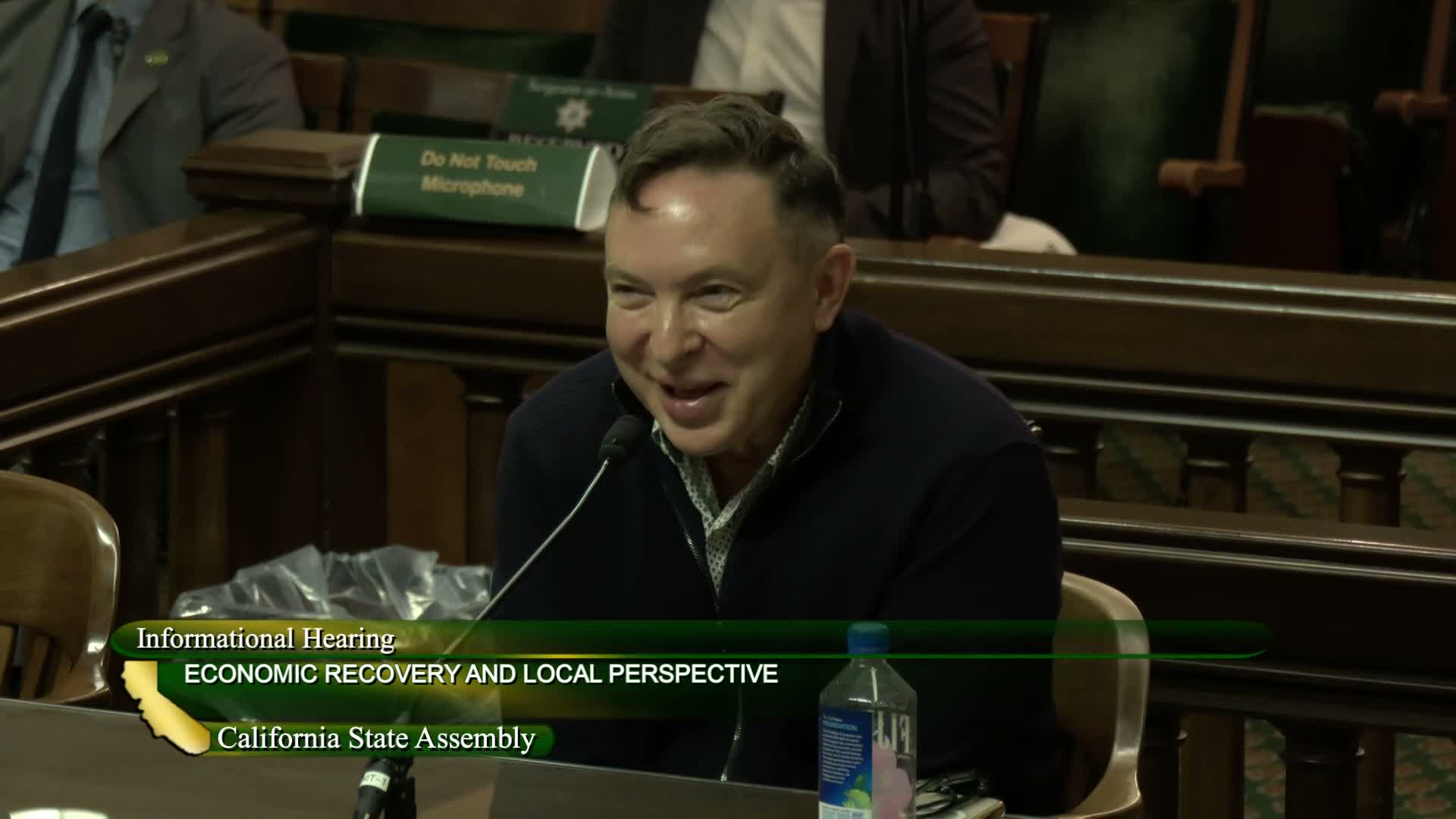
Summary
Darcy Dralinger, owner of Oasis, told the Assembly committee her hybrid theater/nightclub nearly closed three times after the pandemic and that modest extensions to service hours and state support could be the difference between survival and closure for small nightlife businesses.
SACRAMENTO — Darcy Dralinger, owner and artistic director of the Oasis, told the California Assembly Select Committee on Downtown Recovery that independent nightlife venues are operating on razor-thin margins and need policy changes to survive.
"We almost had to close three times," Dralinger said, describing how the venue — open from about 7 p.m. into the early morning for a mix of theater, cabaret and nightclub events — managed through community bailouts and personal investment by the owner. She said Oasis employs about 28 people, works with roughly 500 performers annually and produced 342 events last year.
Dralinger urged the committee to consider extended last-call hours and other state-level assistance that would give small venues more opportunity to earn revenue during peak nighttime hours. "If we don't do something like this very, very soon, we're gonna lose all of the independent nightlife venues," she said, adding that losing those venues would further concentrate cultural production in corporate players.
Committee members and other panelists acknowledged the narrow margins operators face and raised related operational concerns such as staffing costs, insurance and transportation for late-night workers. Ben Van Houten of San Francisco's Office of Economic and Workforce Development and academic witnesses described local reforms and licensing categories (for example, the Type 90 music venue liquor license) intended to make live performance more financially viable.
Dralinger said Oasis has diversified programming (family-friendly cabaret and theater earlier in the evening and nightclub programming later) and experimented with nonalcoholic cocktails and grants, but still needs structural changes in permitting, licensing and market conditions to be sustainable. The hearing did not produce immediate policy votes; Haney said the committee will consider follow-up legislation and budget proposals.