
University of Minnesota outlines AI hub, urges training and outcome-focused rules as senators press on job risks
Get AI-powered insights, summaries, and transcripts
Subscribe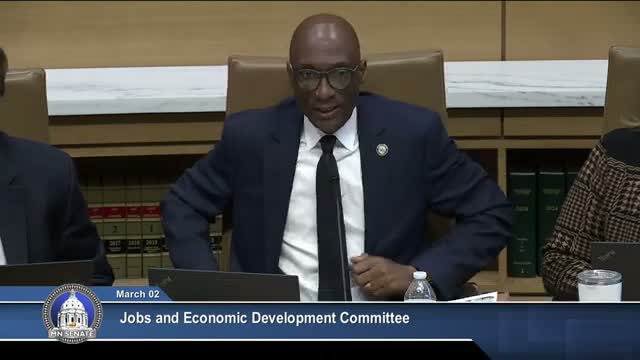
Summary
University of Minnesota researchers told the Senate Committee on Jobs and Economic Development on March 2 that a new AI hub will coordinate research, education and industry partnerships statewide; legislators pressed presenters on job displacement, K–12 access, data centers and whether law should target algorithms or harmful outcomes.
The University of Minnesota told a joint Senate-House meeting that it will launch a centralized AI hub to coordinate research, education and industry partnerships across health care, medtech, agriculture and manufacturing.
The presentation, delivered by Professor Galen Jones and colleagues on March 2 to the Committee on Jobs and Economic Development, emphasized workforce training, ethical governance and statewide outreach. "We want to become a state and global hub for AI and data science initiatives across public and private sectors," Jones said, describing plans for K–12 outreach, university-wide AI literacy and targeted upskilling grants for existing workers.
Minnesota legislators pressed presenters on how the state should respond. Senator Rich Draheim and others asked whether lawmakers should regulate specific algorithms or focus on harmful outcomes; Jones recommended outcome-focused rules, saying he is "a fan of legislating outcomes" rather than trying to write statutes that bind specific technologies. Vipin Kumar, a regents professor who said he is serving on a new United Nations panel on AI policy, described international coordination underway and noted the panel will meet the U.N. Secretary-General imminently.
Workforce and equity were central themes in questioning. Multiple senators raised worries that AI could displace jobs and widen wealth gaps. Senator Heather Gustafson cited estimates about automation timelines and asked which legislative steps could protect workers; Representative Baker urged lawmakers to avoid policies that make Minnesota a harder place for headquarters and investment. Jones and other university presenters said current data show workers who use AI are generally more in demand and argued the state should invest in broad training: "We have to get serious about training people," he said, outlining summer camps for high school students, scholarships for lower-income participants and DEED-funded pilot training for medtech employers such as Phillips and Mayo.
Legislators also asked about compute capacity and data centers. Jones described outreach to Nvidia and other industry partners and said Minnesota needs greater computing resources and shared data platforms to support precompetitive collaborations. He acknowledged energy concerns around data centers and said efficiency improvements are under way but that siting and responsibility are important.
The university highlighted existing strengths — large academic datasets, high-performance computing and interdisciplinary research — and pointed to NSF-funded institutes (including AI LEAF) and a Center for Learning Health System Sciences as foundations for statewide leadership. Jones said the hub will emphasize ethics, human oversight and accessible systems for Minnesotans and invited lawmakers to visit campus AI facilities.
The committee did not take formal action during this hearing. Chair Senator Champion closed by reminding members of upcoming DEED testimony and adjourning the meeting. The University offered to share follow-up materials, including state-by-state policy scans and details on training grants and partnerships.