Lifetime Citizen Portal Access — AI Briefings, Alerts & Unlimited Follows
NNLM Region 7-funded Connecticut programs teach students to find reliable health information and explore nursing careers
Loading...
Summary
In a Nov. 17, 2025 NNLM Region 7 webinar, Dr. Maria Kroll and Dr. Mary Anne Perez Brescia described three funded programs—an adolescent health literacy webinar series, a hands-on K–12 nursing introduction, and a college mentorship initiative—that aim to improve health literacy and diversify the nursing pipeline in Connecticut.
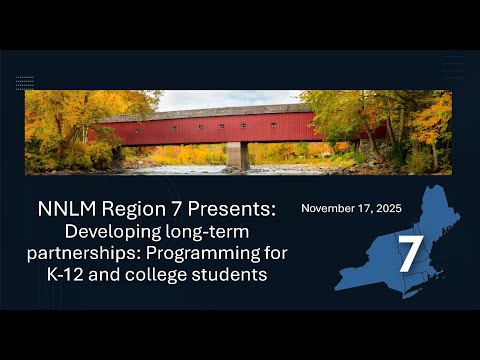
On Nov. 17, 2025, the Network of the National Library of Medicine (NNLM) Region 7 hosted a webinar in which Dr. Maria Kroll and Dr. Mary Anne Perez Brescia described three NNLM-funded projects intended to boost health literacy and introduce students to careers in nursing.
The presenters said the chapter’s first NNLM-funded effort delivered 18 one-hour virtual workshops for adolescents from historically underfunded high schools and a community center. "Ninety-seven percent of the students identified methods to seek reliable health information," Mary Anne Perez Brescia said, noting participants learned to evaluate websites and use trusted sources during the pandemic-driven shift to online information.
The presenters tied those lessons to a second program, "Dive In" (also presented under the title "Developing Inclusive Voices in Nursing"), which brought nurses into classrooms and after-school programs to link nursing tasks with math and science. Dr. Maria Kroll described hands-on activities used with elementary and middle school students — including an operating-room demonstration using the board game Operation and simple emergency-skills exercises — to make STEM connections and spark interest in health careers. "We wanted to focus on how do we introduce nursing into, for this population," Kroll said, describing classroom visits, after-school sessions and a spring-semester in-class model.
The third project, MMARS (Minority Mentoring for Academic Resilience and Success), pairs college students with faculty mentors and asks those college trainees to teach high-school students on campus and at community events. Kroll said participants who completed the training later returned to lead sessions at a summer nursing symposium and that Southern Connecticut State University provided a campus link that expanded outreach. "MMARS stands for Minority Mentoring for Academic Resilience and Success," she said.
Presenters highlighted partnerships that helped recruit students and venues, naming HOSA chapters, the Lighthouse Foundation in Bridgeport, New Haven Public Schools, regional collaboratives and Southern Connecticut State University. The presenters emphasized community-driven design: they start by asking partners what the community wants and then tailor session timing, format and content accordingly.
Speakers also described limits. Short session length (often 45–60 minutes in school or after-school settings) and limited long-term follow-up were cited as constraints on measuring sustained skill use. The presenters said they plan to reconvene partner schools, continue the summer symposium and explore additional settings such as senior centers.
Questions during the webinar focused on pedagogy and outcomes. Perez Brescia framed the programs around building students' confidence to share learning with family and peers: "Our goal as a nurse is to always educate patients so that they can master a skill," she said, arguing that early mastery increases the likelihood that students will continue healthy behaviors and help others.
The Region 7 host said an evaluation link and the Region 7 newsletter would be posted in chat and that the session recording will be made available. The presenters invited organizations interested in adapting the materials to reach out for collaboration.
Why it matters: presenters said the combination of brief, age-appropriate activities, trusted community partnerships, and a train‑the‑trainer approach helps address misinformation online and builds local pathways into the nursing workforce.