Get Full Government Meeting Transcripts, Videos, & Alerts Forever!
Get email alerts on the Historic Preservation topic
No spam. Unsubscribe anytime.
Council adopts clarifying updates to Chapter 50 historic preservation ordinance
Summary
Council approved edits to Chapter 50 to define "ordinary maintenance," set application completeness requirements, add administrative approval timelines and allow the historic preservation officer to grant a certificate of appropriateness if the Historic Landmark Preservation Committee does not act within the existing 90-day period.
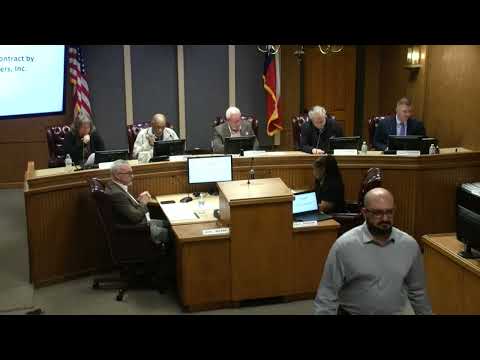
Jessica Salle, the community services director, presented proposed updates to Chapter 50 of the Nacogdoches Code of Ordinances on Feb. 20, saying the changes would add clarity and transparency to the historic preservation process.
Salle said the revisions define "ordinary maintenance" (for example, replacing a 1-over-1 wood window in the same size and color), clarify that applications must be complete before the Historic Landmark Preservation Committee (HLPC) will review them, and explain what qualifies for administrative approval at the staff level. The changes also establish timeframes: 15 days for administrative approvals and 60 days for HLPC hearings on complete applications. Salle noted the draft also asks that, if HLPC does not act within 90 days, the historic preservation officer be authorized to grant a certificate of appropriateness to avoid unnecessary delays for applicants.
City attorney Jerry Baker clarified that the 90-day language appears in the current ordinance and that the proposed change replaces the word "permit" with "certificate of appropriateness" to match the committee's authority. Council members asked whether Chapter 50 covers only downtown or all historic overlays; Salle said the ordinance covers five nationally registered historic districts and individually designated properties, roughly 360 properties under historic overlay.
The vote: A council member moved to approve item 6C with the noted additions; the motion was seconded and the chair announced the motion carried on a voice vote.
Next steps: staff will finalize the ordinance language as approved and implement the clarified administrative processes for applications and certificates of appropriateness.