Get Full Government Meeting Transcripts, Videos, & Alerts Forever!
Get email alerts on the School Facilities And Growth topic
No spam. Unsubscribe anytime.
Bethel Local facilities committee weighs short-term classroom fixes and longer-term school site plans as enrollment grows
Summary
At its May 14 meeting, the Bethel Local facilities committee reviewed a charter update, discussed short-term needs (furniture, trailers or metal buildings), and examined longer-term options including adding classrooms or pursuing a new elementary tied to the Carriage Trails 2 development and projected state ELPP funding. A charter vote was deferred for lack of appointed committee members.
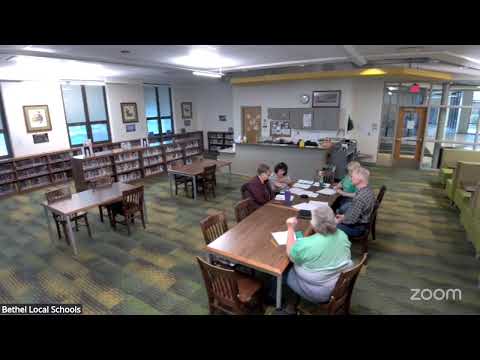
The Bethel Local facilities committee met on May 14 and spent the bulk of the two-hour meeting mapping short-term fixes and long-term options to address rising enrollment and constrained space.
Chair Lorna Furderer opened the meeting and reviewed a revised facilities charter that Julie circulated in advance. Committee member (speaker 3) moved to approve the charter revision, but members agreed they did not have enough officially appointed committee members present to take a formal vote and postponed action until a future meeting.
The committee turned quickly to near-term needs. Members said one-time money from state or other sources should be prioritized to avoid having to return funds. "We don't lose the money," Lorna Furderer said, describing district efforts to compile a list of priority purchases and projects. Short-term items noted for possible immediate spending included classroom furniture and equipment removed during pandemic-era closures.
Members discussed interim space solutions for instruction. Options included adding classrooms at the end of the existing building, placing reconfigurable metal buildings behind the kitchen that could later be repurposed as a gym or cafeteria, or continuing to use trailers. Committee members recalled prior metal-building cost estimates (roughly $1.2 million in earlier work) and expected current prices to be higher; they emphasized the tradeoff between lower upfront cost for temporary solutions and the longer-term value of permanent construction.
Enrollment projections and funding timelines were a central context for planning. The committee reviewed district projections prepared with the treasurer and superintendent showing current enrollment around 2,064 students and scenarios placing enrollment between roughly 2,570 and 2,750 by 2029–30 under a steady-growth model. Committee members noted the district had been counting on state ELPP program funding on a multiyear timeline and that the timing and amount of that funding would influence whether to add on to the current building or pursue a standalone elementary in the Carriage Trails 2 development.
Committee members also discussed Carriage Trails 2, a proposed residential development. The chair said she had attempted to contact the developer for updated timing and build-out numbers. Members raised traffic and bus-access concerns for the local street network if the planned homes and apartments are built in phases, and they discussed whether the developer or a new community authority might contribute to facilities or impact fees.
Operational and service issues were raised: members flagged cafeteria and gym capacity, parking for increased staff, and the need to identify mechanical-plant capacity (boiler, electrical) before committing to additional classrooms. The committee also reviewed short-term reconfigurations that will move fifth grade to the older building next school year and urged staff to provide more detailed cost-per-square-foot estimates for potential additions.
On local revenue, the chair reported the district’s income tax levy renewal was approved by voters in the recent election and will take effect in January 2027; members said that local revenue could help priority projects but would not immediately solve capacity needs.
Next steps the committee agreed to pursue included collecting existing master-plan drawings and prior cost estimates, arranging site visits (for example to Troy Christian to inspect metal-building solutions), trying to contact the developer for Carriage Trails 2 updates, and adding the charter revision to the next regular meeting agenda when sufficient appointed members are present. The committee set its next meeting for June 12 at 6:00 p.m. and adjourned at 7:46 p.m.
The facilities committee did not take a formal vote on the charter or any construction contract at this meeting; members asked staff to return with more detailed cost estimates and documentation at a future meeting.