Get Full Government Meeting Transcripts, Videos, & Alerts Forever!
Get email alerts on the Renewable Energy topic
No spam. Unsubscribe anytime.
OPPD urges transfer of Cape Junction Solar to private developer as York County debates setback rules
Summary
An OPPD representative highlighted potential nameplate-capacity tax revenue from Cape Junction Solar and urged compromise on setbacks as the York County Board moved proposed renewable-energy regulations toward public hearing, including a 1% cap limited to larger commercial classes.
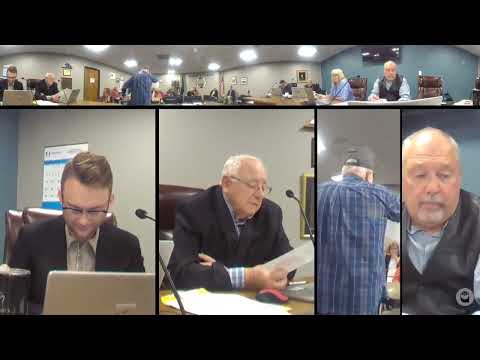
Dustin Marble, speaking on behalf of OPPD, told the York County Board of Commissioners the utility seeks to transfer generation interconnect rights for Cape Junction Solar to a private developer and said the project could bring “millions of dollars of economic development benefits” to York County.
Marble said other Nebraska counties already receive nameplate-capacity tax payments and cited Wayne County receiving about $1,600,000 per year as an example. He urged the board to balance community benefits with private property rights and proposed a compromise on setbacks: a 660-foot setback from nonparticipating properties with dwellings and a roughly 150-foot setback from nonparticipating properties without dwellings.
The presentation prompted public comment. Jim, a resident who spoke during the public-comment period, questioned long-term maintenance and oversight of large green-energy projects and called certain regulatory proposals a form of “reverse eminent domain,” arguing that some restrictions effectively compel landowners to alter use of their property.
Willard Peterson, from Bradshaw Township, urged the commissioners to consider cutting some setbacks in half and cautioned against equating a solar farm’s impacts with those of feed yards. “I cannot figure out in my head how a solar farm and a feed yard match in much of any way,” Peterson said.
During the board’s discussion of draft zoning regulations, commissioners debated the draft language that had mistakenly listed a half-mile figure instead of the 660-foot setback previously discussed, and they clarified the intended scope of an aggregate cap on renewable projects. After discussion, the board agreed the 1% aggregate cap should apply to larger commercial project classes (classes 3 and 4), leaving small residential and small-commercial installations outside that cap.
The board voted to set a public hearing on the proposed regulations for April 15 at 5:30 p.m. to seek wider public input; one commissioner registered a formal no vote on the motion and stated the current setback level remains too large. The hearing will be publicly noticed per the county’s zoning notification rules before the board considers final adoption.
The board’s action moves local rules closer to addressing both potential economic benefits from renewable projects and residents’ concerns about setbacks, cumulative impacts and local control.