
DNR directors tell committee federal rescissions, land selections and FAST‑41 coordination could speed access to northern mineral projects
Get AI-powered insights, summaries, and transcripts
Subscribe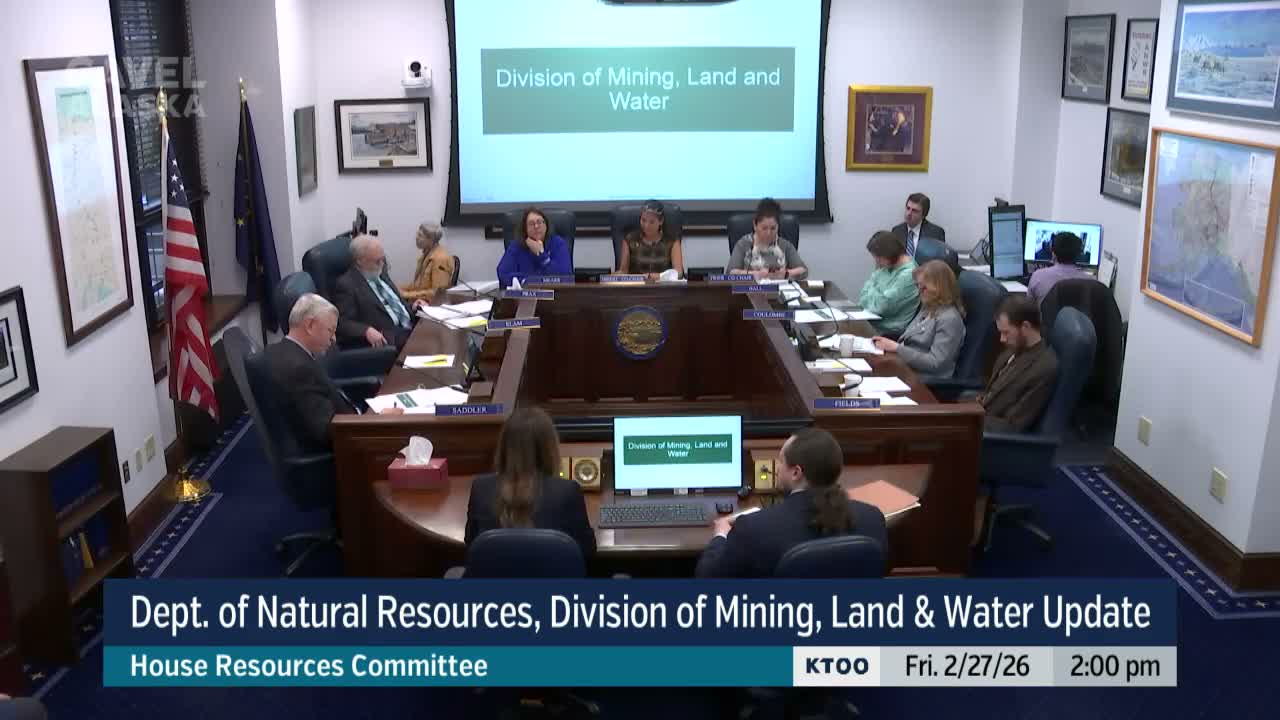
Summary
The Division of Mining, Land and Water and OPMP told the House Resources Committee that recent federal notices and rescissions may allow state land selections (Ambler corridor, pipeline right-of-way) to proceed, and that voluntary programs such as OPA coordination and FAST‑41 can shorten federal and state permitting timelines for big projects.
Christy Collis, director of the Division of Mining, Land and Water, told lawmakers the department is tracking several recent federal actions that may open federal lands or reduce federal permitting hurdles and therefore improve access to state selections and infrastructure corridors.
“Once this [public land order] is lifted, our selections can attach,” Collis said, describing public‑land rescission notices the department saw in the Federal Register that affect areas north of the Yukon River and the Ambler District. She said those changes could allow the state to bring priority land selections into state ownership—steps the department has been working on with the Bureau of Land Management and the Department of the Interior—and that having those lands under state management would facilitate infrastructure and resource development.
Collis also flagged the Department of Interior’s recent actions affecting the BLM conservation landscape rule and called the rescission a restoration of the BLM’s multiple‑use mandate, saying it reduces regulatory hurdles the department views as delaying permitting for projects. She identified ongoing partnership work such as a Placer Mining Resource Network (with BLM, Corps, USFWS and small placer miners) to prepare a handbook on permitting and reclamation for small placer operations.
Lawmakers asked how the changes affect pipeline corridor strategy and land classification. Collis said the pipeline right‑of‑way would be authorized through the Division of Oil & Gas and emphasized the department had adopted a Northeast Alaska area plan so lands can be classified and managed quickly after transfer; Commissioner designee John Crother called land management a long‑term strategy and said the lands are long‑term assets that could facilitate revenue and infrastructure.
Ashley Adoco, director at the Office of Project Management and Permitting (OPMP), outlined voluntary coordination options to speed permitting: applicants can opt into OPA coordination, sign a memorandum of understanding and pay for coordinating services; OPMP then leads multi‑agency reviews, reduces duplication and uses tools such as the federal FAST‑41 transparency dashboard for covered and transparency projects. Adoco provided permitting timeline examples: in 2025 individual state authorizations for an exploration program took less than four months, and state permitting for certain expansions was completed in under one month on an individual authorization basis.
Committee members asked for more details on who funds coordination and transparency tools. Adoco and Crother confirmed that applicants pay for OPA coordination services under the voluntary MOU model and that FAST‑41 and the federal transparency dashboard are federal programs where projects can opt in to be listed. Collis and OPMP staff recommended that media and stakeholders follow the DGGS annual minerals report and OPMP’s mine‑permitting web pages for authoritative updates. No votes or formal committee actions were taken.