
Council deadlocks on MUD 66 debt‑service waiver; reopens discussion and postpones for more data
Get AI-powered insights, summaries, and transcripts
Subscribe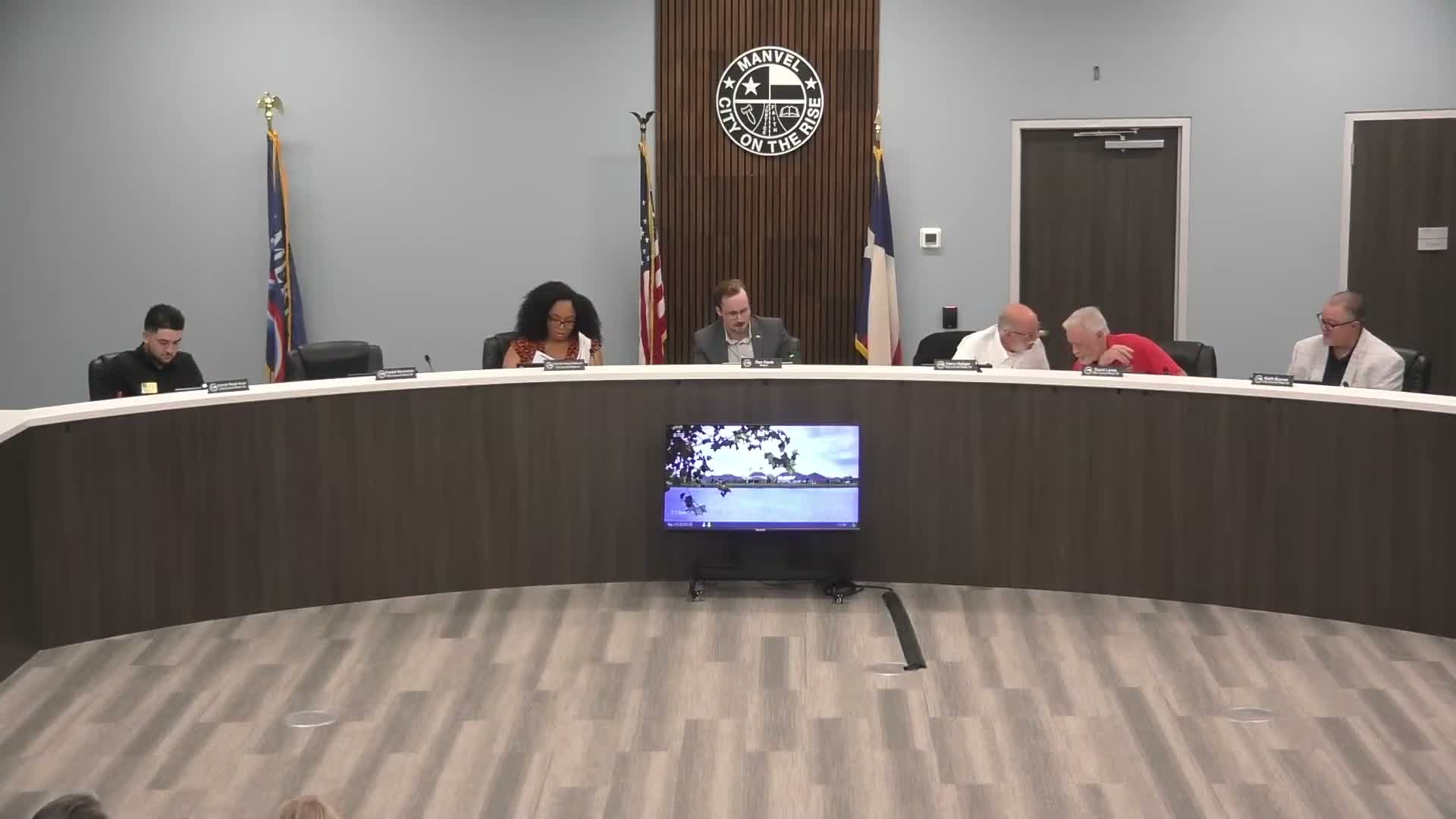
Summary
Council tied 3‑3 on a request to waive the city’s $15,000 level‑debt‑service rule for Brazoria County MUD 66; the motion failed, council reconsidered the item in the same meeting and voted to postpone for two weeks for additional financial detail and simplified tax‑impact analysis.
The council voted on a requested waiver that would allow Brazoria County Municipal Utility District 66 (Bluewater Lakes) to structure a bond sale with a difference larger than the council’s consent limit of $15,000 between the minimum and maximum annual debt service. The initial motion to grant the waiver resulted in a 3‑3 tie and failed; the council then reconsidered and voted to postpone the item for two weeks to allow staff and the applicant to provide clearer, simplified information on the potential tax‑rate impact.
Aliyah, representing the district requesters, said the district is obligated to reimburse developers for water, sewer and drainage infrastructure and that the waiver would permit structuring that keeps the near‑term tax rate lower for residents. “The district is obligated to pay that back…we are here to ask for the council’s consideration to allow that debt to be issued in the most efficient way possible for the impact on the tax rate,” she said.
Lauren Morales, the district’s financial adviser with Rathbun and Associates, told council staff would try to keep the aggregate tax rate at or near current levels and estimated less than a 50% chance the aggregate tax rate would increase under the proposed structure; she also said the difference between granting and denying the waiver equated to roughly three pennies on the tax rate (about $120 per homeowner annually based on the most recent average homestead value used in the analysis).
Council members expressed caution about precedent and taxpayer risk. The initial motion was tied 3‑3 and failed; later in the meeting the council moved to reconsider and then unanimously voted to postpone the item to the next meeting and asked staff and the district to deliver simplified explanations and packet materials showing the actual tax‑rate impact and alternatives.
Because the district’s underlying obligation to reimburse developers remains regardless of the council’s decision, staff said the choice is procedural—how the district schedules and structures its final bond maturity payments rather than whether the debt will be paid.