Get Full Government Meeting Transcripts, Videos, & Alerts Forever!
Get email alerts on the Overlay Zoning topic
No spam. Unsubscribe anytime.
Planning commission calls public hearing on expressway corridor overlay to standardize noise and air-quality mitigation
Summary
Commissioners voted to call a public hearing on amendments that would move the Environmental Health Area (EHA) map into the zoning ordinance as an expressway corridor overlay (CECA/RECA), add air-quality provisions (MERV-13 filtration) and broaden mitigation standards; commissioners requested clearer testing protocols and standards for required reports.
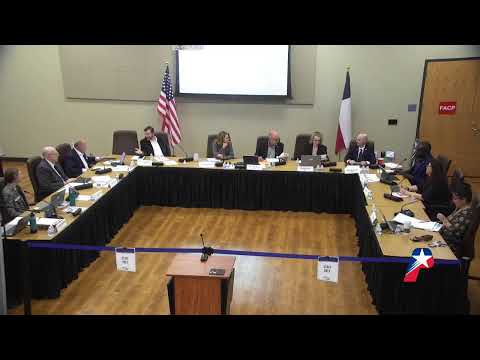
The Plano Planning & Zoning Commission voted 7–0 on Nov. 4 to call a public hearing on proposed amendments that would migrate the city’s Environmental Health Area (EHA) guidance from the comprehensive plan into the zoning ordinance and create an expressway corridor overlay district.
Senior planner Jordan Ruckerby said the amendment would rename EHA 1 and EHA 2 to Conditional Expressway Corridor Area (CECA) and Restricted Expressway Corridor Area (RECA). Under the draft text, sensitive residential uses in CECA would be permitted only when mitigation meets ordinance standards; RECA would bar sensitive uses. Staff proposed adding air-quality considerations and specific mitigation steps — for example, a MERV-13 or higher filtration standard — and to apply mitigation requirements to primary residential uses and institutional dwellings rather than only to multifamily and institutional dwellings.
Ruckerby told the commission that the contours used to map EHA remain based on prior noise-decibel modeling and that staff intends to update contours when funding allows. Commissioners pressed staff on details: whether the MERV-13 language requires actual installation versus mere accommodation, how many units should require verification testing, and whether interior noise testing would use a 24- to 72-hour sampling window rather than a single instantaneous reading. Staff said the draft language was open to refinement and that they would coordinate with building inspections and the city attorney on standards and enforceability.
Several commissioners said they supported moving the map and standards into the zoning ordinance to improve clarity and consistency and to protect both residential quality of life and the city’s ability to reserve expressway-adjacent land for economic uses. Commissioner Bronski moved to call a public hearing on the ordinance; the motion passed 7–0.
Next steps: staff will place the draft overlay ordinance on a future commission agenda for a public hearing and will refine the language on air filtration and interior noise testing in consultation with building inspections and legal staff.