Get Full Government Meeting Transcripts, Videos, & Alerts Forever!
Get email alerts on the Technology Levy topic
No spam. Unsubscribe anytime.
Wayzata technology director explains what a proposed 10‑year levy would pay for — devices, security and cybersecurity
Summary
Wade Phillips, Wayzata Public School District’s technology director, told a podcast the April 14 referendum seeks to renew two overlapping 10‑year technology levies to maintain current services (device replacement, infrastructure, safety upgrades and cybersecurity) with no proposed tax increase. Early voting begins Feb. 27.
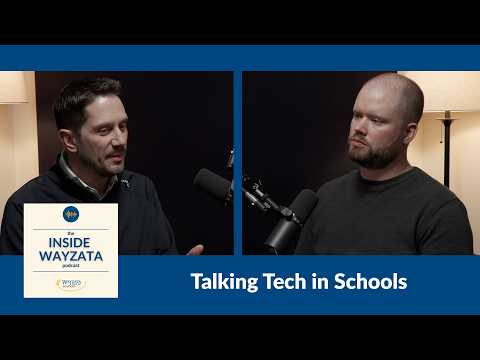
Wade Phillips, the Wayzata Public School District director of technology, told host Zach Nelson that the referendum on April 14 asks voters to renew the district’s long‑running technology levies to preserve existing services for classrooms, infrastructure, safety and cybersecurity.
“The technology levy is really just dedicated funds from our community to fund technology,” Phillips said, adding that the district uses overlapping 10‑year levies so a lapse in one renewal does not immediately stop ongoing programs.
Why it matters: Phillips said the levies pay for a mix of classroom devices, staffing, network infrastructure, licensing and security systems — not a program expansion. “It’s a maintenance of effort or the continuation of the work that we’re currently doing,” he said. The district’s technology planning covers devices in classrooms (including an upper‑elementary 1:1 device program), multimillion‑dollar replacement cycles, and the back‑end networks that make those devices work.
How the money is used: Phillips outlined categories funded by the levy: • Devices and replacement cycles — Phillips said elementary technology spending from the district’s roughly $12,000,000 elementary budget is about $400,000 and estimated the annual device replacement liability is about $1,200,000, “give or take.” • Infrastructure — fiber, wireless, servers and licensing that require ongoing maintenance and replacement cycles. • Safety and security capital — Phillips said about $10,000,000 has been identified for safety and security infrastructure (examples he gave include district‑wide emergency communications upgrades, secure door access systems and camera replacements). He estimated the district has roughly 900–1,000 security cameras and cited a recent roughly $1,000,000 cost to update cameras and systems at the secondary schools. • Cybersecurity and staffing — Phillips said levy dollars support staff, training, endpoint protection, penetration testing and vendor partnerships that provide continuous monitoring; he emphasized human awareness as a key defense.
Student device management and classroom balance: Phillips described how devices are used differently across grade levels — classroom‑dedicated devices in elementary grades and broader take‑home or 1:1 programs in older grades — and said the district relies on technical guardrails (filters and monitoring) plus human intervention (teachers, principals and families) when issues occur. On one common question, he said there is no technical “one‑button” way to permit all educational YouTube content while blocking noneducational material, illustrating limits to filtering.
What voters were told about taxes: The host read campaign materials noting that the renewal would not raise taxes for district residents; Phillips framed the request again as maintaining current levels of service rather than increasing the district’s tax rate.
Next steps and where to get information: The host said listeners were directed to the district’s referendum information and an email address mentioned on the episode for details; he reminded listeners of election day, April 14, and that early voting begins Feb. 27.
“Technology is a tool — the teaching and learning and the experience is the goal,” Phillips said, summarizing the district’s approach.
The podcast episode was an informational interview intended to explain what the levy funds and how the district plans and prioritizes technology and safety spending.