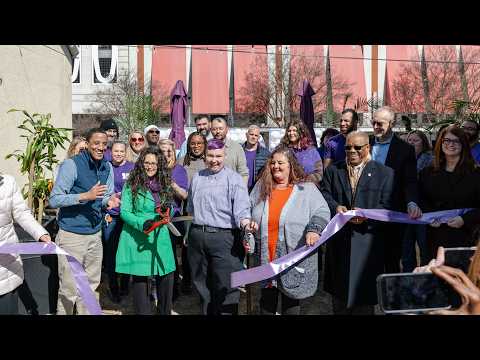
Promise Resource Network opens Raleigh Recovery Hub; county officials praise peer-led services
Loading...
Summary
Promise Resource Network opened a new Raleigh Recovery Hub & Café on a chilly day in Wake County, where state and local leaders praised peer-led recovery services, cited usage and call‑line figures from other PRN programs, and said county staff expect the hub could reach up to 2,000 people per month.
Promise Resource Network opened its new Raleigh Recovery Hub & Café with remarks from PRN leaders, a state health official and Wake County commissioners, who framed the center as an open-access, peer-run space intended to support people with mental health and substance-use challenges.
Shereen, who led the opening remarks for Promise Resource Network, described the renovated space as welcoming and “no barrier,” saying staff and volunteers with lived experience will run activities and support visitors. She urged attendees to imagine people entering the hub ‘‘maybe feeling grief and loss, maybe feeling broken, maybe feeling hope’’ and said the Charlotte PRN hub served about 1,900 people and hosted roughly 165 activities in a recent month.
Kelly Crosby, director of the Division of Mental Health, Developmental Disabilities, and Substance Use Services at the N.C. Department of Health and Human Services, spoke about recovery and peer-led supports. "Recovery is very, very, very, very possible," Crosby said, and she noted that the statewide warm line receives "over 8,000 people" calls each month. Crosby also described peer respites as alternatives to emergency room visits or hospitalization, where people can seek voluntary short-term support from peers rather than clinical or emergency settings.
Representatives from Alliance Health also praised PRN’s approach. Sean Schreiber, identified in the event as representing Alliance Health (a local managed‑care entity for Medicaid behavioral‑health recipients), thanked PRN and said the group’s temporary operations had helped about 850 people who otherwise would have been in crisis.
Don Mogg, chair of the Wake County Board of Commissioners, said Wake County staff had heard about PRN roughly two years ago and recommended investing ‘‘open or settlement funds’’ in peer support programs. Mogg said staff expect the Raleigh hub could help as many as 2,000 people a month and called the initiative a partnership among people with lived experience, state agencies, managed care and the county.
Organizers and officials described the hub’s planned services to include open‑access peer support groups, educational activities, workforce development and overdose prevention education. Speakers repeatedly framed the center as a complement to clinical care rather than a replacement: clinicians may provide treatment when needed, they said, while peer spaces provide community and ongoing supports.
The event included expressions of gratitude to partners and a personal anecdote noted by the PRN speaker: a caller who had lost a child told PRN staff that seeing the Charlotte respite convinced them that a Raleigh respite could have saved a life, a remark the speaker used to underscore the hub’s hoped‑for impact.
The ribbon‑cutting did not include a formal vote or new ordinance; officials described planned investments and expectations for service volume but did not specify precise budget authorization or contract terms at the event.
The opening concludes PRN’s expansion in the region; organizers invited attendees to tour the new space and begin programming.