
Public commenters urge halt to legacy-forest sales after court ruling; board defers timber decisions
Get AI-powered insights, summaries, and transcripts
Subscribe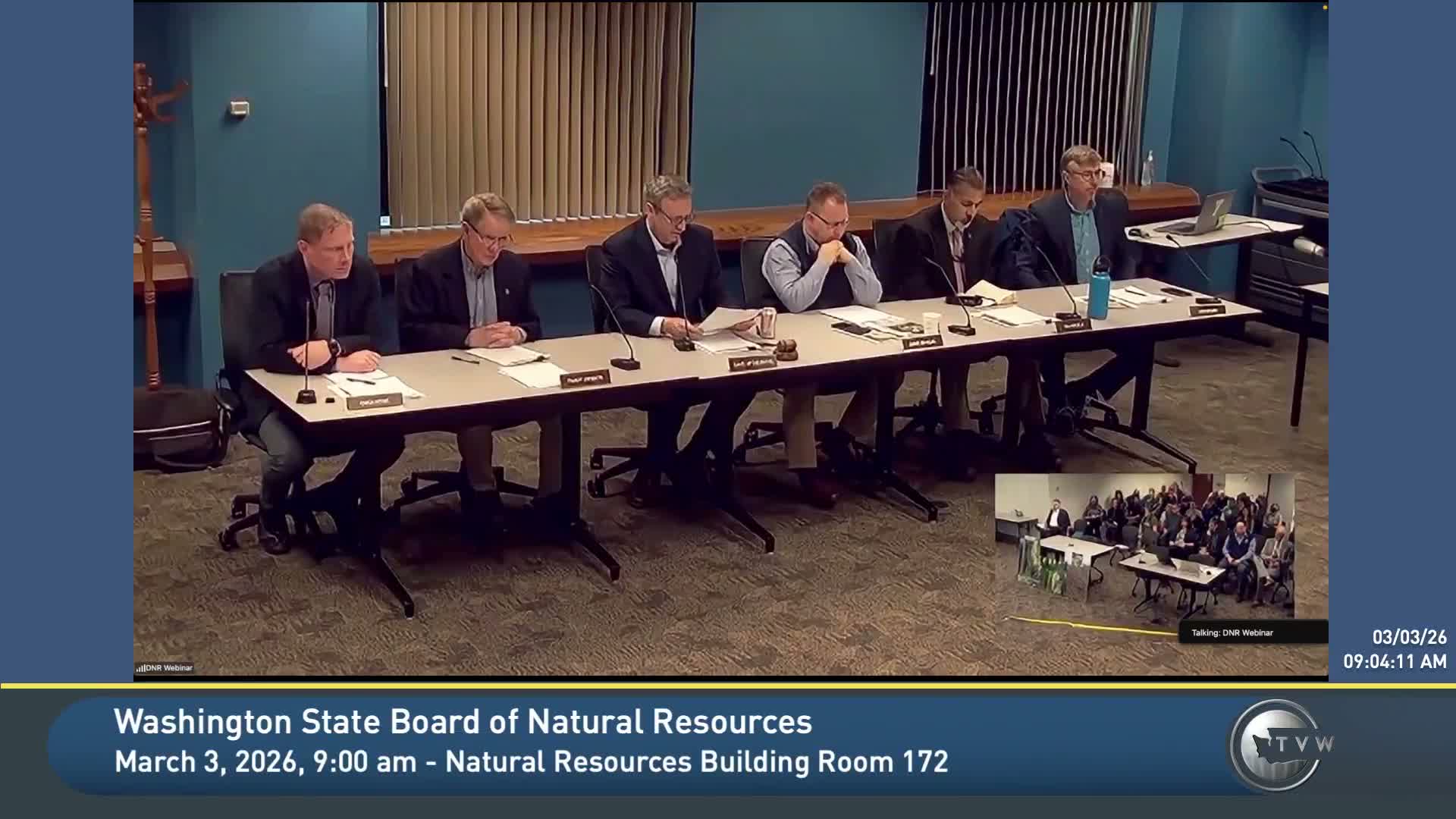
Summary
After a Court of Appeals decision, the Board of Natural Resources deferred timber sales; dozens of public commenters urged the board to protect legacy forests, citing climate, biodiversity, and alternative analyses the court found lacking.
The Board of Natural Resources on March 3 temporarily deferred consideration of timber sales and moved its March 16 study session to a full board meeting so staff can align sales with a recent Division I Court of Appeals ruling.
Public testimony that followed the announcement was dominated by pleas to protect 'legacy' forests. Aaron Del Stargard, a metalworker and former cattleman, told the board: "I urge the board not to sell off our legacy forests," arguing that cultural and ecological values outweigh short-term revenue. Donna Albert of Montesano, reading from The Trees Are Speaking, cited scientists including Jerry Franklin and Beverly Law to argue that older, naturally regenerated forests are irreplaceable and that letting trees grow is a key climate strategy: "No climate strategy is as cheap, reliable, or effective in reducing carbon in the atmosphere and storing it long term as simply letting trees grow."
Several commenters pressed the agency on the Wishbone Timber Sale and the court's finding that DNR had not adequately studied or described appropriate alternatives. A commenter identified as Lehi First urged the board to withdraw the '10 fir' sale, saying the DNR's addenda failed to identify conflicts or reasonable alternatives. Connie Beauvais, Port of Port Angeles commissioner and chair of the Clallam County Revenue Advisory Committee, asked the board "to have DNR appeal the judge's decision on the alternate analysis denoted in the Wishbone suit," and said the RAC will deliver a letter to legislative leaders raising concerns that administrative changes have reduced operable acres and lowered trust revenue.
Not all public speakers opposed logging; industry and county representatives said declining harvests and revenues are already harming rural services and jobs. Eric Johnson, representing the Skagit County commissioners, said timber receipts fell from about $4.7 million in 2024 to $2.3 million in 2025 and asked the board to implement the Decadal Sustainable Harvest Plan to meet local program needs. Industry representatives similarly warned of lost jobs and urged adherence to fiduciary obligations.
The board's deferral is procedural: Chair Dave Upthearobe explained the action is intended to allow staff time to revise sales to conform with the court opinion. The chair also said the March 16 meeting will be used to consider timber sales after those adjustments and that members may participate remotely. The public comment period closed before staff presentations and the meeting moved on to an economic forecast and other agenda items.