
Alaska hearing on HB 78 spotlights split over returning to a defined-benefit pension for new hires
Get AI-powered insights, summaries, and transcripts
Subscribe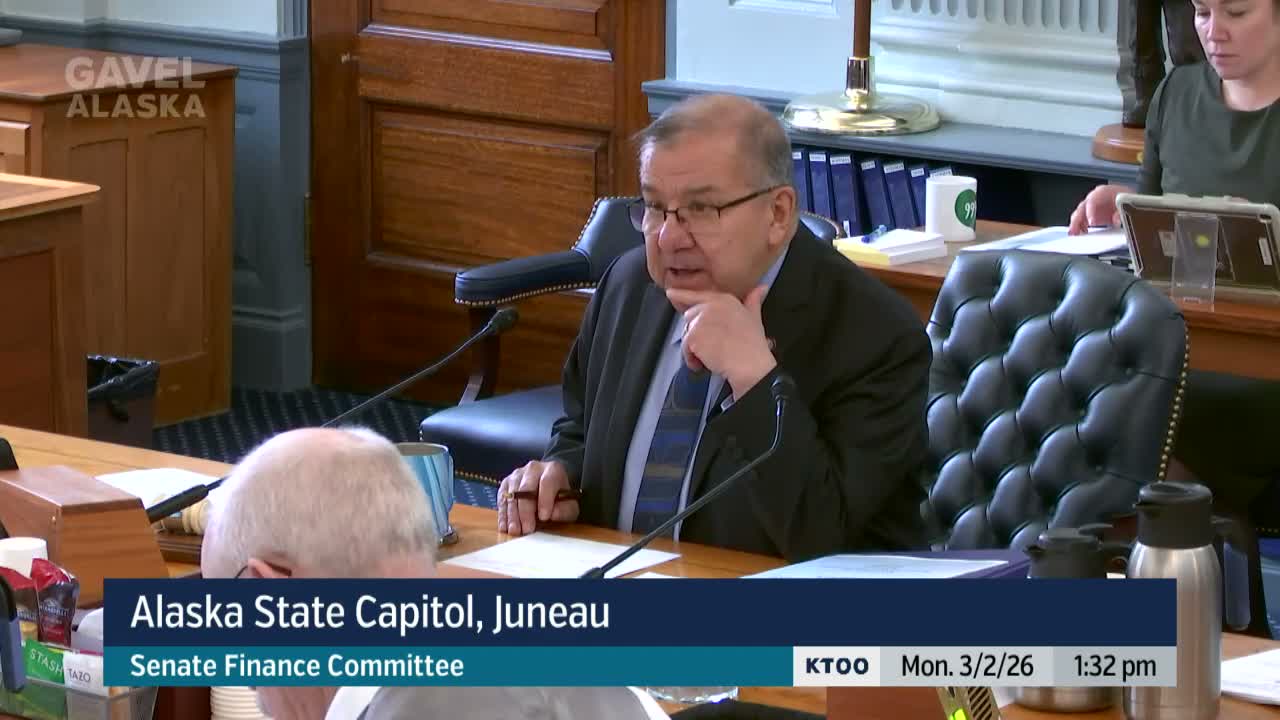
Summary
At a Senate Finance Committee hearing on House Bill 78, economists, unions and dozens of public employees urged reinstating a limited defined-benefit tier to reduce turnover, while budget watchdogs warned of multibillion-dollar risks; the committee set the bill aside for further review.
A hearing of the Alaska Senate Finance Committee on House Bill 78 produced sharply divergent views on whether creating a new shared-risk defined-benefit (DB) tier for new state hires would shore up the state workforce or expose Alaska to fiscal risk.
Representative Kopp, the bill’s sponsor, told the committee the proposal would establish a modern, actuarially disciplined DB tier for new hires while keeping legacy liabilities closed. “It creates a new tier built with actuarial discipline and shared responsibility and full funding from day one,” he said, describing the bill as a “forward-looking solution” to recruitment and retention challenges.
Economist Teresa Ghilarducci, testifying remotely, urged lawmakers to weigh long-term savings from reduced turnover against the bill’s estimated cost. Citing the bill’s actuary, she said the fiscal note projects about $89 million in additional annual retirement contributions under HB 78 but argued that reductions in premium pay, replacement costs and higher investment returns could more than offset that amount. “If pension design reform reduces turnover by half, your annual savings would be about $60 million,” she said, adding that pooled DB plans can realize investment efficiencies individual accounts cannot.
Supporters who spoke during a two-minute public-comment period echoed that claim. Hillary Wood, a 29-year Alaska Department of Fish and Game employee, said having a reliable pension was the main reason she stayed and urged the committee to pass the bill to preserve institutional knowledge. Brian Geisel, a retired state trooper now teaching in Alaska, said his DB pension kept him in the state and that teachers deserve similar stability.
Opponents, including the Pension Integrity Project at the Reason Foundation and Americans for Prosperity Alaska, warned of large long-term costs and modeling uncertainty. Zachary Christensen of the Reason Foundation told the committee that under one scenario HB 78 could cost $1.4 billion over 30 years and under worse assumptions could reach $7 billion. Brett Huber of Americans for Prosperity argued Alaska still carries unfunded liabilities from the previous DB system and cautioned lawmakers against adding new fiscal burdens while the state faces structural budget pressures.
Committee members questioned both sides about assumptions, including whether modern DB design prevents past abuses such as wage “spiking” and whether younger workers actually prefer DB or DC plans. Senator Kaufman asked whether DB plans could create perverse incentives to maximize overtime; Dr. Ghilarducci said contemporary plan formulas largely eliminated spiking and cited survey and ethnographic work suggesting many younger workers value retirement security.
The hearing featured more than 30 public comment statements from current and retired public employees, union leaders and educators from across the state, who described high turnover, vacancy-driven premium pay and classroom instability. Several witnesses cited replacement-cost estimates and district-level turnover statistics to argue HB 78 would improve retention and reduce operating costs.
No formal vote was taken. At the conclusion of public testimony and sponsor remarks, the chair set the bill aside for further consideration, and the committee adjourned with plans to resume work the next day.
The committee’s next agenda will include supplemental appropriations and other bills; lawmakers said they will continue to examine funding assumptions, actuarial models and whether any plan design changes could reduce risk before taking a final position on HB 78.