Get Full Government Meeting Transcripts, Videos, & Alerts Forever!
Get email alerts on the Municipal Finance topic
No spam. Unsubscribe anytime.
Auburn council votes to place hotel and short‑term rental tax on November ballot
Summary
The Auburn City Council voted June 24 to place a ballot measure asking voters to raise the transient occupancy tax from 8% to 10% and require short‑term rental operators to collect the tax; supporters called it a fairness and revenue move, while some council members expressed concerns about timing amid a fiscal emergency.
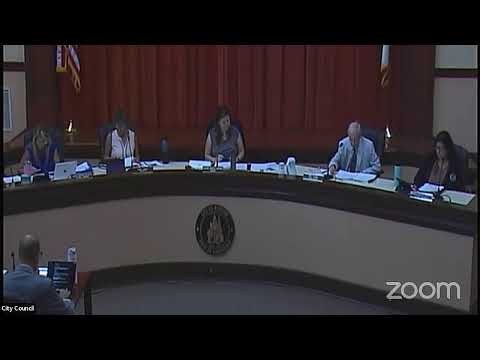
Auburn’s City Council voted June 24 to place a measure on the Nov. 5 ballot that would increase the city’s transient occupancy tax from 8% to 10% and extend collection obligations to short‑term rental operators such as Airbnb and VRBO.
The staff presentation said the 75‑word ballot question — drafted to be voter‑friendly and reviewed by outside consultants — would direct revenue to police, fire, street maintenance, pothole repairs, parks and other general city services. Staff estimated roughly $162,000 a year in additional revenue if the measure is approved.
Council staff read the draft language aloud: “Shall the measure funding police, fire, street maintenance, pothole repairs, parks, and for general government use by increasing the city's transient occupancy tax paid only by hotel and lodging guests on hotel rent by 2% matching nearby city rates and by extending it to short term rentals to last until voters end it, raising approximately $162,000 in additional revenue per year that cannot be taken by the state be adopted.”
Supporters argued the change levels the playing field between hotels and short‑term rentals and brings Auburn in line with neighboring jurisdictions. Rob Haswell of Visit Placer told the council the draft question “couches this in a way that voters can understand” and emphasized that clear language helps win support. Local business owner Margarita Swan said she backed the increase and told the council, “10% is not gonna make those travelers poor.”
Opponents on the council did not dispute the merits but raised concerns about timing and optics. One council member said the city recently declared a fiscal emergency and that the TOT would yield only about $162,000 annually, far short of closing a structural deficit estimated in the hundreds of thousands. That council member said the timing — moving rapidly to the ballot — could be used against the city in later campaigns.
City staff and outside advisors outlined limitations on city advocacy once a measure is placed on the ballot: staff may provide impartial, factual information but cannot spend public funds to advocate for passage. The county will administer the ballot format and publish official pro/con arguments under the elections code.
Councilmember [named in the roll call as Dalton Calvio] voted no; the motion carried on roll call and the resolution and proposed ordinance were placed on the November ballot.
Next steps: if the council ordinance is adopted as part of the ballot package, the city will return with a separate resolution to designate two council members to prepare and file the official argument in support and any rebuttal, as permitted by law. The council also discussed that any campaign for the measure would require independent fundraising, since public funds cannot be used to advocate.