Get Full Government Meeting Transcripts, Videos, & Alerts Forever!
Get email alerts on the Transportation topic
No spam. Unsubscribe anytime.
Transportation official Cameron Chester warns Spencer County schools face bus‑capacity pressure amid local housing growth
Summary
Cameron Chester, the district transportation official, told the board the fleet is operating near capacity, cited driver shortages, delayed bus deliveries and communication gaps; staff recommended targeted purchases, sub‑driver policy changes and upgrades to radio repeaters to improve safety and service.
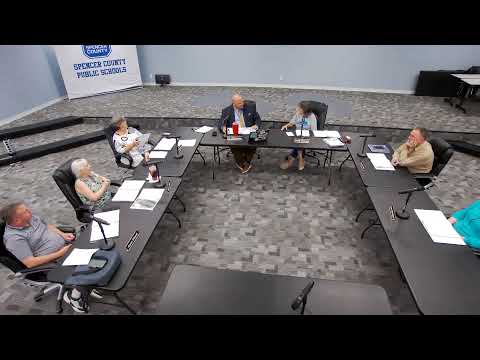
Cameron Chester, the district’s transportation official, told the Spencer County Board of Education at its Sept. 10 work session that the district’s bus fleet and staffing are "right on target" today but face near‑term pressure from new housing developments in the county.
Chester said the transportation department currently employs 31 full‑time bus drivers, three full‑time bus monitors, 12 preschool monitors, a head mechanic and two additional mechanics. The district runs 25 regular routes and three special‑needs routes; Chester reported one full‑time driver vacancy and two full‑time substitute vacancies, and said two new drivers are in training and expected to complete certification within two to three weeks.
"We do have 25 regular routes, 3 special needs," Chester said in his presentation, and explained the district uses hands‑on route mapping rather than relying solely on commercial routing software. He defended the practice as safer and more responsive to local conditions.
Why it matters: Chester showed the board permit lists and subdivision plans that staff received from the PVA, identifying multiple developments in Spencer County (including Tucker Farms, Global Crossing phase 5, Old South Plantation and Bellwood) that could increase student demand for transportation. He warned the district is already near capacity for routes and urged planning now to avoid service shortfalls.
Chester also reviewed the district’s bus purchasing and maintenance cycle, saying the district is about three buses behind the planned replacement schedule because of a misdelivered special‑needs bus and longer industry lead times. He provided an estimated price of roughly $155,000 per new bus and said the district expects to request bus purchases during the September meeting cycle ahead of the October ordering window.
On vehicle features, Chester proposed testing air conditioning on a special‑needs bus, noting a $10,000–$13,000 premium per bus and explaining that climate control can be critical for some students with IEP accommodations. "As we transport these kids in August and June, they have IEPs for special accommodations," he said, adding that the district’s tech/meal bus currently has air and is heavily used in summer programs.
Communications and safety were a major focus. Chester presented radio coverage maps from the vendor RCS that showed white spots with poor bus radio and cellular reception across parts of the district. He reported a vendor quote for a single Motorola repeater, including relocation and installation, at $24,399 and recommended evaluating a two‑repeater solution with digital radios and simulcast capability to broaden coverage and provide redundant communication between buses and dispatch.
Board members asked about routing, field trips and the operational tradeoffs of adding air to buses. Chester confirmed the district ran 707,693 total vehicle miles last year (641,920 on routes and 51,880 for field trips), with 379 field trips and 579 vehicle requests, and that limited sub‑bus availability and driver absences have required cancelling or delaying trips on some occasions.
Next steps noted in the session included returning to the board with proposed bus purchase requests for formal approval, continuing recruitment and retention work for driver substitutes (including possible policy changes regarding minimum driving frequency and CDL training reimbursement agreements), and pursuing more detailed repeater coverage maps and cost estimates before asking the board to approve radio hardware purchases.
Ending: Chester closed by inviting further questions and said staff would follow up with written material and pricing for board consideration at upcoming meetings.