Lifetime Citizen Portal Access — AI Briefings, Alerts & Unlimited Follows
PNNL scientists outline approaches to reduce biofouling on marine sensors
Loading...
Summary
Scientists from Pacific Northwest National Laboratory described how biofouling harms marine equipment and detailed mitigation strategies including coatings, copper tubing, UV lights, brushes, filters and routine cleaning.
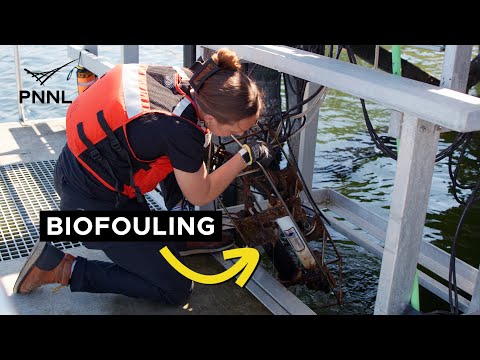
Tristan, an Earth scientist with Pacific Northwest National Laboratory, opened a briefing on biofouling, calling it “a major problem” for anything placed in the marine environment. Noelani, also identified as an Earth scientist at PNNL, said biofouling occurs when communities of organisms and organic material form sticky films that adhere to submerged surfaces and noted the films can damage marine energy equipment, accelerate corrosion, increase hydrodynamic drag and spread invasive species.
Noelani said biofilms also impair sensor measurements by clogging pump ports, covering sensor interfaces and limiting contact between sensors and seawater. Tristan outlined mitigation options for scientific sensors, listing copper tubing, ultraviolet lights near sensor intakes, protective covers, coatings or pastes, continuous-wiping brushes, intake filters and routine cleaning when retrieval is feasible.
Noelani described PNNL research to develop and test new coatings for solid and flexible materials, including ropes and netting, and referenced a patented, non-toxic coating called “slick” that she said is slippery enough to prevent organism adhesion. Both presenters emphasized that planning for biofouling and selecting appropriate materials and maintenance strategies are important to keep devices operational for longer periods underwater.
The presentation was framed as a technical overview of problems and mitigation options; no policy proposals, motions or civic actions were discussed.