Get Full Government Meeting Transcripts, Videos, & Alerts Forever!
Get email alerts on the Zoning Fence Variance topic
No spam. Unsubscribe anytime.
Mansfield Zoning Board denies variance to place 6-foot fence inside utility easement at M3 Ranch corner lot
Summary
The Mansfield Zoning Board of Adjustment voted unanimously (5-0) to deny a homeowner’s request (ZBA25-006) to place a 6-foot fence five feet from the sidewalk — inside a utility easement and short of the 15-foot setback — at 600 M3 Ranch Road after staff cited safety and easement access concerns.
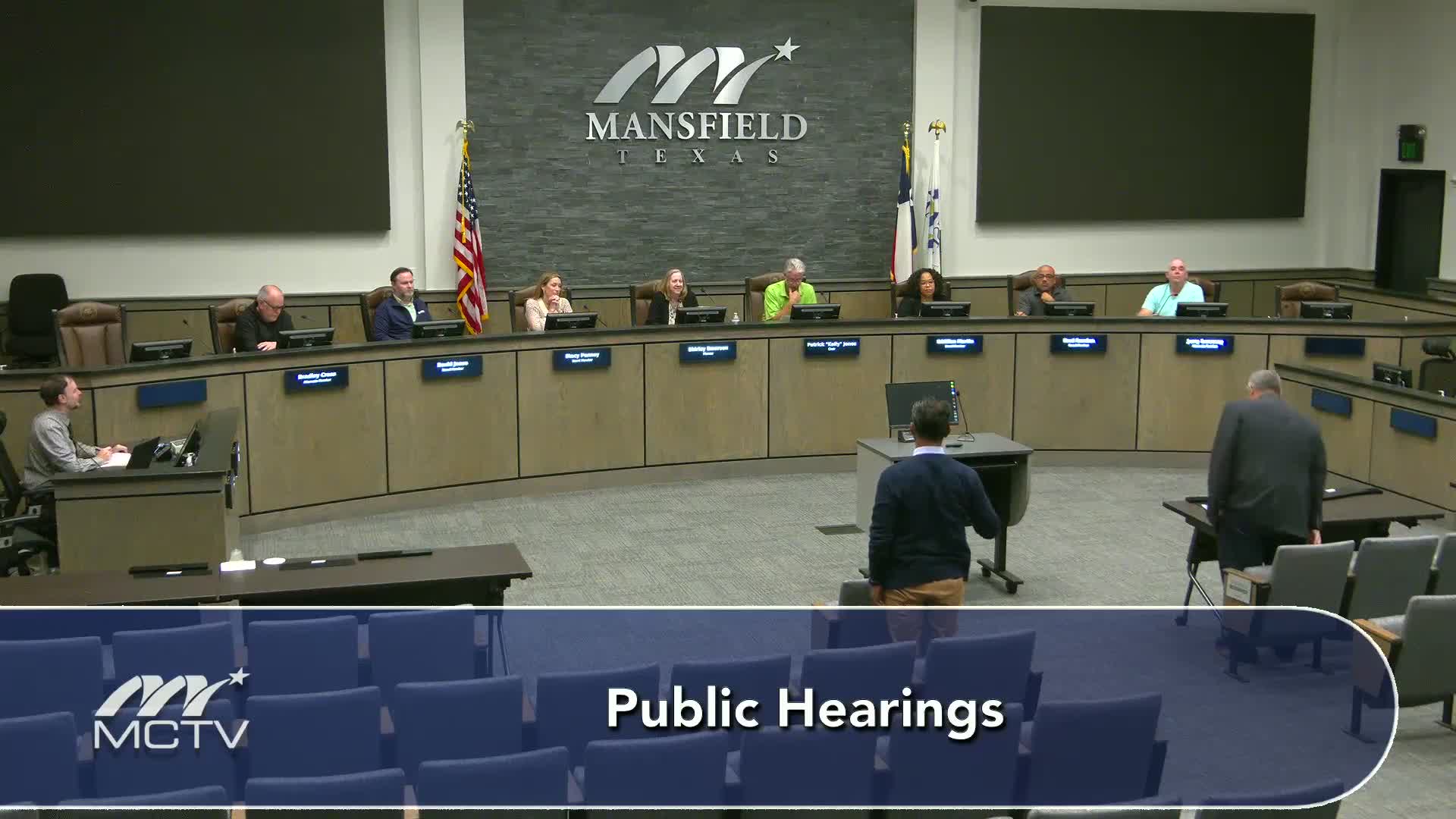
The Mansfield Zoning Board of Adjustment on Nov. 5 denied a homeowner’s request to reduce the required 15-foot side-yard fence setback to 5 feet and to locate a 6-foot fence within a utility easement at 600 M3 Ranch Road, voting unanimously 5-0.
The vote followed a staff presentation noting that Section 155.094 of the Mansfield Zoning Ordinance restricts fences taller than 36 inches from being placed less than 15 feet from a side property line adjacent to a public street. "This section of the ordinance is specifically established in order to create a safe, visible, street front along all of our ... corridors," Planning and Development assistant director Artie Wheaton Rodriguez told the board, citing visibility and utility concerns.
Applicant Sean Varghese, who has a contract with American Legend Homes, told the board he was asking to reduce the setback to 5 feet — and said he would accept a 10-foot compromise — to make use of a rear yard that he said is less than 20 feet deep because of the lot layout and a slip-lane entrance. "I am requesting a variance to reduce the fence setback from 15 feet to 5 feet," Varghese said. He argued that a curve in White Buck Road preserves sight lines and that shared infrastructure — including a fire hydrant and utility boxes — limits his usable yard space.
Board members and staff pressed on two central points: whether any proposed fence would block sight lines at the corner and whether the fence would interfere with utilities in the recorded easement. Staff said the originally approved June 2025 permit showed a compliant 15-foot setback but that a subsequent permit (and the fence location now proposed) brought the fence into the easement. Rodriguez told the board that franchise utilities have access to the easement and that future equipment could require the full 10-foot utility working space.
During questioning, staff also said builders have on some lots installed fences outside their approved permit locations. Those cases, staff said, are being addressed and builders were given until January 2026 to present plans or face code-enforcement action. "They will either be coming to this board, moving the fence, or receiving a ticket," Rodriguez said.
After closing the public hearing, Mr. Rendon moved to deny the variance; Ms. Penney seconded. In deliberations members said they sympathized with the applicant’s loss of usable yard but were constrained by the ordinance’s safety intent and the need to preserve utility access. "I just don't see it here," the chair said during discussion. The motion to deny passed unanimously, five to zero.
The board’s denial means the applicant may revise the submission to comply with the ordinance, pursue a code amendment, or seek other remedies. The chair had earlier reminded the room that "any person who is aggrieved by the board's decision may appeal the decision by filing a lawsuit in the applicable district court, county court, or county court of law within 10 days" of the decision being filed.
The meeting adjourned immediately after the vote.