Get Full Government Meeting Transcripts, Videos, & Alerts Forever!
Get email alerts on the Historic Preservation Outreach topic
No spam. Unsubscribe anytime.
Historic commission backs Phase 3 outreach: revive recognition events, modernize tours and boost social media
Summary
The Historic Landmark Commission reviewed Phase 3 of its outreach program, endorsing a revived recognition day at large civic events, a landmark showcase, expanded social-media features, and digital walking tours with QR/location tools; staff noted limitations of current tax incentives for costly restorations.
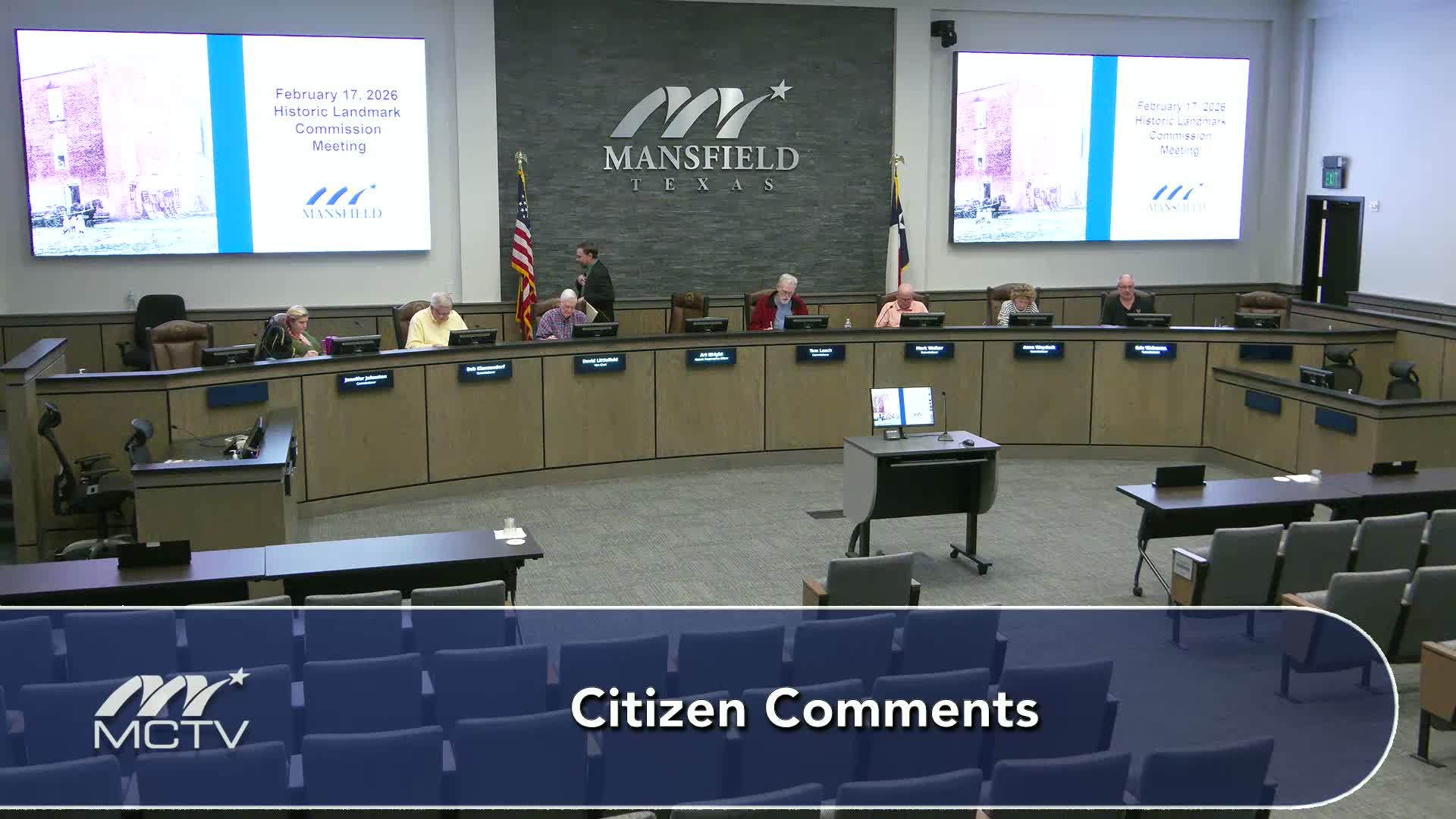
The Historic Landmark Commission on Tuesday reviewed Phase 3 of its landmark outreach program and endorsed steps to raise public awareness and encourage new landmark applications.
Art Wright, the commission's preservation officer, told commissioners Phase 3 (months 7–9) focuses on "recognition and celebration" and on measuring whether outreach produces more applications. "The goal is to recognize new landmarks, and bring in that community pride…to increase public awareness by highlighting those, landmarks, encourage new applications, and then we need to measure progress," Wright said.
Wright proposed reviving a formal "recognition day"—presenting certificates or plaques at a public event—and pairing it with larger gatherings where media and other city departments would already be present. "My recommendation is to bring it back and possibly partner it with something else, like having…State of the City," Wright said, arguing the larger platform would improve publicity.
He also recommended a "landmark showcase" and more frequent social-media posting to feature restored properties, and suggested modernizing walking-tour materials—moving from paper sheets to phone-based maps, QR codes and short videos. "What we would do is have possibly QR codes that go with landmarks, and then you can just scan it…or you're going down the map," Wright said, noting that many current paper guides are outdated.
Commissioners discussed practical limits for digital tools: Wright cautioned that QR codes or locational signage on private property would require owner consent and public-sign placement. He suggested a phone-based, location-aware map that would not require owners to place codes on building façades.
The presentation also reviewed incentives. Wright described a local tax-exemption framework that can provide a 10-year benefit and said that simply becoming a landmark can yield a 25% reduction tied to improvements; higher exemption levels (30%, 50% or 100%) require substantial restoration work. He added that a minimum restoration threshold is roughly $5,000 and that restoration costs often run "into the tens of thousands," making the tax savings alone insufficient in many cases.
The commission did not take a formal vote on a specific outreach contract or budget at the meeting; members asked staff to incorporate the proposals into the program materials and to begin measuring engagement and outcomes as Phase 3 proceeds.