Get Full Government Meeting Transcripts, Videos, & Alerts Forever!
Get email alerts on the Budget topic
No spam. Unsubscribe anytime.
Mansfield staff previews FY2026 budget, flags roughly $8 million gap; sales tax trending higher
Summary
City staff told the council that preliminary FY2026 proposals show about an $8 million gap after personnel and capital requests; improved sales‑tax receipts and further appraisal district updates are expected to narrow the shortfall ahead of adoption in September.
City staff presented a preview of the fiscal 2026 budget at a June 23 work session, saying the draft includes personnel requests of about $4.1 million and capital requests exceeding $7 million that together leave roughly an $8 million shortfall pending further adjustments.
“Nothing you’re gonna see today is a surprise,” a staff presenter told the council, and later added, “I want that number to scare anybody,” to underscore that the gap will be addressed through further internal screening of personnel and capital items. Staff said a placeholder of about $3 million is already in the draft budget for capital projects.
Finance staff also noted recently certified appraisal district updates — with Ellis County’s certification moving significantly — and said roughly $1.5 billion in protested value currently translates to about $10 million in potential revenue, but the budget is only counting roughly 70% of that amount until protests are settled. Staff expects appraisals and protests to be further settled by late July.
Sales tax continues to outpace prior-year collections. Staff described year‑to‑date sales‑tax performance as materially above last year and said the team is projecting to carry a 5% increase into next year’s budget (about a 9% budget‑to‑budget increase when compared to last year’s adopted budget). Council members asked for conservative assumptions and recognized lingering uncertainties tied to appraisal protests, construction costs and contingencies for water and elevated tank projects.
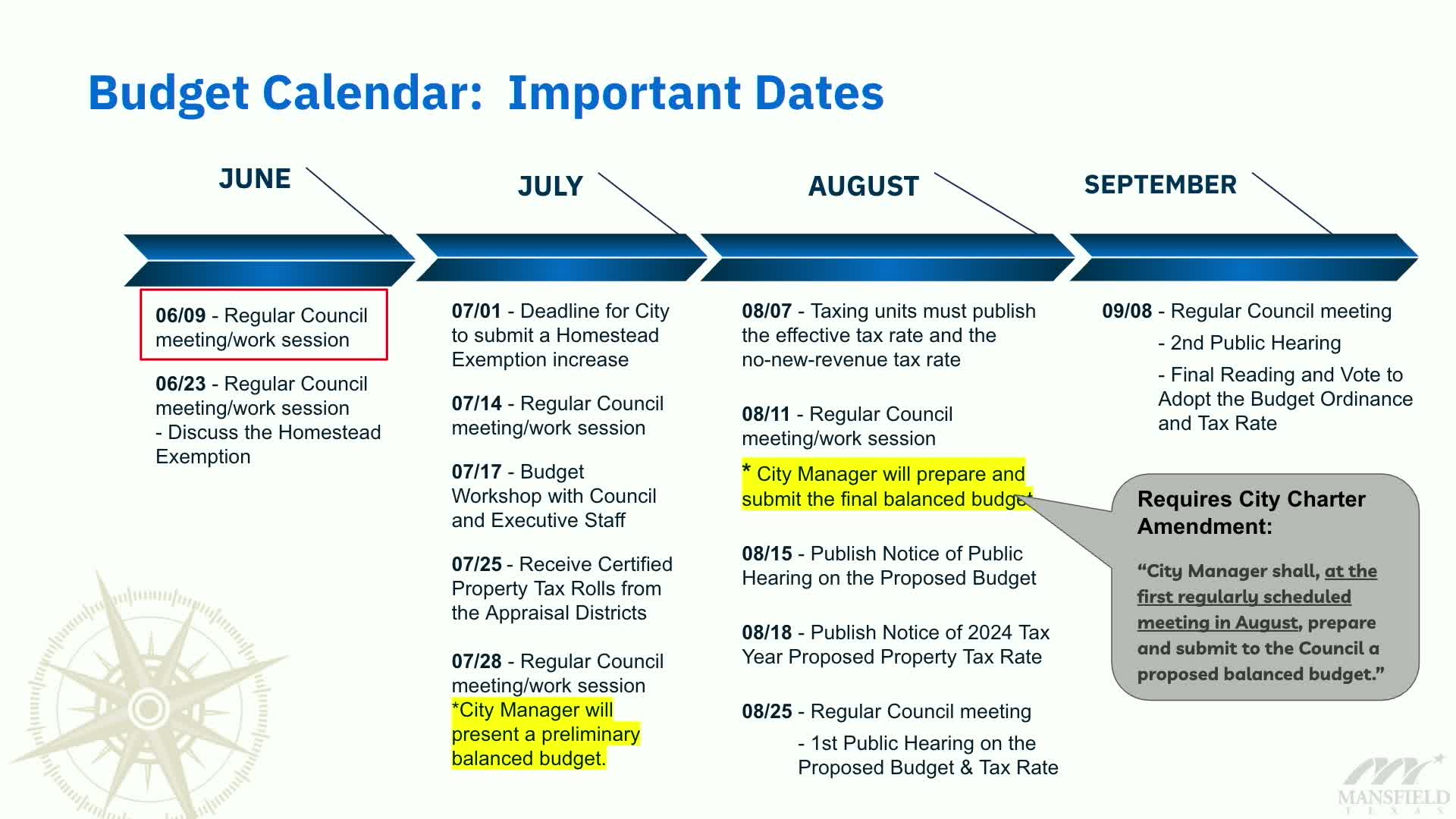
Staff outlined the timetable for formal action: a more detailed budget workshop July 17, public budget hearings in August and final reading and tax‑rate adoption scheduled for the council’s September 8 meeting.
What’s next: staff will return with updated appraisal numbers, refined personnel turnover/retention data, and a scrubbed capital list to help close the gap before the council’s August/September readings.