Get Full Government Meeting Transcripts, Videos, & Alerts Forever!
Get email alerts on the Land Use Zoning topic
No spam. Unsubscribe anytime.
Mansfield commission approves planned development for specialty grocer after traffic and visibility questions
Summary
The Planning and Zoning Commission approved a planned-development for a 12,500-sq-ft specialty grocer and two retail buildings with an end-cap drive-through, 6–1, after staff and the developer outlined traffic mitigation and neighbors raised concerns about setbacks, buffers and church visibility.
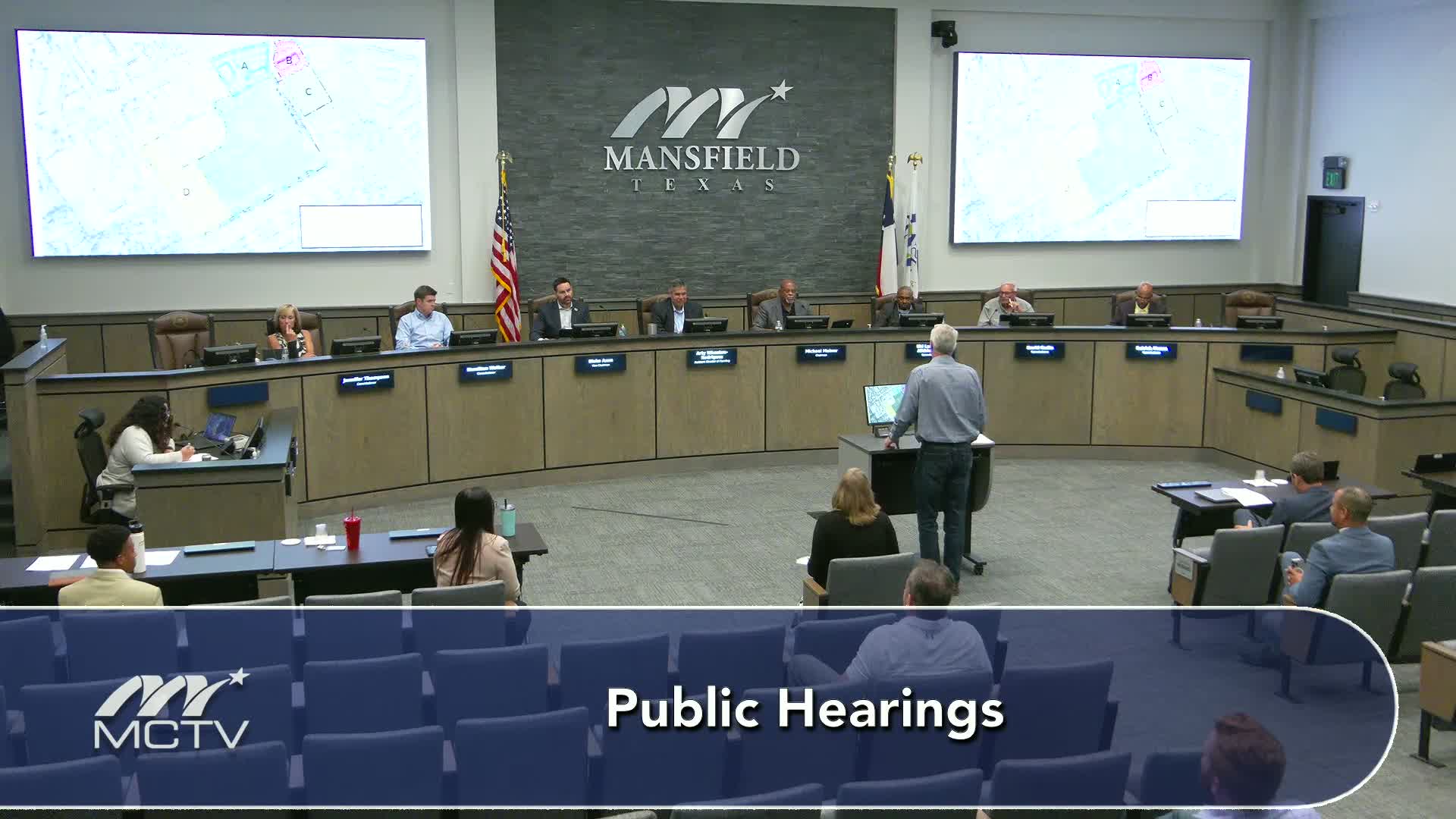
MANSFIELD — The Mansfield Planning and Zoning Commission on July 21 voted 6–1 to approve a planned-development allowing a 12,500-square-foot specialty grocer, two retail buildings and an end-cap drive-through on roughly 5.96 acres at Matlock Road and East Debbie Lane.
Staff and the applicant told commissioners the development includes three buildings (a 12,500-sq-ft specialty grocer, a ~6,336-sq-ft retail building and a ~13,162-sq-ft retail building with an end-cap drive-through), a new 50-foot public right-of-way through the site and 278 parking spaces. The PD asks for several deviations from base C-2 rules, including a reduced landscape buffer along one edge (proposed 10–12 feet versus the standard 20 feet) and shared monument signage plus expanded façade sign allowances; staff recommended approval, saying the plan aligns with the Mansfield 2040 growth goals.
The commission’s traffic consultant and city engineering staff said the developer’s traffic impact analysis (TIA) identified two required deceleration lanes and that the intersection already warrants a traffic signal in the PM peak; with the proposed development the TIA projects the signal also will be warranted in the AM peak. "A traffic signal is warranted at this time with the development," the engineering representative said, noting the TIA shows existing PM congestion at a level-of-service E and that the development makes an AM warrant likely as well.
Neighbors, including Gary Cardinelli representing Community of Hope, urged caution. "We're very concerned with the setback aspects of this property," Cardinelli said, listing visibility for the church, traffic queueing and buffer width as matters that need clarity before full support. He asked that the developer meet with the church to examine sight lines and ingress/egress impacts.
The applicant said the grocer typically operates 8 a.m.–9 p.m., estimated annual sales of roughly $22–25 million, and plans to break ground in August with the grocer opening between February and April if permits proceed. The applicant also said the grocer would likely be an anchor that targets a higher-income customer base and that the development team is planning tenant mixes intended to avoid duplicative, low-end fast-food concepts at the drive-through end cap.
Vice Chairman Axon moved approval and Commissioner Thompson seconded the motion; the measure passed 6–1. The transcript and staff presentation indicate the PD will tie architecture, landscape and signage plans to the PD document, and that required engineering review (platting, signal funding/installation and final TIA engineering) will continue during subsequent entitlement steps. The record does not show a named aye/no roll-call; the published tally was 6–1.
What happens next: zoning approval establishes PD standards but does not authorize construction. The developer must complete platting, detailed engineering and other entitlements before building permits are issued; staff and the developer said traffic improvements identified in the TIA would be addressed through those permitting and funding steps, potentially including developer funding and economic-development assistance for signal installation.
Commissioners and staff recommended the applicant meet with neighbors (Community of Hope) to discuss visibility, buffering and access as the project advances.