Get Full Government Meeting Transcripts, Videos, & Alerts Forever!
Get email alerts on the Urban Design topic
No spam. Unsubscribe anytime.
Mansfield rolls out corridor enhancement standards to unify medians, add shade and cut maintenance costs
Summary
City staff presented a corridor enhancement program establishing 'good/better/best' median and parkway standards, emphasizing native trees, multimodal improvements and reduced long‑term mowing; East Broad is the first candidate with an estimated $11.4M project cost and $800,000 for landscape upgrades.
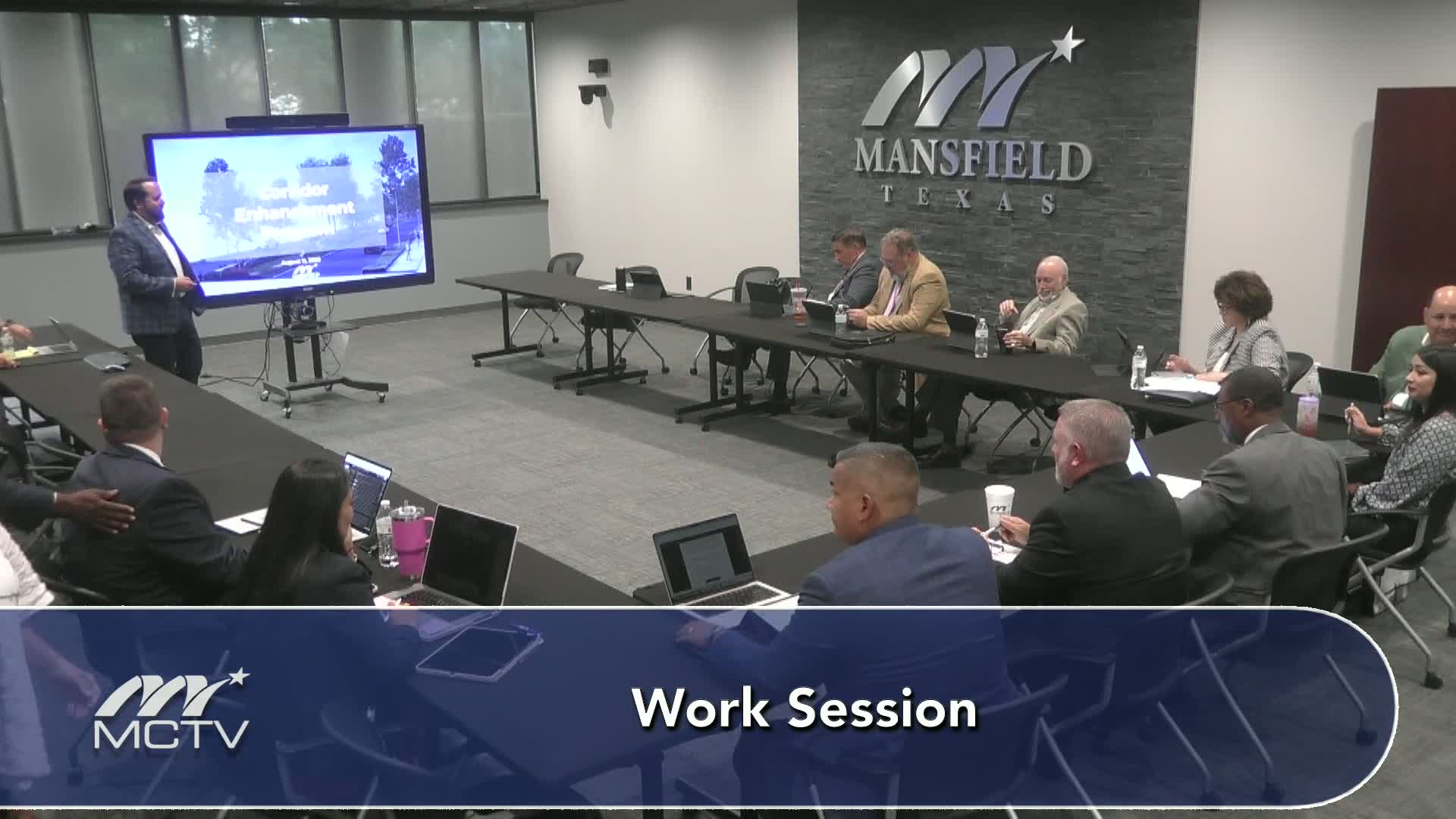
Mansfield staff presented a corridor enhancement program intended to create consistent parkway and median standards across the city and to support safer multimodal streets, more shade, and lower long‑term maintenance costs.
Matt Jones outlined the goals: unify landscaping across corridors so that residents and visitors can identify Mansfield’s public realm, increase tree canopy and shade to encourage pedestrian use, and design medians that lower maintenance costs over time. "We want it to be uniquely Mansfield," Jones said during the presentation.
Design tiers: staff proposed a three‑tier framework for medians and parkways. Level 1 (good) emphasizes simple hardscape and limited plantings; Level 2 (better) adds ornamental trees and increased groundcover; Level 3 (best) minimizes turf, adds plant beds and incorporates durable hardscape/berms to reduce mowing. Jones said the 'best' option has higher upfront capital cost but substantially reduces recurring mowing and maintenance.
Examples and costs: Jones used East Broad Street to illustrate standards and costs. He said the East Broad project documents were about 90% complete and show roughly $11.4 million in overall project cost, with approximately $800,000 attributed to enhanced landscape scope (about 10% of the project cost), and compared that percentage to signalization costs for context.
Utilities and species selection: Council asked whether utilities (overhead franchise lines) would limit tree choices or force undergrounding. Staff said state rules limit when utilities can be forced underground; instead, staff will select appropriate species and design details to reduce conflicts and will plan for undergrounding where feasible. Native, Texas‑adapted trees were emphasized to reduce long‑term watering and maintenance.
Implementation: staff said the standards will be applied project‑by‑project as reconstruction or new design occurs, with flexibility to use 'best' practices on high‑visibility corridors and more moderated tiers elsewhere. Staff also described planting specifications, topsoil considerations, and maintenance schedules to improve longevity.
Next steps: the city will incorporate the standards into design documents and apply them to upcoming CIP projects; council gave staff direction and asked for continued coordination with utilities and developers.