
Community pushes back on Anchorage rightsizing plan; Campbell STEM, Fire Lake and O'Malley draw sustained opposition
Get AI-powered insights, summaries, and transcripts
Sign Up Free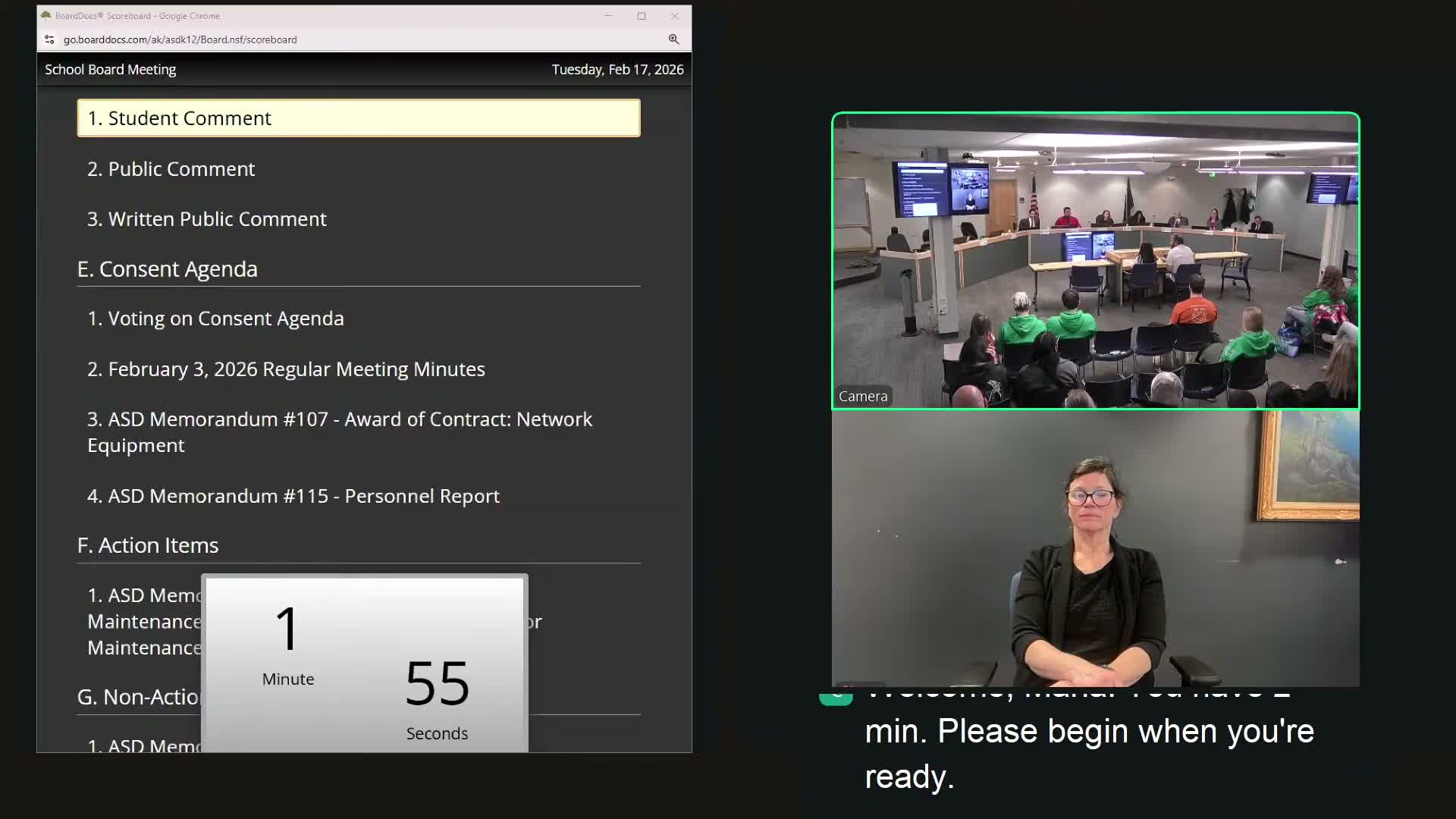
Summary
Parents, teachers and program advocates told the school board that proposals to close or repurpose neighborhood schools, reassign immersion students and combine fine‑arts and specialist roles would harm specialized programs, increase inequities and risk enrollment declines.
Community speakers packed the public comment period of an Anchorage School Board meeting to push back on the district's "rightsizing" proposals, which include school closures or repurposing, removing neighborhood students from select immersion schools, changes to specialists and a proposed reduction in some special education positions.
Campbell STEM drew repeated attention: teachers, parents and volunteers said the school is the only nationally certified STEM elementary in the district and cited recent voter‑approved bonds and planned maintenance as reasons to keep it open. "Campbell STEM is our community," said Cameron Hoyer, a longtime teacher, adding that the school provides specialized labs, high attendance and demonstrable academic growth.
Parents of immersion programs raised alarms about O'Malley Elementary, where the district proposed removing neighborhood students and limiting busing. Claire Norton Cruz said families were "blindsided" by a Friday email and warned that removing busing and neighborhood students would depress enrollment, complicate families with siblings in different programs and threaten program viability.
Several speakers described practical consequences of the proposed specialist reductions: music and art teachers warned that merging arts into a single fine‑arts role would reduce year‑long curricula and skill acquisition; elementary health teachers said safety lessons and abuse‑prevention curricula could be lost without protected time; and coaches argued that sports cuts would disproportionately harm students without access to clubs. "For half of 1% of the budget, we gain student engagement," said Monica Sullivan, who cited sports accounting for a small fraction of the district budget and urged alternatives for large savings.
Special‑education and deaf education advocates said cuts to specialized teachers and intervention coaches would remove access for students who require tailored instruction. Joel Sundberg, a parent of a deaf child, said reductions in staff at the Alaska State School for the Deaf and Hard of Hearing would directly reduce access to communication and individualized instruction.
Board procedure: the board adopted a motion to extend the meeting until midnight to hear more public testimony. At midnight the board adjourned and deferred remaining speakers and agenda items to a later meeting. No final votes on closures or program changes were recorded during this evening's session.
The board is expected to move the rightsizing proposal to a formal vote at an upcoming meeting; community members said they will continue to press the board for more transparent cost analyses, clearer consultation with program staff and consideration of alternatives to proposed closures.