
House Finance advances a package of tax and housing bills after debate on exemptions and rental assistance
Get AI-powered insights, summaries, and transcripts
Subscribe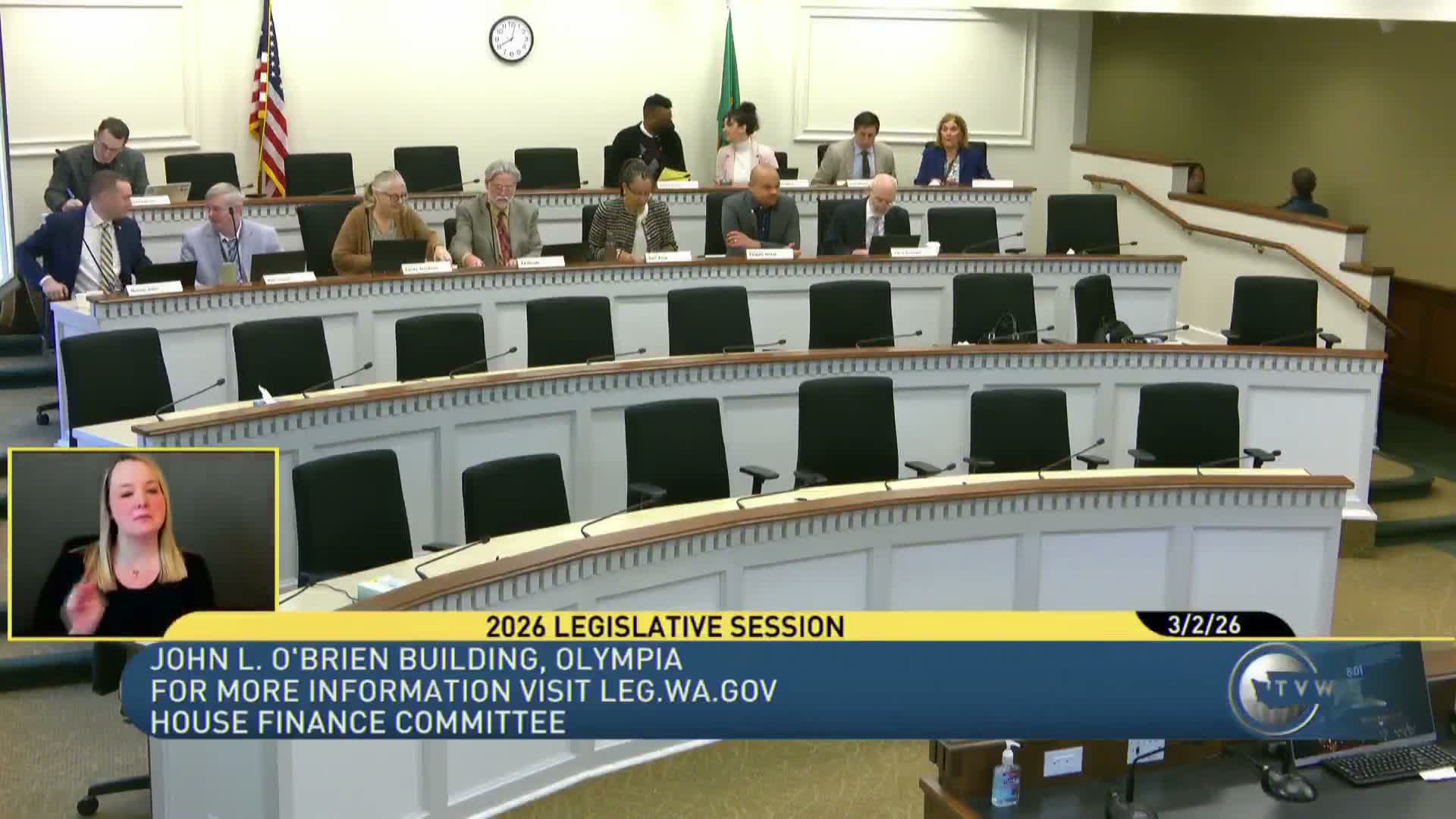
Summary
In an executive session March 2, the House Finance Committee reported a slate of tax and housing bills out with due-pass recommendations, advancing measures on nonprofit assembly-hall exemptions, timber-distribution rules for school districts, expanded uses of local sales tax for housing and multiple property-tax relief provisions for seniors, veterans and disaster-impacted residents.
The House Finance Committee met in executive session on Monday, March 2, and reported multiple bills out of committee with due-pass recommendations after debate over exemptions, program scope and fiscal impacts.
The committee moved ESSB 5252, which would remove the acreage limit on the property-tax exemption for nonprofit assembly halls and meeting places. Representative Rammell urged support for the bill, saying these granges "are meeting places for community events, for public forums, for weddings" and that the change will help struggling community halls. The motion passed by voice with 15 ayes and 0 nays; the bill was reported out with a due-pass recommendation.
Senate Bill 5994, which changes timber-tax revenue distribution rules to allow districts that had a levy in either of the two previous calendar years to receive timber-tax distributions, was also reported out by voice (15 ayes, 0 nays). Representative Springer framed the measure as providing "a little certainty for some of the smaller school districts" that rely on timber-sale revenue.
One of the lengthiest debates centered on Senate Bill 6027, which expands allowable uses for certain local sales and use taxes to include housing-related services. Representative Zahn offered amendment HERA 440 to allow rental-assistance uses statewide rather than limiting the tool to a single county. Representative Orcutt objected to the broader rental-assistance authorization, saying it could divert funds away from policies that encourage homeownership: "If we want to build generational wealth ... we need to get them into affordable housing," he said, arguing that widening rental assistance could reduce resources for that goal. The amendment was adopted, and on roll call the committee reported the bill out by a 10-5 vote.
The committee also considered ESSB 6113, a Department of Revenue bill that was amended with a striking amendment and several proposed subamendments dealing with retail-sales definitions and exemptions for live presentations and libraries. Multiple subamendments were debated and not adopted; the striking amendment was adopted and the bill reported out by voice (15-0).
On property-tax matters, SB 6162 — which would consolidate a state levy and expand exemptions for seniors and disabled individuals — drew detailed discussion about implementation and unintended consequences. Representative Penner described amendments aimed at easing administration, including a requirement that the Department of Revenue provide application assistance for applicants who request help. Some members urged more time to assess fiscal impacts; nevertheless the committee ultimately reported the bill out (staff announced the outcome as a report with a due-pass recommendation).
Other measures advanced included a temporary extension of property-tax relief for residents affected by recent atmospheric-river flooding (substitute SB 6343), changes to estate-tax rates and exclusions (SB 6347), and amendments to the conservation-futures program to include federally recognized tribes and require county reporting on land acquisitions (SB 6097). Votes varied by bill; for example, one recorded outcome for an estate-tax amendment produced a 9-6 result, while several disaster-relief and conservation bills passed unanimously by voice.
The committee adjourned after the final votes; Chair closed by thanking committee and caucus staff, naming Tracy Taylor, Christina King and Rochelle Harris among those who assisted the panel.
What happens next: Each bill reported out of committee moves to the next step in the House process; reported-out recommendations do not by themselves adopt policy changes, and each measure may be amended further on the floor or in other committees.