Get Full Government Meeting Transcripts, Videos, & Alerts Forever!
Committee advances bill clarifying public utility districts’ authority to self-perform certain renewable projects
Summary
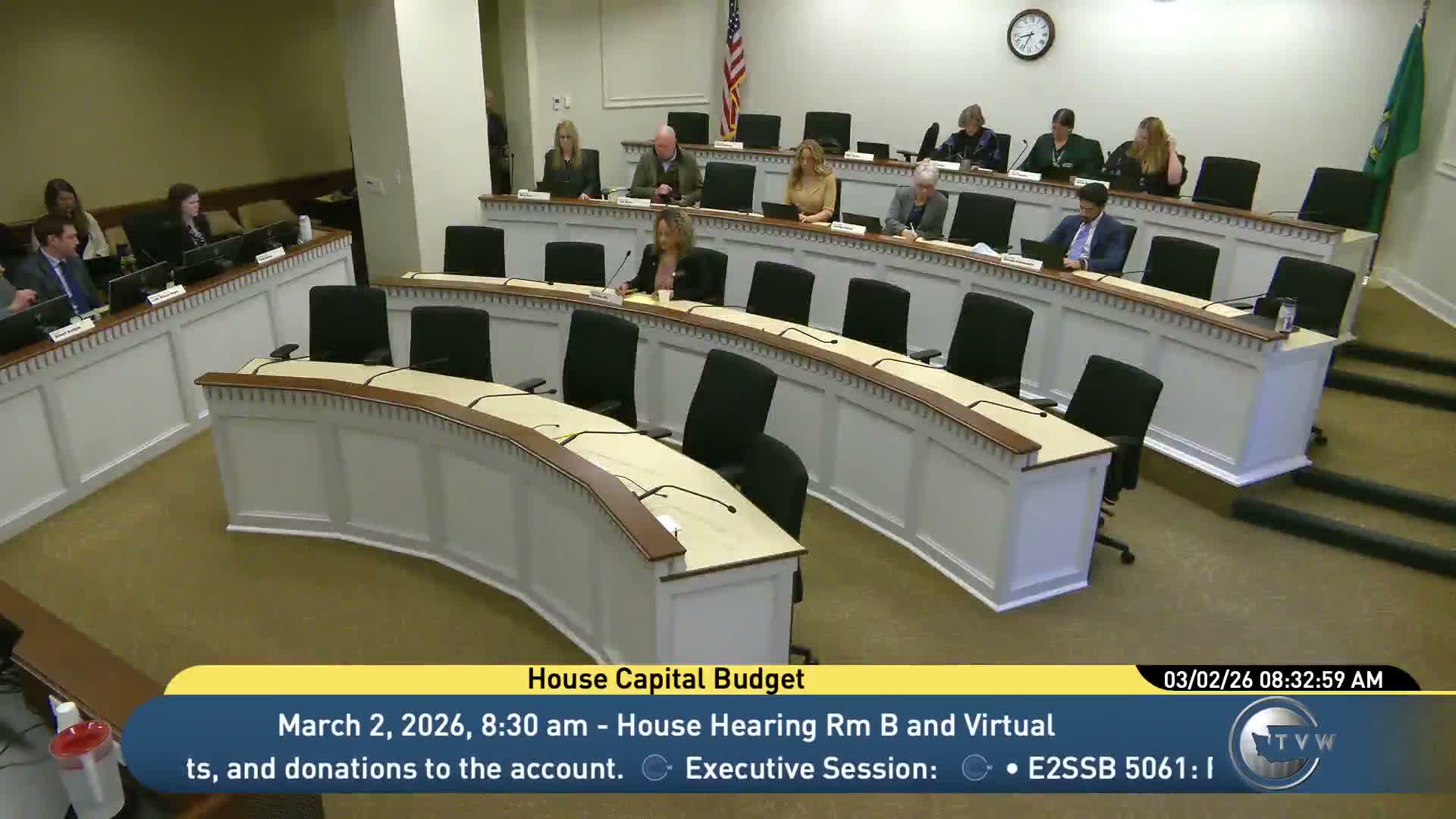
The capital committee voted 16-0 (three excused) to report Substitute Senate Bill 6,076 out of committee with a due-pass-as-amended recommendation after adopting a technical amendment that narrows a $1,000,000 self-performance cap to non-emitting renewable-resource generation work.
The capital committee reported Substitute Senate Bill 6,076 out of committee with a due-pass-as-amended recommendation after adopting a technical amendment clarifying the scope of a self-performance authority for consumer-owned utilities.
Rob Hatfield, staff to the committee, told members the bill “makes several changes with regard to the authority of consumer owned utilities, primarily public utility districts, to construct certain…
Already have an account? Log in
Subscribe to keep reading
Unlock the rest of this article — and every article on Citizen Portal.
- Unlimited articles
- AI-powered breakdowns of topics, speakers, decisions, and budgets
- Instant alerts when your location has a new meeting
- Follow topics and more locations
- 1,000 AI Insights / month, plus AI Chat