Appropriations Committee advances a wide slate of bills, adopts some amendments; key votes at a glance
Loading...
Summary
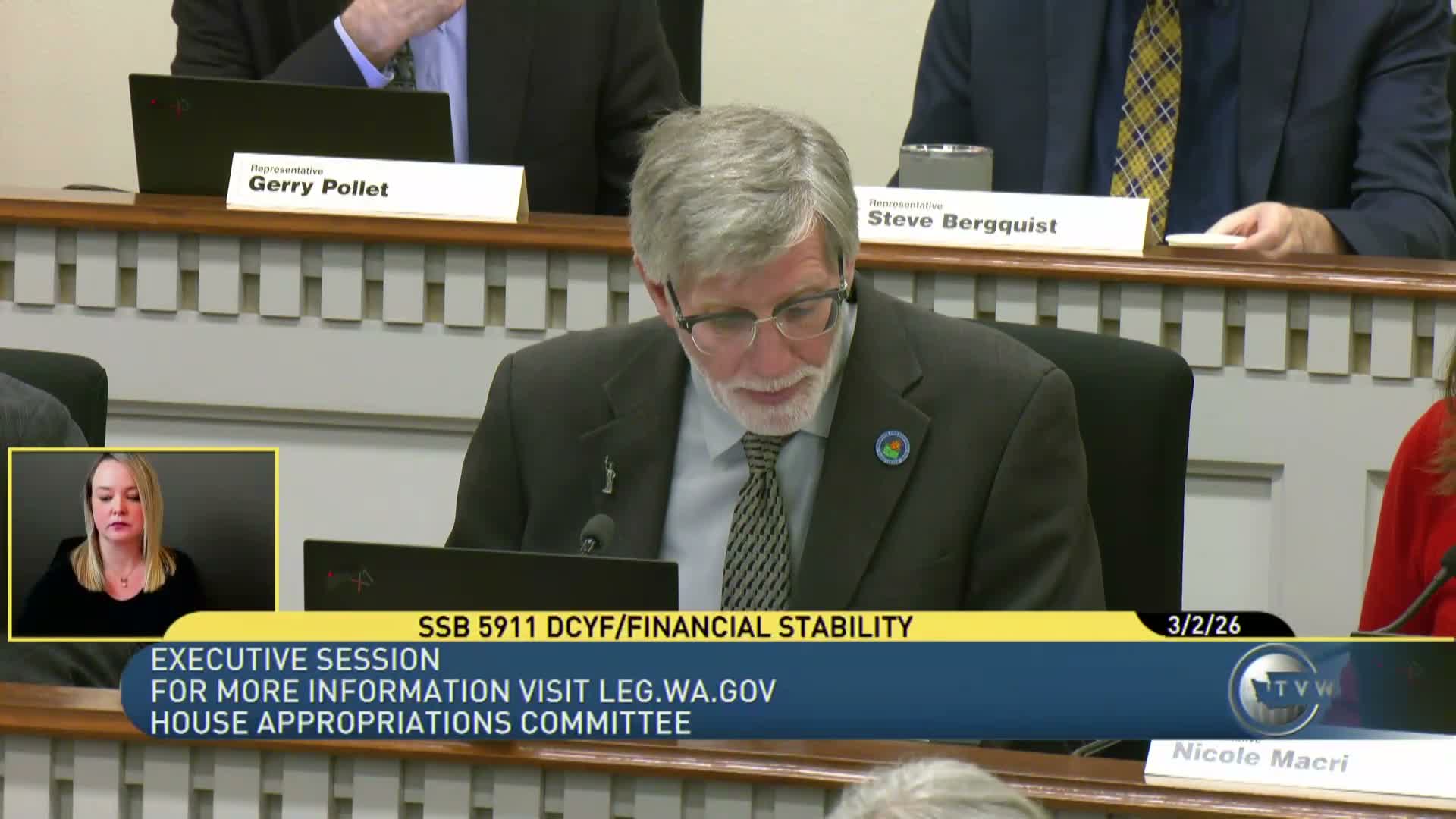
In a lengthy executive session the House Appropriations Committee considered dozens of bills across childcare, health care, housing, workforce and environmental areas; several measures were reported out with due‑pass recommendations after amendment debates and recorded roll‑call votes.
The House Appropriations Committee conducted an extended executive session that included amendment briefings and roll‑call votes on a long run of bills. Committee staff briefed amendments for numerous measures; members debated policy tradeoffs and adopted or rejected specific amendments before reporting many bills out of committee with due‑pass recommendations.
Key outcomes (selected items recorded in the hearing record):
- House Bill 2689 (working connections childcare): Committee adopted amendment Clark 350 requiring a 65% provider response rate for the market rate survey (to validate region rates) and reported the substitute House Bill 26‑89 out of committee with a due‑pass recommendation; committee tally recorded 18 ayes, 11 nays and 2 excused.
- Engrossed second substitute Senate Bill 5395 (prior authorization): After adoption of an amendment addressing retrospective denials the committee reported the bill with a due‑pass recommendation; roll call recorded 29 ayes and 2 excused.
- Multiple health‑care and workforce bills, including measures on prior authorization, 340B drug program reporting and workers' compensation medical‑care reforms, were debated with amendments adopted and rejected; several of these bills were reported from committee with due‑pass recommendations.
- High‑profile housing proposals (including a bill to limit certain corporate ownership of single‑family residences and related amendments) drew extended debate and multiple recorded votes; the committee adopted some clarifying and delaying amendments and ultimately reported the housing measures as amended.
What it means: The Appropriations Committee moved dozens of measures forward in the budget and policy calendar. Adoption or rejection of targeted amendments means some bills were narrowed or delayed; the committee record includes the roll‑call tallies and text of amendments for those tracking fiscal and legal consequences.
Next steps: Bills reported out with due‑pass recommendations proceed to the House floor for further debate and final votes. Many amendments adopted in Appropriations will appear in floor substitute language.