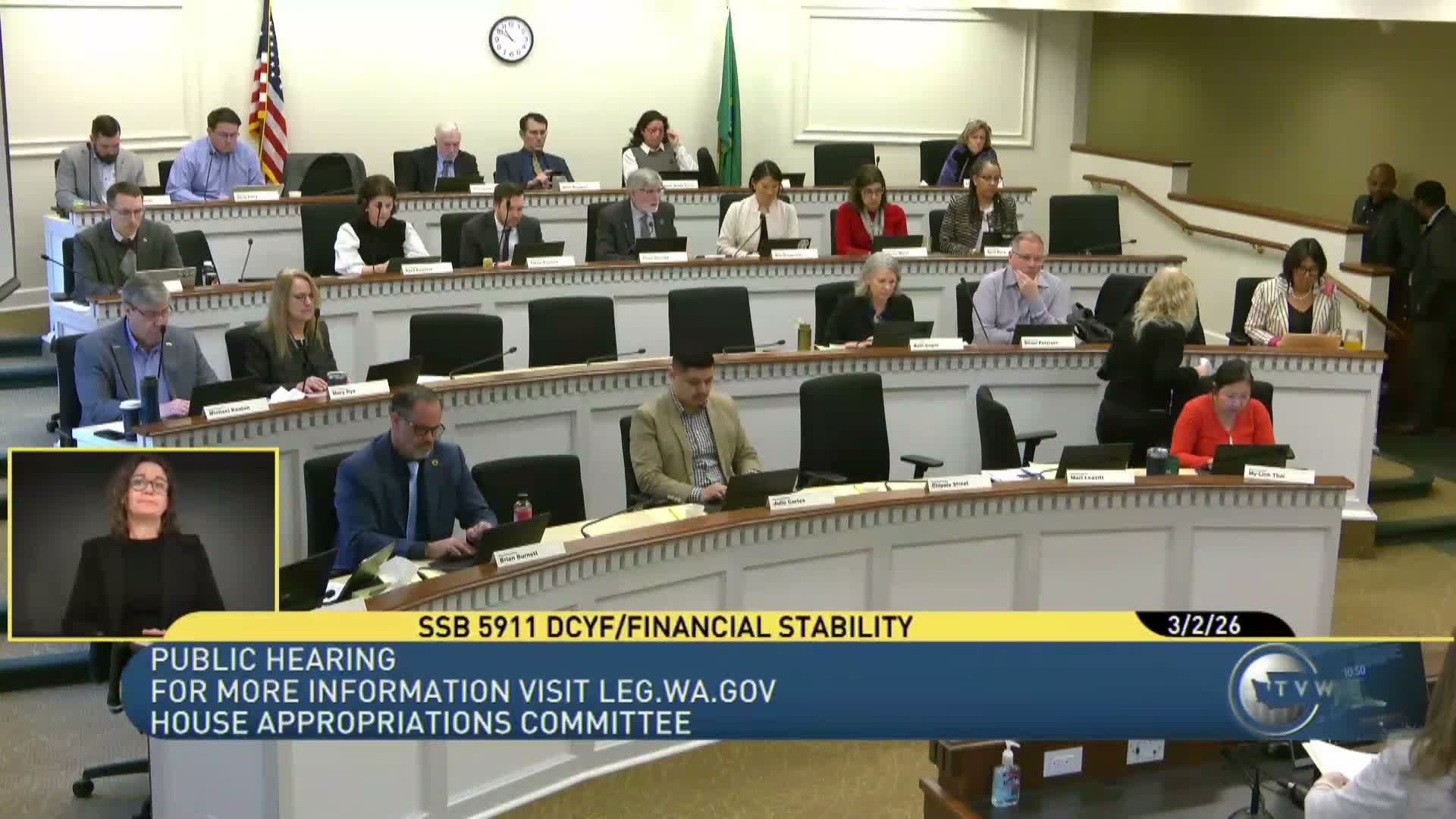
Bill would stop DCYF from using extended‑foster‑care benefits to reimburse cost of care, advocates say
Loading...
Summary
Committee staff and advocates briefed and testified on substitute Senate Bill 59 11, which would prohibit DCYF from applying benefits paid to youth in extended foster care against those youths' cost of care starting Jan. 1, 2027; staff estimated a net general‑fund impact of roughly $608,000 in FY27 and $2.2 million per biennium thereafter.
O'Mara Harrington, staff to the Early Learning and Human Services Committee, explained the substitute for Senate Bill 59 11 and the striking amendment passed out of policy committee. She told the panel that, beginning 01/01/2027, "DCYF may not apply any benefits payments or funds of a person in extended foster care as reimbursement for the person's cost of care." Harrington said the measure also requires DCYF to help eligible extended‑care youth become their own Social Security representative payee when possible, and authorizes DCYF to conserve funds in qualifying protected accounts such as ABLE accounts when funds reach $2,000.
Sydney Jeffries, staff to the committee, summarized the fiscal estimate in the executive budget: the Department of Children, Youth, and Families projected a net general‑fund impact of about $608,000 in fiscal year 2027 and $2,200,000 each biennium thereafter. Jeffries noted that part of the ongoing cost reflects backfilling revenue loss from discontinuing the practice of applying a youth's benefit payments against the cost of care and that some costs are associated with staffing and a contract to implement a benefit‑management and payee support program.
Advocates testified in support. Kim Justice of Partners for Our Children said the bill would allow youth in extended foster care with disabilities to receive federal SSI benefits they're entitled to and argued other states have already moved to end the practice of withholding benefits. The committee also heard from other supporters who said the bill targets a narrow population (youth at pivotal transition points) and restores federal benefits youth should keep.
A Representative asked for clarification about fiduciary duty when DCYF is a representative payee; staff said statutory and federal representative‑payee rules still apply when the department serves in that role and clarified that when an individual is their own payee or another payee is designated, the state disclaims fiduciary duty.
What happened next: The committee considered a technical amendment (HARO 851) offered by Representative Penner to require that when DCYF contracts with an external entity to administer representative‑payee services, the contracted entity must be a regulated bank or a bonded/insured nonprofit; staff estimated that change would not alter the bill's fiscal impact. The bill was later reported from Appropriations with a due‑pass recommendation.
Why it matters: The substitute would change how benefits of youth in extended foster care are treated for cost‑of‑care purposes, preserving federal benefits for some young adults and requiring DCYF to assist youth to become their own payees or find suitable payees when necessary.
What's next: The bill was reported from Appropriations with a due‑pass recommendation and will proceed to the House floor.