
Senate committee hears ESHB 27‑11; industry groups and residents testify on taxes, mobile IDs and bonding
Get AI-powered insights, summaries, and transcripts
Subscribe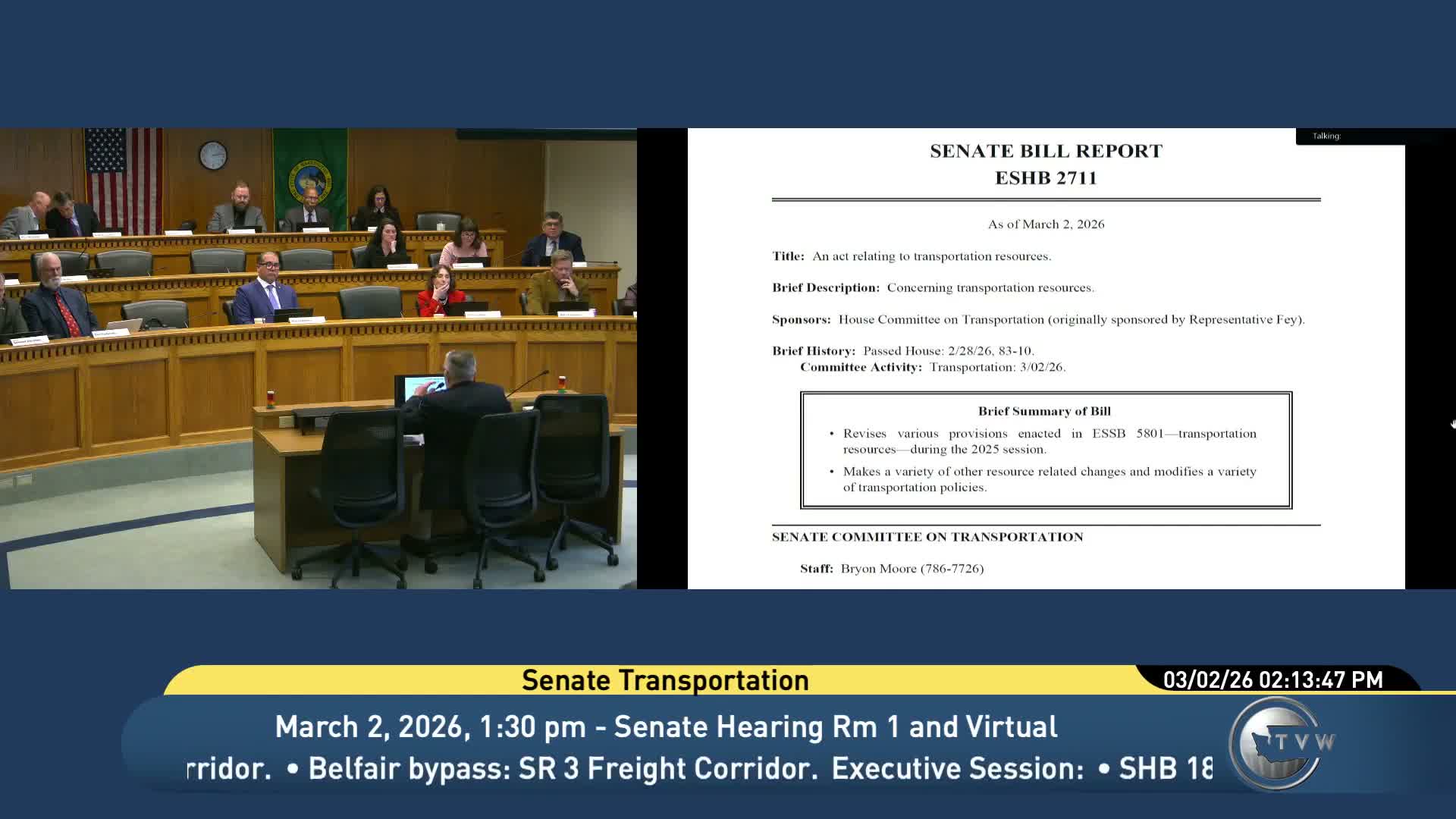
Summary
Committee staff outlined ESHB 27‑11, which clarifies several transportation‑related taxes and creates a Preserve Washington account; public testimony included support from aviation and auto groups for tax clarifications or repeal, requests from airlines for mobile IDs, and calls from transit advocates to add extended bond authority for Sound Transit.
The Senate Transportation Committee held a public hearing on engrossed substitute House Bill 27‑11 on March 2, receiving a staff overview of the bill's transportation revenue and policy provisions and hearing more than a dozen oral testimonies.
Committee staff Brian Moore described the bill as a compilation of transportation resource and policy items. New or clarified provisions in the House version include a trade‑in clarification that treats trade‑in value as part of the tax base for recreational vessel and luxury vehicle tax calculations, a six‑month waiver of penalties and interest for the luxury vehicle tax (through June 30, 2026), an exemption for motor homes for six months, creation of a Preserve Washington account for highway preservation, and a provision restoring the Transportation Commission's authority to exempt some transit buses and rideshare vehicles from tolls. The bill also includes some account transfer timing changes and would repeal the luxury vehicle tax in line with a similar Senate bill. Staff said a full fiscal note was not yet complete for all provisions.
Public testimony represented a cross section of stakeholders. Industry groups most directly affected by luxury‑tax provisions testified in favor of the House language or repeal:
- Brad Shuster (Aircraft Owners and Pilots Association, Northwest Mountain Region) supported repeal or clarification of the luxury/privileged taxes affecting aviation. - Mike Guinness (Pacific Northwest Business Aviation Association) said the luxury aircraft tax has prompted operators and purchases to move out of state and urged repeal. - Scott Hazelgrove (Washington State Auto Dealers Association) supported the bill's grace period, installment option for leased vehicles and retail exemptions consistent with sales tax policy.
Other testimony included:
- Dana DeBell (Delta Air Lines) urged the committee to include state‑issued mobile driver's license language in the bill so mobile IDs can be used seamlessly in air travel and security checkpoints. - Angela Birney (mayor of Redmond and Sound Transit board member) asked the committee to add extended bond authority for Sound Transit to access federal TIFIA resources and mitigate cost and schedule risks. - Kirk Hopencottir (Transportation Choices Coalition) and IBEW Local 46 representatives asked for 75‑year bonding authority for Sound Transit projects, to align financing with long asset lives and reduce delay costs. - Lily Wilson Codega (IAMMP/Inland Boatmen's Union) asked the committee to dedicate sales tax revenue to Washington State Ferries to address aging vessels and workforce shortages. - Sherry Collin (Washington Trucking Association) urged a delay or rollback of the diesel tax increase enacted last year, arguing it unfairly burdens truckers. - Community members, including a commenter identified only as Anna (District 2), described concerns about automatic fuel tax indexing and household price impacts.
Testifiers for bicycle education and related safety programs asked the committee to maintain or add sustainable funding provisions included in parallel bills.
Committee members asked clarifying questions but took no vote during the hearing. The public record indicated 15 pro, 717 con and one other sign‑ins were recorded by staff; oral testimony reflected both industry support for certain tax clarifications and citizen concerns about fuel costs and tax indexing.
The committee will consider amendments and potential executive action in subsequent meetings.