Get AI Briefings, Transcripts & Alerts on Local & National Government Meetings — Forever.
Yakima county says contamination at Boise Cascade mill is holding up I‑82 East‑West corridor
Loading...
Summary
At a Senate Transportation Committee work session, Yakima County told lawmakers it is ready to move forward on the I‑82 East‑West Corridor but is awaiting Ecology guidance and a consent decree tied to cleanup of wood waste and contaminated soil at the Boise Cascade mill site; Ecology said it needs a county work plan before filing the decree.
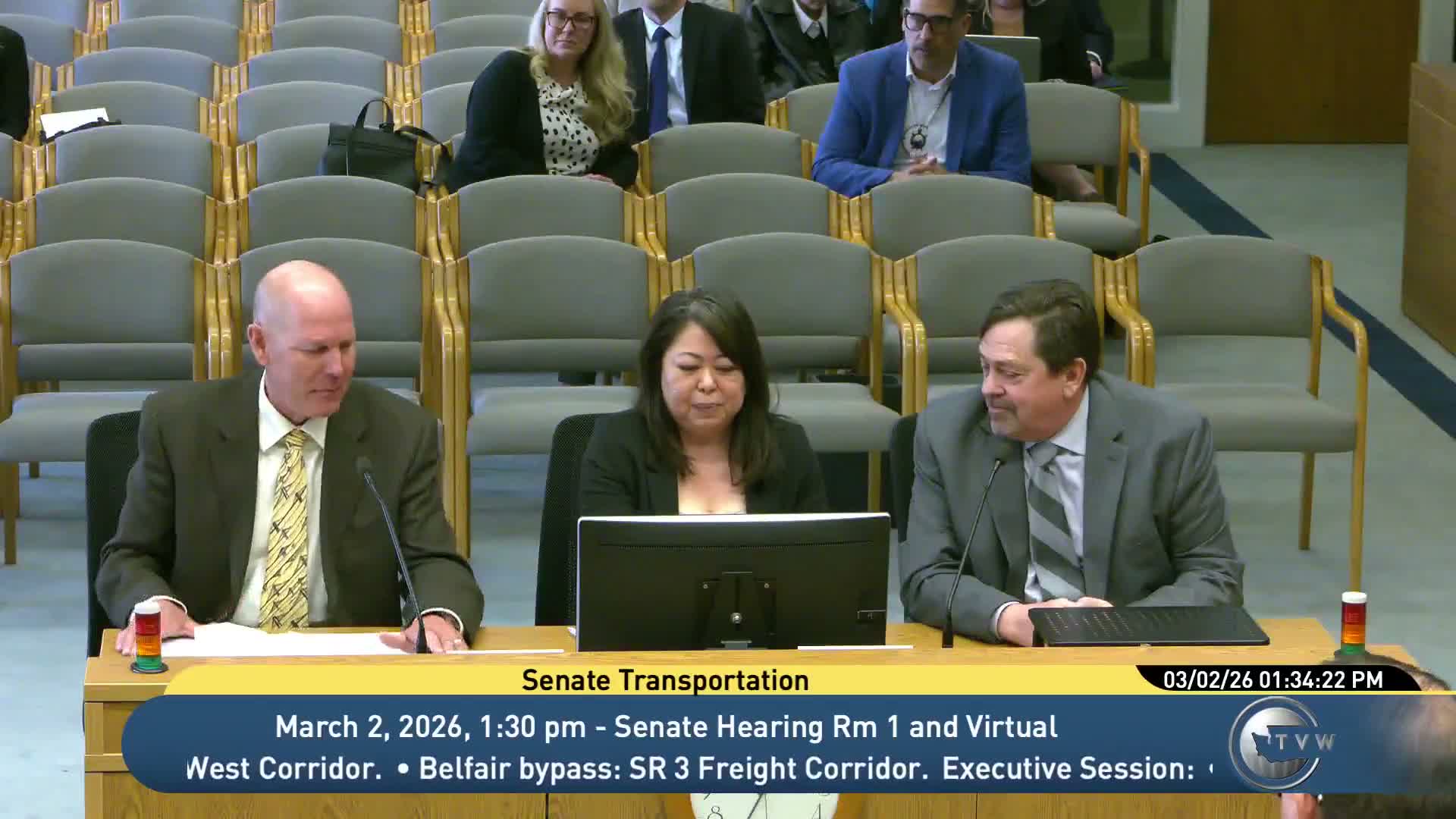
Yakima County told the Senate Transportation Committee on March 2 that it is prepared to start construction on the long‑planned I‑82 East‑West Corridor but cannot proceed until technical and legal questions about cleanup at the former Boise Cascade mill site are resolved.
County Engineer Matt Petrushevitz said the county has been pursuing the corridor for decades and secured nearly $50 million in state Connecting Washington funds for part of the project. He said the county has relocated about 10 homes to make way for the corridor at a cost the county listed as $3,400,000 total — roughly $340,000 per home — and that local officials are committed to completing the work.
"We have moved 10 homes," Petrushevitz said. "We want to remove this wood waste. We don't want to dump it in the river. We want to remove it responsibly and we don't want to leave any contaminants behind." He told the committee that the county has a draft plan but is waiting on Ecology to specify preliminary cleanup levels and other technical guidance before finalizing a work plan and moving to bidding and construction.
Nhi Erwin, toxics cleanup program manager at the Department of Ecology, told the committee that state cleanup law makes liable parties responsible for contaminated sites and that Ecology has been negotiating a de minimis consent decree that would resolve the county's liability in exchange for the county doing cleanup work. Erwin said Ecology has provided technical feedback and that the missing piece is the county's draft work plan, which must accompany the consent decree.
"The contaminated material must be removed to comply with the cleanup regulations," Erwin said. "Once the county submits the work plan, Ecology can move forward with our public comment process. Once that is complete, the decree can be filed in court and the county can begin the physical work of removing the wood pile."
Erwin also said federal NEPA work on related actions has been paused because of tribal concerns. Both Ecology and the county characterized the consent decree path as the mechanism that will allow the county to proceed: Ecology needs a draft work plan to complete the decree, and the county needs Ecology's technical direction to finalize the plan.
Committee members pressed for clarity on who must act to move the project forward. Ranking member Senator King said the corridor has been delayed for years and urged the parties to bring the consent decree forward so the county can proceed. Petrushevitz reiterated the county's readiness and frustration, saying they want to "get this thing done," while Ecology said it is close to finalizing terms but needs the county's draft plan to complete the package.
Next steps recorded in testimony: Ecology said it will proceed to public comment after it receives the draft work plan; once the consent decree is filed the county may begin removal of the wood waste and associated cleanup actions. The county indicated a plan to begin removal this fall if regulatory and legal steps are completed.
The committee did not take formal action on the project during the session; lawmakers heard the update and asked for continued coordination among Yakima County, WSDOT and Ecology.
The committee is expected to monitor the submission of the county work plan and the filing of the consent decree as the next procedural steps.