Get Full Government Meeting Transcripts, Videos, & Alerts Forever!
Get email alerts on the Impact Fees topic
No spam. Unsubscribe anytime.
Mansfield panel approves impact-fee report as staff outlines major water, sewer and roadway projects
Summary
The Planning and Zoning Commission approved the city's impact-fee report 6—0 (1 absent) after staff said residential development is driving most impact-fee revenue and detailed a 10-year capital program, including a water-treatment expansion and major road widening slated to begin in 2026.
City staff presented data showing residential development is the predominant driver of Mansfield's water, wastewater and roadway impact fees, and the Planning and Zoning Commission voted to approve the city's impact-fee report by a 6— margin with one member absent.
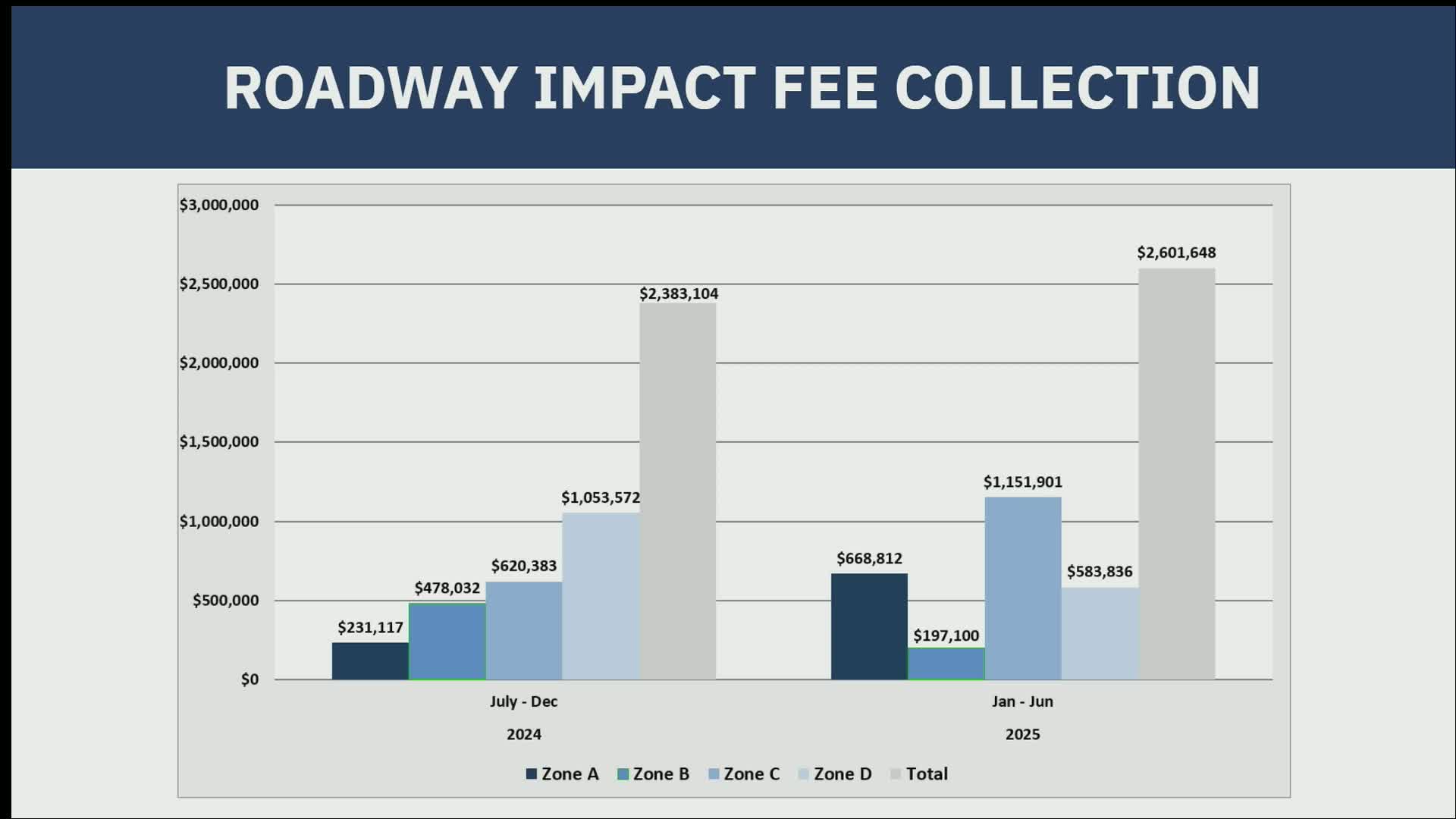
"You can see very most of our impact fees are driven by residential uses," the presenter said while walking commissioners through graphs comparing residential and nonresidential contributions. Staff reported recent collections with roadway receipts at $2,600,000 and utility (water and wastewater combined) receipts at $3,140,000.
Officials cautioned that some nonresidential projects have deferred fees under development agreements and that those amounts are included in reports only after the fees are billed and paid. The presenter also listed near-term residential developments that will add permit activity: Dolce Vita (263 lots), Watson Branch Phase 2 (125 lots), Birdsong 3 (103 lots) and South 0.7 B (99 lots).
Engineering Director Raymond, summarizing the impact-fee capital program, listed several projects the fees help fund and provided timing estimates:
- A 16-inch water main from Main Street to Broad Street, with design underway and construction expected to begin in early 2026. - Bud Urban Water Treatment Plant Phase V expansion, described by staff as raising plant capacity to about 65,000,000 gallons per day. - A Westside Sewer and Water project to serve several subdivisions; it had been on hold over easement and landowner discussions but is reported back on track. - The Mountain Creek Tributary sewer interceptor (18" and 21" sections) to remove an upstream lift station and enable further residential phases. - A Main Street-to-157 connector intended to provide an alternate route for larger vehicles and reduce truck traffic through school-area roads. - A Broad Street reconstruction and widening to five or six lanes; staff said bidding is targeted before year end and construction would likely begin in 2026 with an approximate 18-month schedule.
A commissioner asked whether higher wastewater impact fees are being passed through in home prices; staff said residential impact fees are generally rolled into the cost of a home and that each new home pays a roadway impact fee at the time of permitting. Staff also clarified that the city's report includes only permits that have paid impact fees.
Responding to concerns about proposed roundabout geometry on West Broad Street and frequent tractor-trailer traffic, the engineering director said designers ran swept-path analyses and intend to use mountable interior pavers and other accommodations so large trucks can navigate the roundabout.
Staff closed by noting many projects are already visible in the city's online capital-projects dashboard and traffic-impacts map; the Commission then approved the impact-fee report by motion, with a recorded outcome of "passes six-zero with 1 absent."