
Pittsburgh Public Schools budget committee outlines 2027 timeline, asks for goal‑aligned cost scenarios and tax impact data
Get AI-powered insights, summaries, and transcripts
Subscribe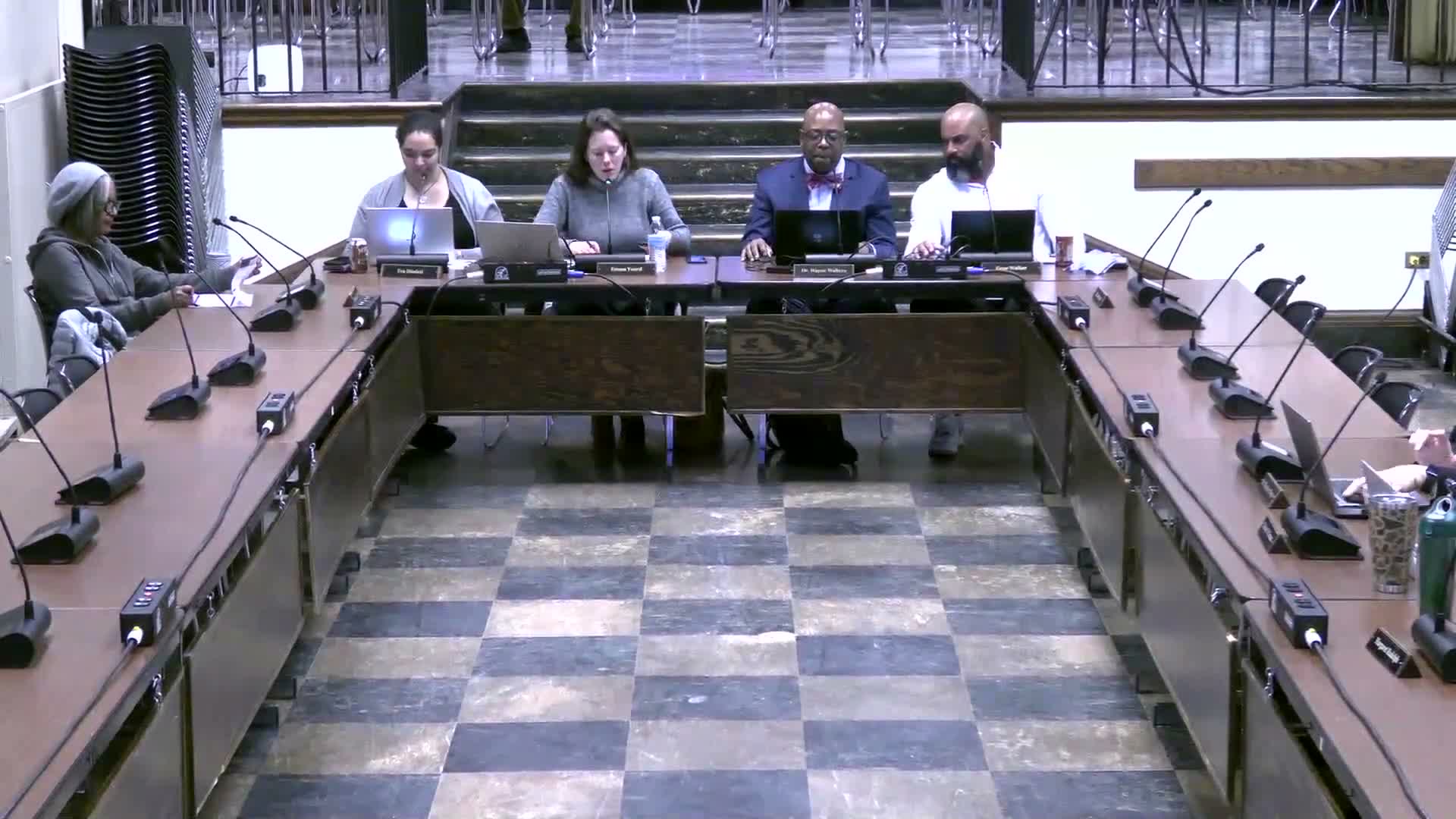
Summary
At a March 2 Budget & Finance Committee meeting, CFO Ron Joseph reviewed the 2026 budget timeline and the plan for 2027, noting the Act 1 index caps tax increases at 3.5%. Board members requested side‑by‑side, goal‑aligned slides, taxpayer‑impact scenarios and procurement policy updates ahead of April, June and September workshops.
The Pittsburgh Public Schools Budget & Finance Committee met Monday, March 2, to review the 2026 budget development process and outline the timetable and presentation approach for the 2027 budget. Chief Financial Officer Ron Joseph led the review, which focused on process milestones, board engagement and how spending could be shown in alignment with the district's draft goals.
"What you'll see is just an attempt to level set the board," Joseph said, describing an atypical presentation with fewer charts and numbers and a focus on shared understanding before the main budget work begins. He told the committee the state’s Act 1 index sets the maximum tax increase the district could adopt without a referendum and said that cap for the upcoming year is 3.5%.
Why it matters: the committee is preparing how to present choices and trade‑offs to the full board so trustees can give strategic guidance—rather than only asking clarifying questions—before the budget is finalized in December. The administration plans to show incremental costs for proposed investments and how those investments map to the board’s goals for early reading, early mathematics, industry‑based credentials and graduation rate.
Board members asked for clearer, side‑by‑side presentations. Director Yael Silk asked administrators to wait until the board finalizes guardrails and metrics so the administration can show which investments would be needed to meet each goal. "It would be really interesting to better understand the alignment between the budget and the goals and guardrails so that we as board members can be asking more strategic questions," Silk said.
Chair Emma Yord proposed decking each goal with a slide that lists the goal, the investments aligned to it, the estimated incremental cost and the trade‑offs required. Joseph agreed that where data exist the district can present a comparison of current state versus proposed increments—for example, "this is what the current state is... and if the investment is to add an additional 10 or 20 or 30 [coaches], then you'll be able to see the side by side...and this would be the impact on the budget."
Taxes and taxpayer impact: several trustees asked for simple, easy‑to‑read summaries showing how possible tax increases would affect households. Joseph said the budget book and prior presentations have included per‑taxpayer impact pages and that the district will include those figures when a tax‑rate change is under consideration. Director Diodati noted that a prior year's millage calculation changed on the night of a vote, which affected earlier per‑household estimates; Joseph said he would ensure updated valuations and impacts are provided.
Procurement and cost controls: Director Reid asked whether the district runs targeted "housekeeping" budget workshops to identify procurement or technology purchasing efficiencies. Joseph said departmental reviews during the budgeting process do identify unused contracts and potential savings, and he will follow up with Chief Technology Officer Mark Stuckey to tighten districtwide coordination of technology purchases. Chair Yord added that procurement policy updates responding to Controller Heisler's recommendations are expected to reach a June policy workshop.
Next steps: Joseph said the first 2027 budget workshop will review 2025 year‑end financials and provide initial revenue forecasts; the second workshop is scheduled for June 1; a final workshop is set for Sept. 8; the preliminary 2027 budget is expected to be released in early November; and the legal deadline to adopt the 2027 budget and tax rates is Dec. 31. The administration plans to return with sample priority investments aligned to the board’s goals for feedback.
The committee did not take formal votes at the meeting and adjourned after the Q&A.