Lifetime Citizen Portal Access — AI Briefings, Alerts & Unlimited Follows
Massachusetts Senate amends and advances $3B higher-education bond bill, rejects transfer of $300M to K–12
Loading...
Summary
The Senate passed an amended higher-education bond bill (House No. 4769) that authorizes more than $3 billion for campus projects and dedicates $125 million annually from the fair-share surtax for higher-ed capital; a proposal to earmark $300 million for K–12 failed in a roll-call vote.
The Massachusetts Senate on the floor advanced an amended higher-education bond bill, House No. 4769, after adopting a series of campus-specific amendments and rejecting a proposal to redirect $300,000,000 of fair-share surtax revenue to K–12 funding.
Senator Michael J. Driscoll, speaking on behalf of the bill, said the measure "authorizes investment of more than $3,000,000,000 in our higher education institutions across Massachusetts" and highlighted a $125,000,000 annual dedication of fair-share (surtax) funding for higher-ed capital projects. Driscoll urged colleagues to support the bill as a long-term investment in campus infrastructure and student success.
The chamber adopted a number of targeted amendments that add or clarify funding for specific campuses and projects. Sponsors won votes for projects including a $2,200,000 allocation for MassBay Community College HVAC replacement and a $3,000,000 provision for window replacement in MassBay's Cary Building; a $20,000,000 allocation for Springfield Technical Community College to address deferred maintenance; and a $20,000,000 provision to expand nursing and allied-health facilities at Cape Cod Community College. An amendment to rehabilitate a building at Roxbury Community College for a Centre for Economic and Social Justice was adopted for $12,000,000. Several other amendments for UMass Boston, Salem State and Bridgewater State were also adopted, while some proposals (including a sustainable hand-hygiene incentive and a naming amendment at UMass Boston) were not adopted.
The floor saw extended debate over how the surtax on incomes above $1,000,000 should be allocated. One amendment would have earmarked $300,000,000 from fair-share revenue toward K–12 (chapter 70) priorities and to support a larger rewrite of the school-funding formula; proponents said the earmark would help districts receiving only minimum aid, while opponents said the surtax already supports transportation and higher-education priorities and that the allocation in the bill is intended to be separately accounted for.
The chamber ordered a roll-call vote on that amendment. After the clerk called the roll, the amendment failed with 6 senators recorded in the affirmative and 31 in the negative.
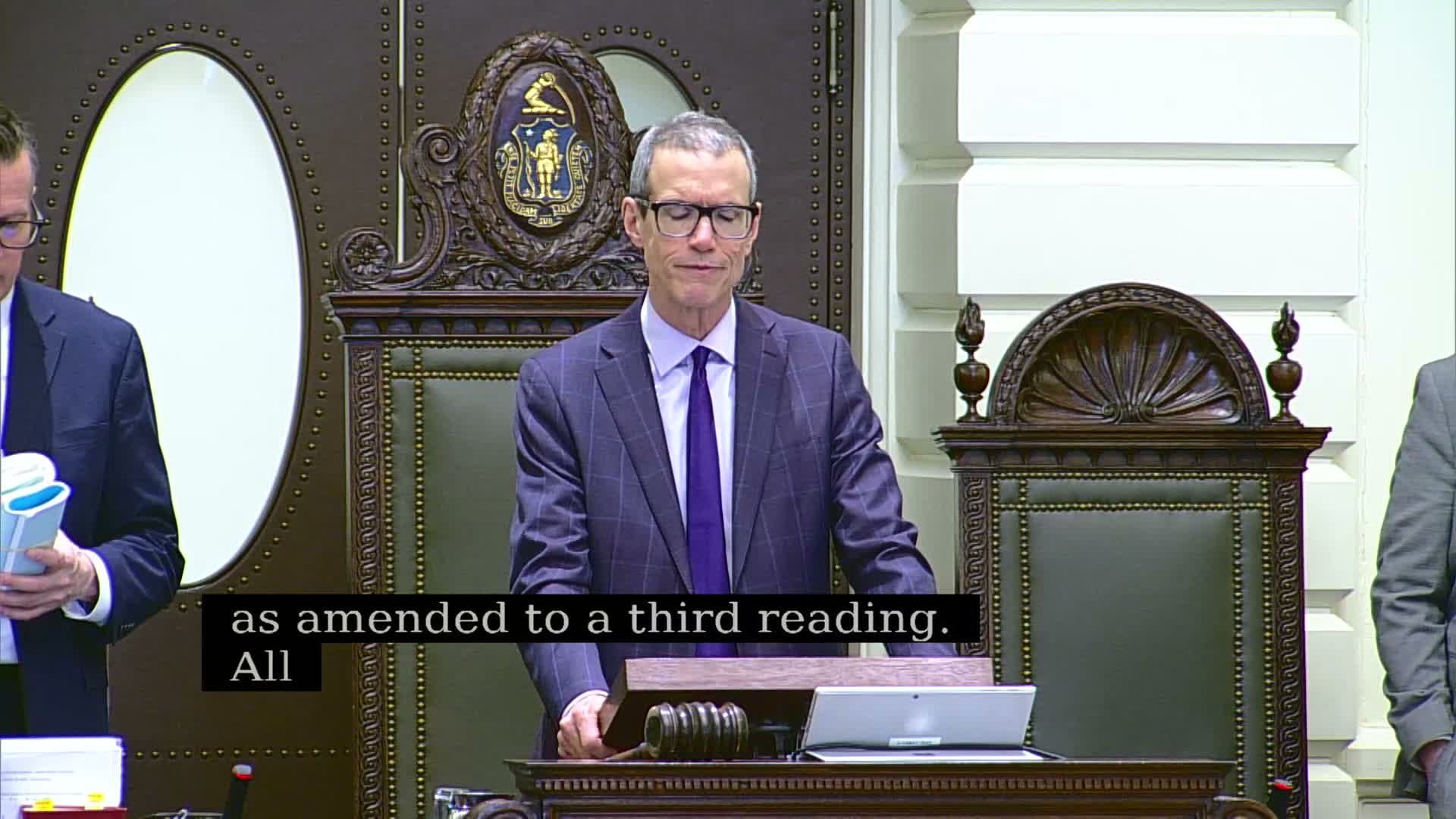
After completing votes on amendments and adopting the Senate Ways and Means amendment, the Senate ordered the bill to a third reading and, later in the day, voted to pass the bill to be engrossed by a recorded vote of 38–0.
The bill as amended directs multi-hundred-million-dollar investments across the state's public higher-education system, including community colleges, state universities and UMass campuses, and includes a dedicated annual fair-share set-aside of $125,000,000 for higher-ed capital projects.
Next steps: the bill was ordered to third reading and then passed to be engrossed; subsequent steps in the legislative process (final floor passage in both chambers and any conference committee actions) will determine the bill's ultimate status and implementation timing.