Get Full Government Meeting Transcripts, Videos, & Alerts Forever!
Get email alerts on the Public Lands topic
No spam. Unsubscribe anytime.
Senator urges reopening of Central Yukon plan, backs HJR106 disapproval resolution
Summary
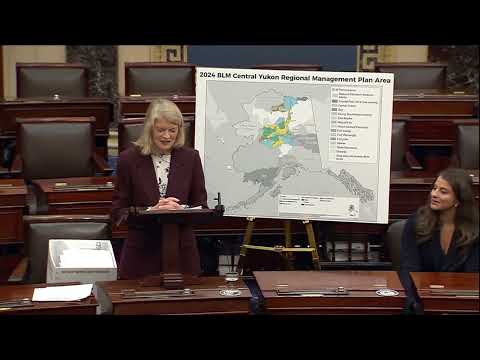
A senator on the Senate floor urged colleagues to support HJR106, a disapproval resolution to reopen the Bureau of Land Management(BLM) Central Yukon Resource Management Plan, arguing the 2024 final decision expanded conservation designations and curtailed resource access compared with a 2020 preferred alternative.
A senator on the Senate floor urged colleagues to back a disapproval resolution, HJR106, to reopen the Bureau of Land Management(BLM) Central Yukon Resource Management Plan (RMP), saying the agencyshifted from a more balanced 2020 preferred alternative to a 2024 final decision that dramatically expanded conservation designations and restricted other uses.
The senator said the final record of decisionfor the Central Yukon plan covers a complex package of designations affecting roughly 13,300,000 acres of BLM-managed land within a broader nearly 56,000,000-acre region of central and interior Alaska. "This plan is meant to replace older regimes that were put in place back in 1981, 1986, and 1991," the senator said, emphasizing the length of the process and the taxpayer cost of the planning effort.
The senator gave multiple examples he said show a sharp policy shift between the agencies' 2020 proposal and the 2024 final decision. He said an area that had one ACEC of about 77,000 acres in 2020 became 21 ACECs and RNAs totaling about 3,600,000 acres in the 2024 plan, and that the acreage proposed for fluid mineral leasing fell from roughly 7,500,000 acres to about 845,000 acres. "Restrictions exploded in the final plan while opportunities for economic development were severely curtailed," the senator said.
He also criticized BLM's handling of longstanding public land orders (PLOs). The senator said BLM had earlier told his office it would lift many PLO withdrawals through this planning effort or by a separate, tiered environmental assessment for PLO 51 50, but that the agency later canceled that separate process. "If if that's not a bait and switch, you know, I don't know what is," the senator said, describing the cancellation as abrupt and harmful to Alaska's land entitlement process.
The senator linked those procedural and substantive changes to conflicts with federal laws he cited, including the Alaska National Interest Lands Conservation Act (ANILCA) and the Alaska Native Claims Settlement Act (ANCSA), and referenced his own Alaska Land Transfer Acceleration Act as part of past congressional efforts to resolve land entitlements. He said Doyon, the regional Alaska Native corporation, warned Congress in a letter that the RMP's restrictions would complicate access to and use of Doyon lands and could limit intended economic benefits.
The senator asked unanimous consent to include letters from Doyon and the North Slope Trilateral (including Arctic Slope Regional Corporation) in the Congressional Record; both requests were met "without objection." He also pushed back on reporting that passage of the disapproval resolution would, by itself, approve the Ambler access project, saying that claim was inaccurate and noting the Ambler permitting process and a separate presidential determination on the project.
The senator said that if Congress were to pass the disapproval resolution it would reopen the plan and direct BLM to return with a revised, more balanced proposal, but it would not invalidate the underlying environmental analysis or public comments collected to date. He urged colleagues to support the resolution and yielded the floor to an Alaska colleague who has worked on the measure.