Lifetime Citizen Portal Access — AI Briefings, Alerts & Unlimited Follows
Interior and Environment subcommittee chairman urges Senate to back bipartisan appropriations package
Loading...
Summary
On the Senate floor the chairman of the Interior and Environment subcommittee urged support for a three-bill fiscal 2026 appropriations package, saying the Interior bill cuts $1.9 billion (about 4.7%), funds wildland fire response, Bureau of Indian Affairs and Indian Health Service programs, and includes Alaska-specific relief.
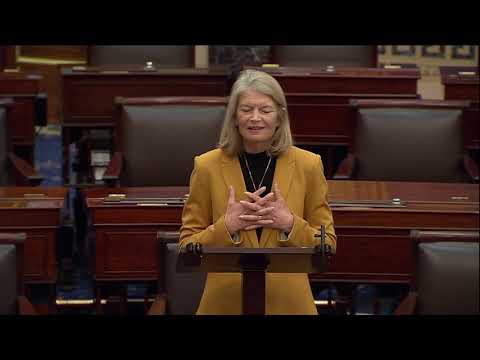
On the Senate floor, the chairman of the Interior and Environment Subcommittee urged colleagues to support a three-bill fiscal 2026 appropriations package that includes the Interior, Environment and Related Agencies bill, saying the measure balances fiscal restraint with programmatic priorities.
The senator said the package contains funding for Commerce, Justice and Science; Energy and Water; and Interior and related agencies, and noted committee cooperation that produced the measure. “We overwhelmingly voted to invoke cloture on the motion to proceed last night,” he said, and pointed to a 26–2 committee vote and the House’s 397–28 passage of the linked mini-bus as evidence of broad support.
He described the Interior bill as pared back by roughly $1,900,000,000 — about a 4.7 percent reduction from the subcommittee’s topline — while preserving priority programs and member requests. The senator said the bill aims to strengthen energy and mineral security, expand Bureau of Land Management capacity for permitting energy projects, and boost U.S. Geological Survey mapping and minerals work.
The chairman emphasized funding to ready agencies for the upcoming fire season, including full funding for wildland fire management and hazardous fuel removal and measures to support firefighters. He also said the bill protects national parks and wildlife refuges while directing resources toward invasive-species responses such as Asian carp and European green crab.
The senator highlighted the bill’s provisions for Native communities, saying it provides “robust funding” for the Bureau of Indian Affairs and the Indian Health Service, strengthens tribal colleges and universities, and advances initiatives addressing missing and murdered Indigenous women and children.
On environmental and state-tribal assistance, he said the bill preserves priorities at the Environmental Protection Agency and fully funds the Clean Water and Safe Drinking Water State Revolving Funds while maintaining support for EPA science, Superfund and state and tribal assistance grants.
He also said the bill includes policy instructions restricting certain agency actions that the subcommittee viewed as burdensome, citing language to withhold items such as lead-tackle regulation and greenhouse-gas reporting requirements for farmers and livestock producers.
The senator pointed to cultural and commemorative funding the subcommittee oversees, including support for arts and humanities accounts and programming for the 250th anniversary of the nation’s founding (America 250).
He singled out Alaska-focused provisions, including fish-habitat restoration, cleanup of contaminated lands, air-shed grants for communities such as Fairbanks, staffing support for health-care facilities in Native communities, and funding to address leaking above-ground fuel storage tanks used for local power generation.
He also acknowledged a ‘‘staggering backlog’’ in Bureau of Indian Affairs probate courts and said the bill makes incremental gains to address that issue.
The chairman concluded by thanking majority and minority staff by name for their work on the bill and urged the Senate to recognize the bipartisan product. He yielded the floor and suggested the absence of a quorum; the clerk then began a roll call.