Get Full Government Meeting Transcripts, Videos, & Alerts Forever!
Get email alerts on the Forest Health Strategy topic
No spam. Unsubscribe anytime.
Marin Regional Forest Health Strategy emphasizes prescribed fire, tribal partnership and landscape-scale monitoring for 118,000 acres
Summary
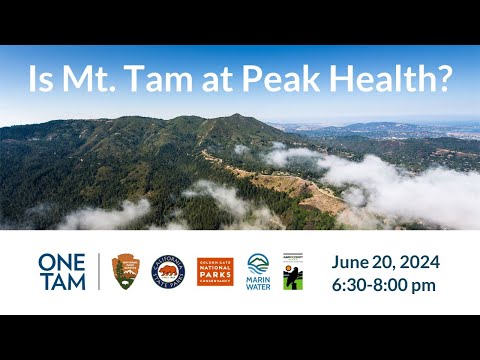
A regional forest health strategy presented at the 1 TAM webinar outlines goals for 118,000 acres of Marin forest and woodland, highlights canopy mortality and sudden oak death impacts, and calls for tribal partnership, CEQA/NEPA compliance on projects, and expanded monitoring and prescribed-fire uses.
Presenters described the Marin Regional Forest Health Strategy and next steps to increase forest resilience across more than 118,000 acres of forest and woodland in Marin County (about 184 square miles). Danny Frankel, the presenter introduced by the Parks Conservancy, said the strategy grew out of the PEAK Health process and uses a countywide fine-scale vegetation map to identify priority forest types, threats and treatment approaches.
Frankel stressed that active management can help forests provide ecosystem services — water, carbon storage and habitat — and that planning must account for threats such as introduced weeds, plant pathogens (including sudden oak death), and the legacy of fire exclusion. He presented mapped estimates of canopy mortality and said about 12% of forests showed trace-to-moderate canopy mortality with an additional 5% showing relatively high visible mortality in 2018, while cautioning that remote-sensing methods may undercount sudden oak death impacts.
On project safeguards, Frankel explained that proposed treatments will go through required environmental review: "All of the forest resilience, wildfire resilience work ... goes through the California Environmental Quality Act process or the National Environmental Policy Act process," he said, noting that site-specific analysis yields mitigations and best-management practices to avoid harm to protected species and habitats.
The strategy highlights collaboration with the Federated Indians of Graton Rancheria. Frankel said the tribe provided technical review and a standalone chapter on traditional ecological knowledge; partners plan to integrate tribal stewardship and expand opportunities for beneficial fire where appropriate: "We are bringing back prescribed fire," he said.
Next steps include continued monitoring tied to PEAK Health, collaborating with the Golden Gate Biosphere Region Climate Adaptation Project to identify refugia, and working with regional agencies (Marin Wildfire Prevention Authority and local fire departments) to expand prescribed fire and other landscape-scale treatments. The presenters said partners will pursue fundraising and program development to implement priority projects and encourage public participation through volunteer programs and events.