Lifetime Citizen Portal Access — AI Briefings, Alerts & Unlimited Follows
Podcast guests highlight relationships, mentorship in moving lab technologies to market
Loading...
Summary
Guests on The Transfer Files podcast said strong relationships with lab-origin scientists and tailored mentorship are critical for startups licensing federal lab technologies, especially in capital-intensive 'deep tech' sectors like batteries.
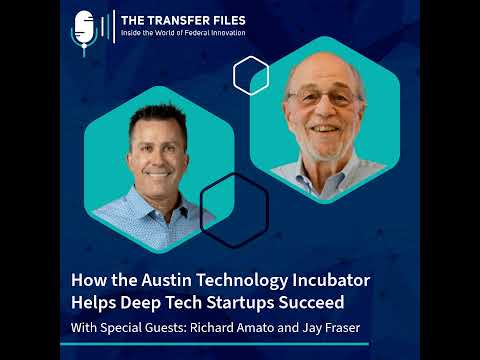
Andrea Nelson hosted Richard Amato, executive director of the Austin Technology Incubator, and Jay Fraser, president and CEO of New Dominion Enterprises, on The Transfer Files to discuss how federal laboratory technologies move toward commercialization.
Amato described ATI’s evolution since its 1989 founding by George Kosmetsky, noting a shift toward university assets and a focus on deep tech areas such as clean energy, healthcare and a newly launched microelectronics incubator. He said ATI’s Texas Venture Mentor Service (TxVMS) provides a bench of approximately 100 mentors who are assembled into teams tailored to a startup’s stage and needs.
Fraser recounted New Dominion’s origin from a relationship with Idaho National Laboratory and cofounder Mason Harrop. He warned that licensing a technology from a national lab does not guarantee market readiness and described commercialization as "not for the meek," citing long timelines and high capital requirements for battery innovations. "Commercializing a technology licensed from a national laboratory is probably one of the more difficult things anybody ever wants to try and do," Fraser said.
Both guests emphasized the importance of coachability and honest mentorship. Amato said incubators must give "brutal honesty" to derisk companies and, in some cases, advise founders to shut down ventures. Fraser described insisting on practical guidance rather than "tough love" early in his ATI mentorship, which led to adjustments in his mentor team and helped refine his company’s approach.
The episode also contrasted deep tech—typically hardware-based, lab-rooted projects with long development cycles—with faster software plays. Amato said incubators often work with deep-tech companies for multiple years, compared with 18–24 months for many accelerators. The guests closed by directing listeners to resources and episode notes on federallabs.org and thanking the podcast production team.
The podcast did not record any formal votes or governing-body decisions; the conversation focused on mentorship, commercialization challenges, and ATI’s programming.