Get Full Government Meeting Transcripts, Videos, & Alerts Forever!
Get email alerts on the Education topic
No spam. Unsubscribe anytime.
Schenectady officials outline how district will implement New York—s new school phone restrictions
Summary
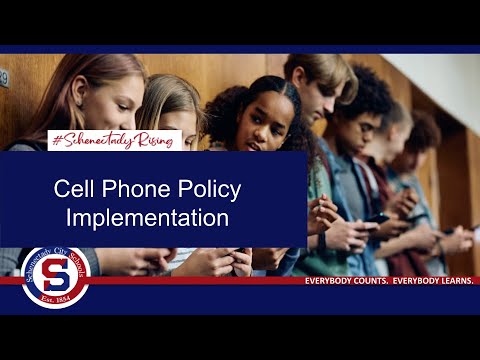
Schenectady City School District staff told parents the district will follow New York State—s 2025 distraction-free school law by banning internet-connected phones and devices during the school day and using grade-specific storage: locked cases for younger children, classroom cases for elementary students, and carryable pouches integrated with entry screening for middle and high school students.
Kendall O'Meely, the district—s executive director of schools and planning and accountability, told parents the district will implement a new distraction-free policy "based on New York State law," and described grade-by-grade procedures for keeping internet-connected devices out of classrooms. The presentation included state findings, operational details and a question-and-answer session about safety and enforcement.
The presenter summarized a statewide listening tour and said the review found that "phones distracted students and inhibited learning and creativity," and that phone-free environments "did not compromise student safety" and can improve mental-health outcomes. The presenter noted that in May 2025 Governor Hochul announced a distraction-free school policy that has become state law and sets a statewide standard while allowing districts to design storage plans and parent contact procedures.
Under the district plan described to parents:
- Pre-K to grade 2: any student who brings a phone will have it housed in the main office in lockable cases during the day. Teachers and staff will manage retrieval at dismissal.
- Grades 3 to 5: each classroom will have a lockable case; teachers will collect phones at the start of the day and return devices at dismissal. Students will continue to have access to district-issued 1:1 instructional devices during class time.
- Grades 6 to 12: students will receive a clear-identification pouch for daily use. As students enter the building they will place their phone in the pouch, staff will verify identification (the district will include student ID in the pouch), and students will carry the pouch through the day. The district said the pouch system is integrated with the school—s entry/weapons-detection line to avoid delays and allow quick retrieval at dismissal.
On lost or forgotten pouches, staff said students who forget a pouch will turn in their phone at the door, receive a written receipt, and pick up the phone in the leadership/community office at the end of the day. If a pouch is lost or damaged, families can apply for a replacement.
Addressing parent concerns about reaching students, O'Meely said the district will install extra phone lines in main offices, leadership offices and assistant principal offices and program call roll-over so a caller reaches another line if the first is busy. "We—ll be working closely with district secretaries on the importance of ensuring that the phones are answered," O'Meely said.
Parents pressed the district on enforcement and emergencies. When asked "What if my child refuses to put their phone in the pouch?" a parent asked, O'Meely replied that building administration would work directly with the student and rely on the code of conduct and relationship-based approaches to resolve refusal. Dennis Green, the executive principal at Schenectady High School, said staff would also contact the parent and work collaboratively to explain the policy and its rationale.
On emergency procedures: staff said pouches need not be unlocked for fire drills or true lockdowns, and that students could use main office phones for urgent calls. The presenter emphasized the district will continue emergency notifications through apps and mass messages to parents.
A parent raised the possibility students might place a nonworking or "dummy" phone in pouches to circumvent restrictions. Staff said the district—s bag scans and weapons-detection procedures during entry make dummy-phone work-arounds less likely and that communication and cooperation between families and schools will be important as implementation proceeds.
The session closed with O'Meely asking for parental support for the new procedures and expressing the district—s hope for a smooth start to the school year. The district did not announce any penalties or specific code-of-conduct sanctions beyond saying refusals would be handled by building administrators and documented processes.
Next steps the district described include distributing pouches at the start of the year, testing the phone-line roll-over system, and communicating building-level specifics to families; an exact calendar for distribution and any replacement costs for pouches were not specified.