
Residents urge county to tighten rules after Hammock Harbor settlement, raising annexation and coastal concerns
Get AI-powered insights, summaries, and transcripts
Subscribe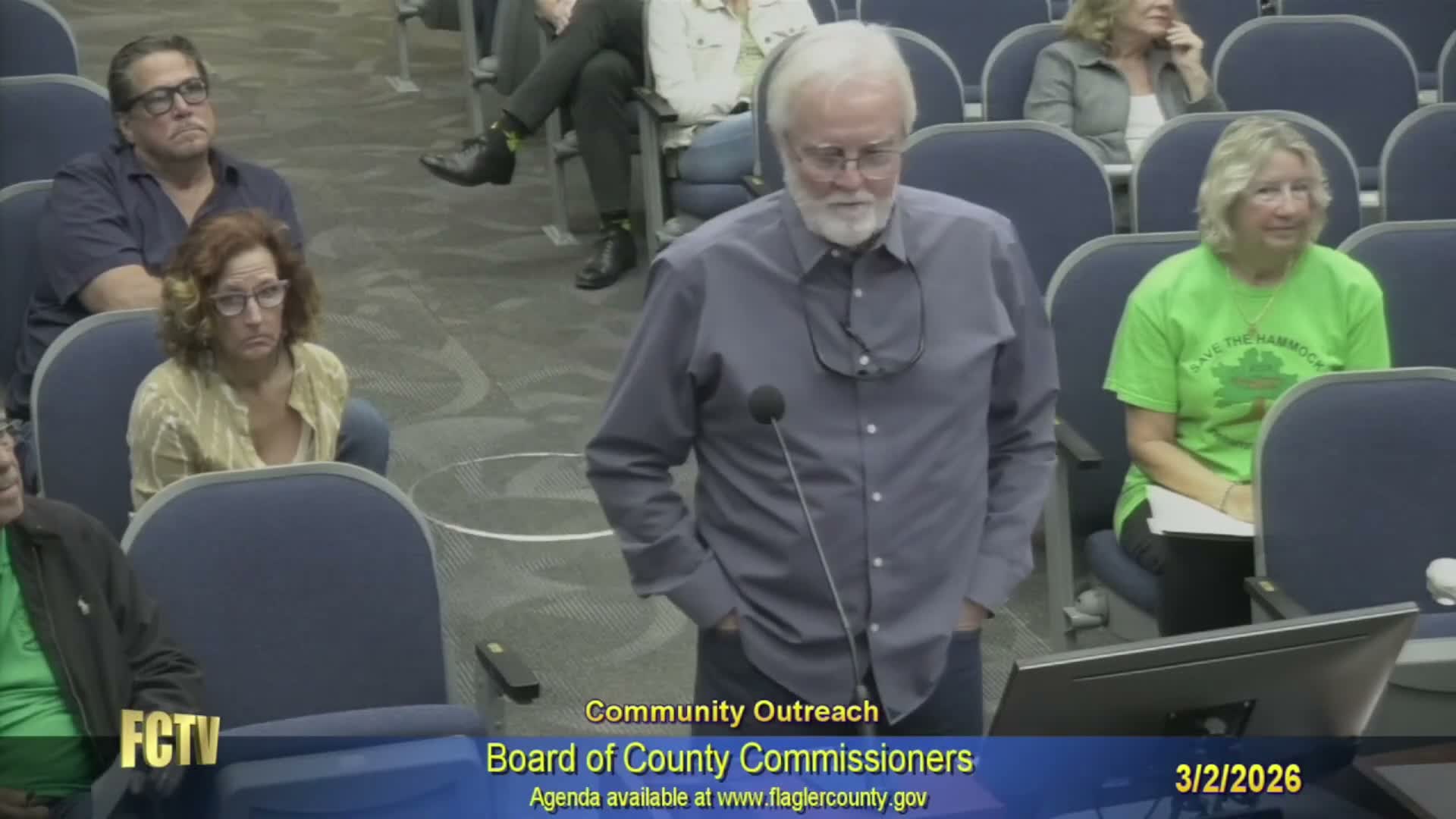
Summary
Residents of the Hammock and other community groups urged Flagler County to strengthen land-development tools and training after a settlement allowed a large warehouse-style project they say violates the scenic A1A overlay; speakers called for code changes, stronger enforcement and more staff training.
A succession of residents and neighborhood association leaders urged the Flagler County commission to strengthen land-development tools and enforcement after the county settled litigation tied to a proposed large-scale development in the Hammock area.
Speakers representing the Hammock Community Association and neighboring residents described the approved settlement in recent meetings as a loss of protections from the A1A scenic overlay and said the allowed building — repeatedly described in public comment as a very large, multi-story warehouse of roughly 50,000 square feet — is incompatible with existing residential and light-commercial character. Commenters raised concerns about building scale, noise (backing alarms and equipment), precedent for future projects, and perceived failures by staff and prior boards to enforce the land development code.
Members of the association asked the commission to re-examine the county’s land-development code (LDC), codify recommendations from volunteer review groups, strengthen review procedures (including technical review committee community participation), train new staff and planning board members on overlays, and consider amendments that would make review recommendations more binding in permit decisions.
Commissioners acknowledged the community’s frustration, noted prior board efforts to defend the hammock in some recent cases, and said the courts influenced the final legal outcomes in the Hammock Harbor matter. The commission invited the Hammock Community Association to submit specific written suggestions and asked staff and legal to identify near-term procedural and training options to help reduce the risk of future similar disputes.
Next steps: County staff requested the association provide concrete code-change suggestions and examples of where staff training or procedural clarifications are needed; commissioners indicated they will consider those items during upcoming LDC rewrites and workshops.