
Lawmakers advance 'Bring Them Home Fund' after heated debate over state-owned facilities vs. grants to nonprofits
Get AI-powered insights, summaries, and transcripts
Subscribe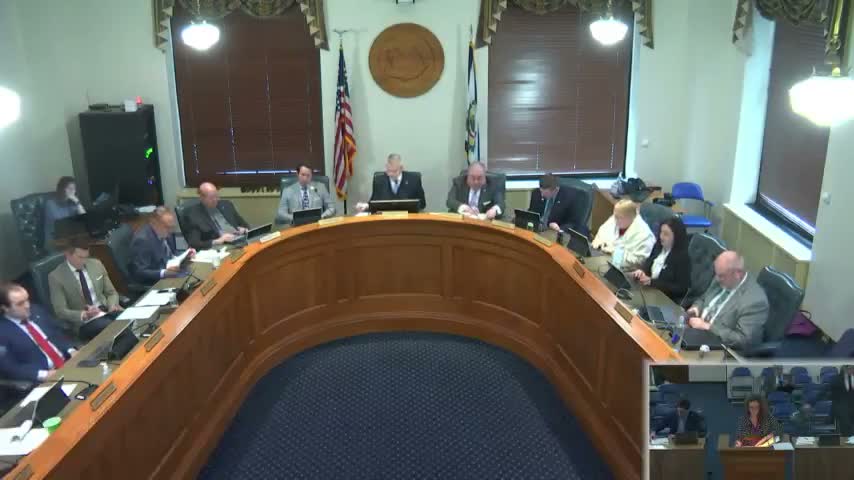
Summary
A committee advanced a governor-backed bill to create the Bring Them Home Fund to renovate state-owned properties for high-acuity children's treatment, rejecting two amendments that would have prioritized grants to qualified nonprofits and created an advisory committee.
Committee counsel described the committee substitute for Senate Bill 399, the governor's proposal to create the "Bring Them Home Fund" to finance renovations and programs that would allow West Virginia to provide in‑state residential treatment for children now placed out of state. Counsel said the fund would be supported in part by redirecting monies that would no longer be spent on out‑of‑state placements and would authorize the Department of Human Services to renovate and repurpose state‑owned properties or contract with third‑party providers.
The governor's policy director, Curtis Capehart, testified that the proposal grew from conversations with providers and state agencies: "The genesis of this was really an outgrowth of some of those ... conversations ... the private sector hasn't done it," he said, arguing that renovating existing state properties could lower the market entry cost and attract private operators.
Senator Marion offered two amendments. The first would have given priority for initial disbursements to grant funding for qualified nonprofit foster‑care providers for renovation, construction, maintenance and stability of new and existing facilities; it also outlined an annual grant application and review process. The second amendment would have created a Foster Care Facilities Improvement Advisory Committee to recommend disbursement priorities to the secretary.
Debate touched on whether state capital investments should focus on state‑owned buildings or instead incentivize private and nonprofit operators. Supporters of the amendments argued grants would be a faster, more efficient way to expand capacity and partner with existing in‑state providers. Opponents warned that directing capital to private real property could create ongoing liabilities and exposed taxpayers to risk if privately owned facilities were later sold or used for out‑of‑state placements. Capehart said additional safeguards would be needed if private facilities were eligible.
Both amendments were defeated after roll calls. The first amendment (priority grants to nonprofits) failed on division, with a counted result of five in favor and ten opposed. The second amendment creating the advisory committee also failed by recorded division. After debate, the committee voted to report the committee substitute for SB 399 to the full Senate with the recommendation that it pass, under its double committee reference to Finance.
What happens next: SB 399 will go to the Finance Committee and then to the full Senate; staff and the department will be expected to answer follow‑up questions about Medicaid, reimbursement and safeguards around using public funds with private facilities.