
WVU tells committee its direct care training surge placed hundreds into jobs but state faces a 4,000-worker gap
Get AI-powered insights, summaries, and transcripts
Subscribe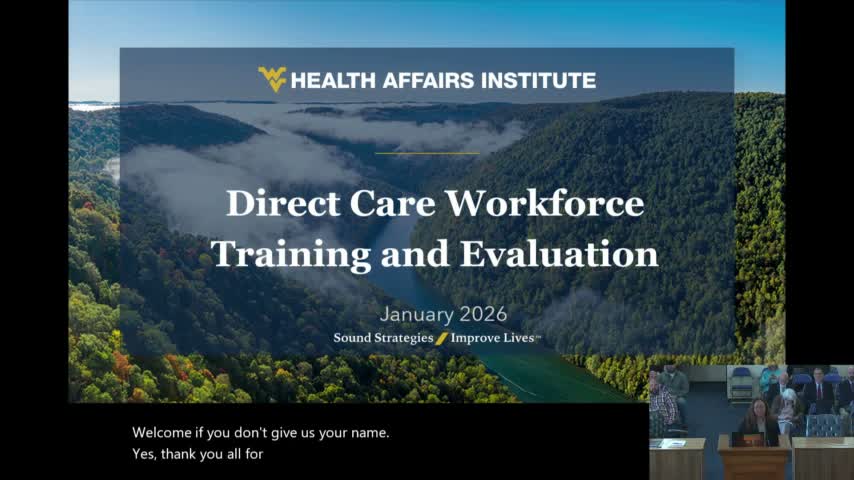
Summary
A West Virginia University Health Affairs Institute presentation said a multi-year training surge trained 708 people with 27% taking direct care jobs and 84% retained at 30 days, but identified a statewide shortfall of roughly 2,500 today and an estimated 4,000 over 5–10 years; low wages and background-check barriers were cited as key obstacles.
Rebecca Gillum, portfolio director for home and community-based services at the West Virginia University Health Affairs Institute, briefed the committee on a multi-year pilot to address shortages of direct care workers across the state.
Gillum said the Health Affairs Institute partnered with five provider organizations to run a training surge and that about 708 people completed training in the project period. She said roughly 2,600 people expressed interest in becoming direct care workers (including at least one person from every county), and that roughly 20% of trainees had accepted job offers by the final day of training; in tracked data covering about half of trainees, about 27% took a job as a direct care worker and at least 84% of those tracked were employed 30 days. "For every person that we train, we had 38 people visit the website," she said, explaining the scale of outreach needed to meet estimated demand.
Gillum described current wages for direct care workers averaging about $10–$12 per hour across the state and noted the industry often competes with fast food and retail employers that require less training and fewer background checks. She highlighted administrative and logistical barriers—35 fingerprinting locations for statewide coverage—and recommended intentional investments in outreach, recruitment, and removing training costs from providers.
When a senator asked about the gap size, Gillum said the present shortfall is roughly 2,500 direct care workers and is estimated to grow to about 4,000 over the next 5–10 years. She said the pilot showed better-than-average placement and short-term retention compared with national averages but emphasized the need for scalable recruitment and systemic changes to pay and administrative hurdles.
The committee thanked Gillum for the presentation and took no immediate action; the briefing provides data and recommendations for future workforce and budget discussions.